About Ciliopagurus strigatus (J.F.W.Herbst, 1804)
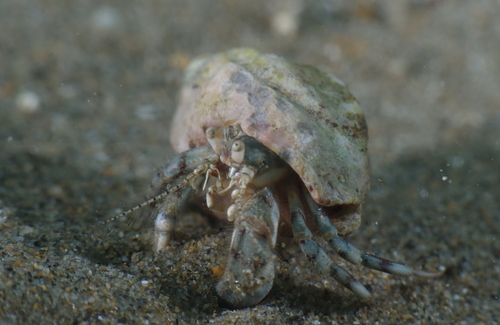
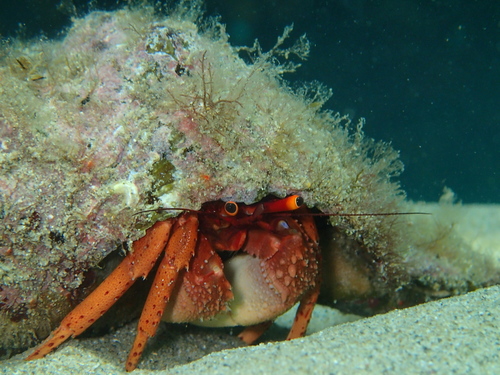
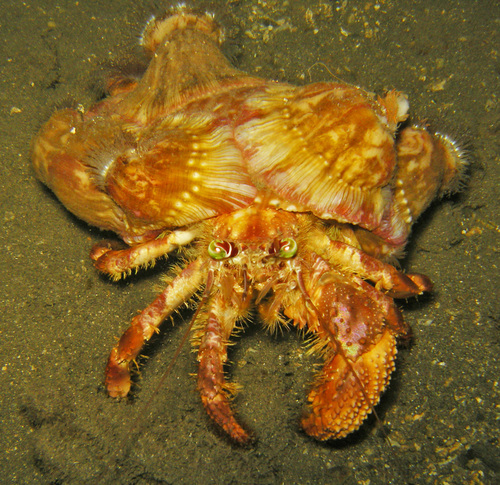
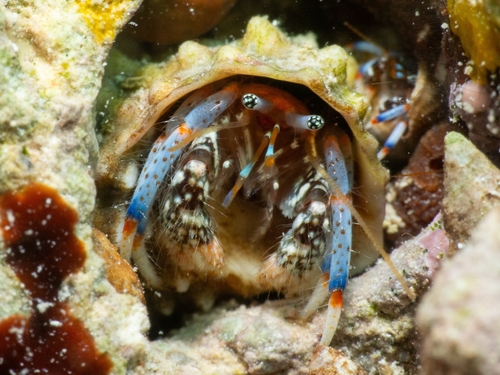
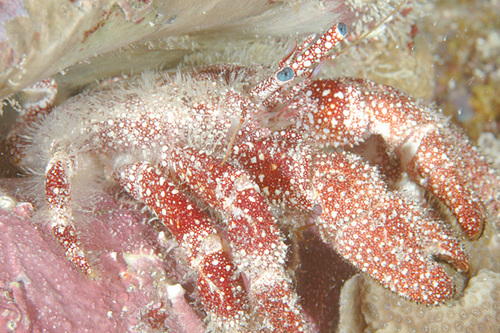
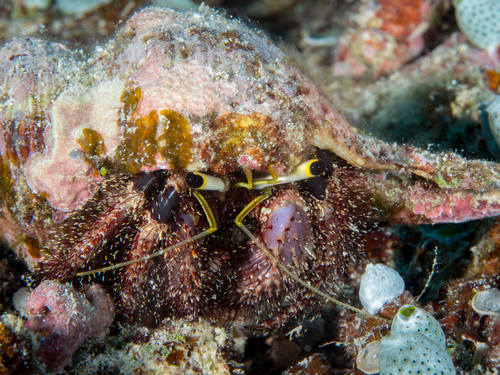
Ciliopagurus strigatus, commonly known as the Halloween hermit crab, is native to the Indo-Pacific region, including the Red Sea and Hawaii. It is most commonly found on coral substrates and sandy areas surrounding reefs in shallow tropical coastal waters less than 50 feet (15 metres) deep; it is not typically found living on top of reefs.
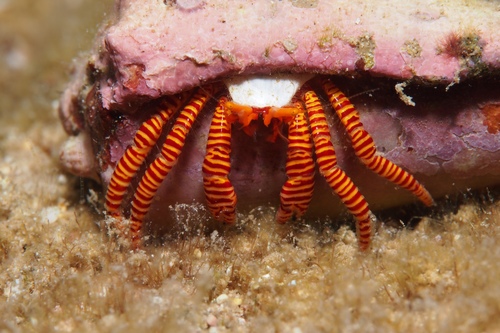
This species looks very similar to three other species in the same genus: C. tricolor, C. vakovako, and C. galzini. It can only be distinguished from these close relatives by the color of its striae. Halloween hermit crabs typically grow to 2 inches (5.1 cm) in length, making them fairly large compared to other hermit crab species. They have a noticeably flattened, pure white shield that measures around 0.315 inches (8 mm) long. This is a nocturnal species, and it has been described as "conspicuous". Halloween hermit crabs live primarily in empty cone shells, mostly those from snails or tritons. Like all other hermit crabs, they wear these shells to protect themselves from predators. Their ocular peduncles and antennae are solid orange, while their antennal flagella are transparent. The propodus has parallel ridges on its palm, with similar ridges present on the dactyls, the movable part of the pincers. A Halloween hermit crab can live for up to 10 years.
Halloween hermit crabs are often kept by aquarium owners, because they have a distinct visual appearance not shared by other aquarium-cleaning crabs. In an aquarium setting, they eat any leftover food that settles along the tank bottom, sift through sand to aerate the aquarium substrate, and are well known for efficiently eating cyanobacteria, unsightly brown bacteria, and filamentous green algae. This species can become aggressive toward other animals in the tank, and may even kill fish and other invertebrates. Offering it meat foods such as clams, mussels, scallops and shrimp alongside various types of vegetation may reduce this aggressive behavior. Overall, Halloween hermit crabs can help support a healthy aquarium environment.