About Ciconia maguari (Gmelin, 1789)
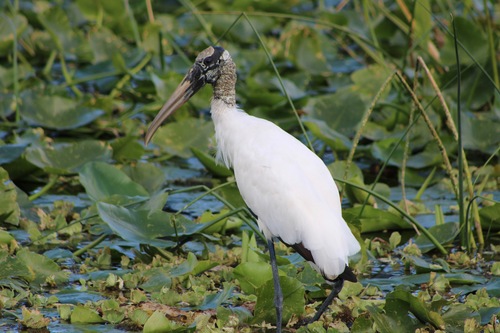
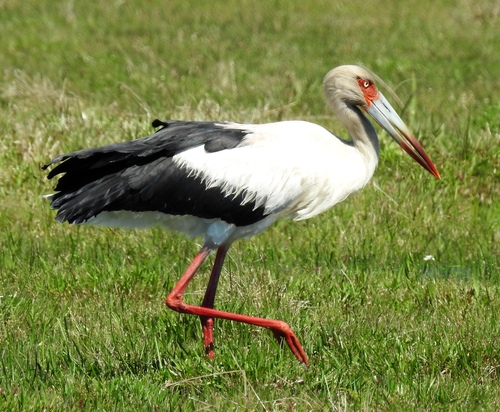
The maguari stork (Ciconia maguari) is a large stork species that lives in seasonal wetlands across most of South America. It is very similar in appearance to the white stork, though it is slightly larger. It is the only species of its genus found in the New World, and is one of just three New World stork species, alongside the wood stork and the jabiru.
The maguari stork has a fairly wide distribution across most of South America, and occurs mainly east of the Andes. Its range includes the Llanos of Venezuela and eastern Colombia, Guyana, eastern Bolivia, Paraguay, Brazil (where it is rare in the Amazon and the northeast), Uruguay, and Argentina. The southernmost point of its range is in Chubut province, Argentina. It occurs much more rarely west of the Andes, for example in Chile, and it probably does not breed there. It is a rare visitor to the Suriname coast from March to May, and has also been recorded as a vagrant on Trinidad and Tobago.
This stork is especially common and widespread in the Chaco of Argentina, which appears to be a common winter destination for flocks of 30 to 40 migrating individuals that come from southern parts of the species' range to find warmer temperatures. It is also common in Brazil, particularly in the state of Rio Grande do Sul, in Paraguay, and in the Pampas of Argentina. It occurs seasonally and is common in the Pantanal, where large numbers migrate from the Parana Basin and Rio Grande do Sul during the wet season. To date, the overall migration patterns of this species across its full range have not been exactly determined.
Its habitat is mostly made up of open lowland and shallow-water wetlands, such as tropical wet savannah grasslands, marshes, mudflats, and flooded fields. It more occasionally visits dry fields, but consistently avoids forested areas. Large groups of maguari storks have been observed in their habitat during the dry season, foraging in shallow bodies of water where prey is concentrated. Where the ranges of these three species overlap, especially in the Venezuelan Llanos, the maguari stork lives alongside the jabiru and wood stork. Among all American stork species, the maguari stork has the smallest geographical range.