About Ciconia abdimii Lichtenstein, 1823
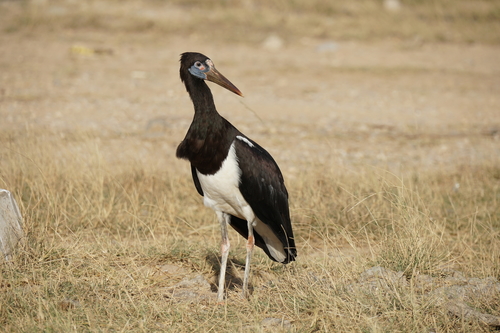
Ciconia abdimii, commonly known as Abdim's stork, is a small stork species with black plumage, grey legs, red knees and feet, a grey bill, and white underparts. In breeding season, it has red facial skin in front of the eye and blue skin near the bill. It is the smallest stork species, reaching 73 cm (29 in) in length and weighing just over 1 kg (2.2 lb). Abdim's stork is widely distributed across open habitats in Sub-Saharan Africa, ranging from the Sahel to South Africa. It is naturally absent from forests, dense woodlands, and deserts, and a smaller population occurs in Yemen. This species breeds colonially in trees, on cliffs, or on rooftops in the northern half of its range, north of the Equator, during the wet season from May to August. For the rest of the year, it migrates to eastern and southern Africa. Some Abdim's storks have escaped or been deliberately released in Florida, U.S., but there is no evidence that this population breeds, and any persisting individuals likely come from ongoing releases or escapes. Because it is widespread and common across its large range, Abdim's stork is classified as Least Concern on the IUCN Red List of Threatened Species. Several nationally coordinated breeding programs exist for this species: in the United States, the species plan is administered by the Association of Zoos and Aquariums, and in Europe it is administered by the European Association of Zoos and Aquaria.