About Cichla temensis Humboldt, 1821
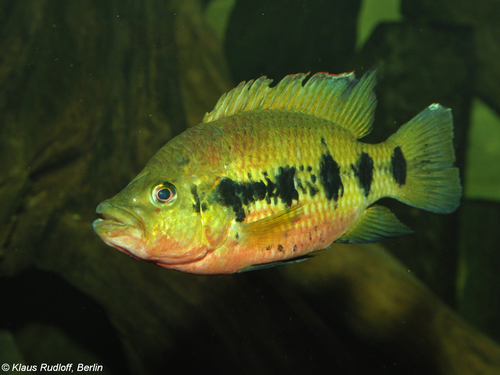
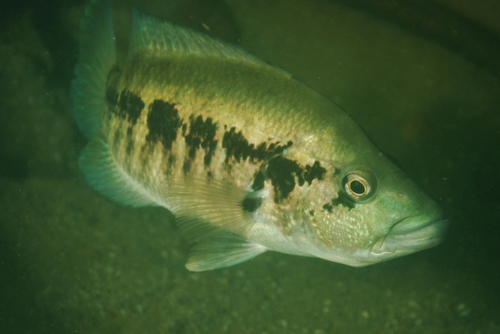
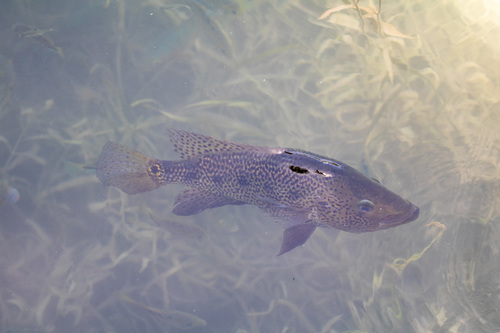
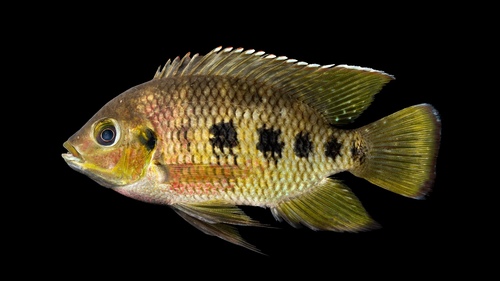
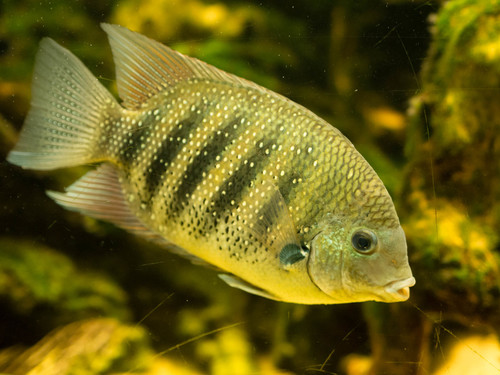
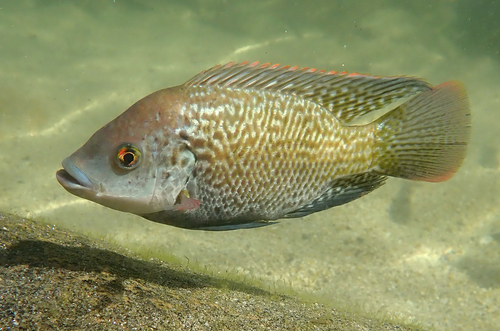
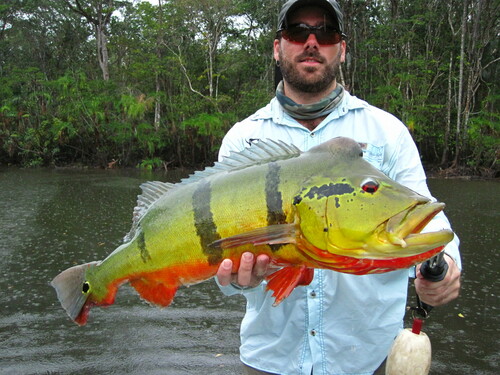
Cichla temensis Humboldt, 1821 resembles other peacock bass species, but typically has a more elongated and slender body shape. It is one of the largest cichlids in the world, reaching a maximum recorded length of 99 centimetres (39 in) and weight of 12.2 kg (27 lb), though the International Game Fish Association has certified a larger record of 28.5 lb (12.9 kilograms). Only the African giant cichlid (Boulengerochromis microlepis) possibly reaches similar body proportions. C. temensis can be distinguished from other Cichla species by its distinct post-orbital band, a dark marking located between the eye and the gill opening; other Cichla species either have irregular blotches in this area or lack any such marking entirely. It shares the closest overall body patterning with C. pinima and C. vazzoleri. Adult C. temensis have highly variable color patterns, which caused taxonomic confusion historically; some authors previously speculated that these variants were separate species, or represented sexual dimorphism. It was not firmly established until 2012 that these differing color morphs are seasonal. Dark individuals with dense, light-hued speckles, called speckled peacock or tucunaré paca, are non-breeding individuals. Breeding adults, called three-barred peacock or tucunaré açu, lose all pale speckles, develop a golden-olive body color that contrasts strongly with dark bars on their flanks, and have a vibrantly colored ventral region. During the breeding season, some males also develop a bulbous forehead called a nuchal hump, which is the only visible difference between the two genders. The 2012 study also identified two additional intermediate morphs, or grades, between the two main seasonal morphs. Morphological and genetic analysis confirmed that these four distinct grades are not caused by sexual dimorphism or regional variation. This pattern variation is greater than the variation observed between individuals of C. orinocensis and C. monoculus. The maximum reported age for this species is 9 years. C. temensis is native to the Orinoco and Rio Negro basins, as well as several smaller rivers in the central Amazon (Uatumã, Preto da Eva, Puraquequara, and Tefé), located in Brazil, Colombia, Venezuela, and Guyana. Attempts have been made to introduce this species outside of its native range. It has not been able to become established in Florida or Texas due to extreme temperatures, but it has successfully flourished in tropical Singapore and Malaysia. Alongside other peacock bass, C. temensis is fished intensively within its native range. Despite the importance of this fishery, the effects of intensive fishing on the species are not well studied. Some authorities consider this fishery the most important inland fishery in South America, and research into distinct population stocks is ongoing. Evidence indicates that hydroelectric dams have both promoted genetic divergence and increased the population size of upstream C. temensis populations, as these peacock bass have adapted to newly inundated regions created by the dams.