About Cicadetta montana (Scopoli, 1772)
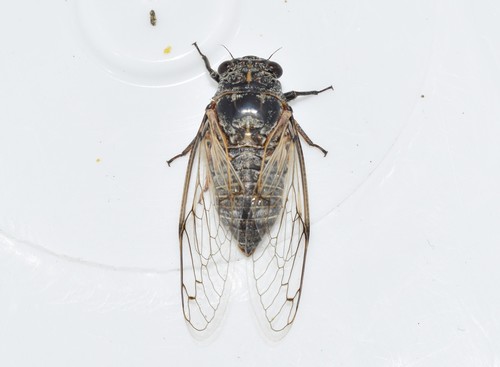
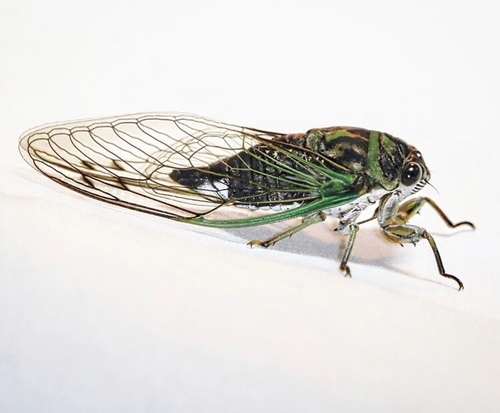
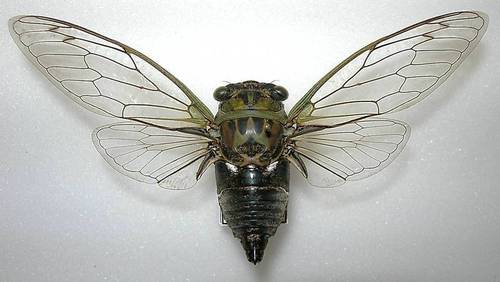
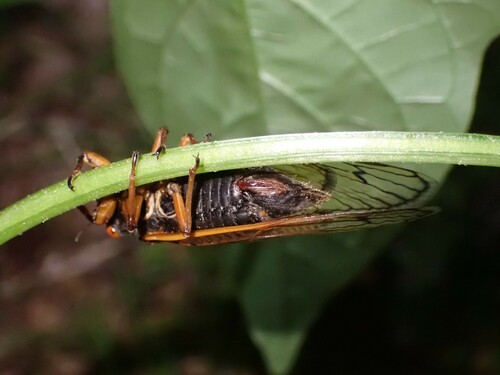
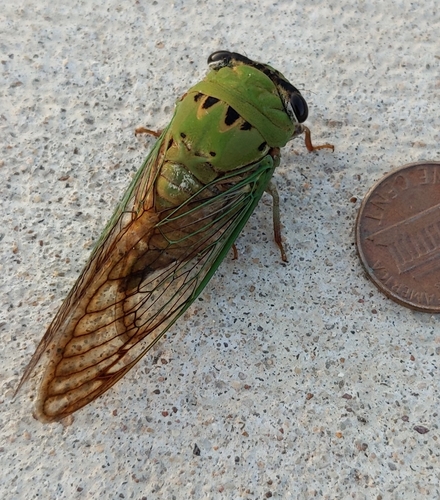
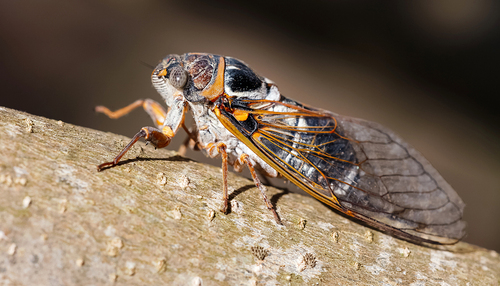
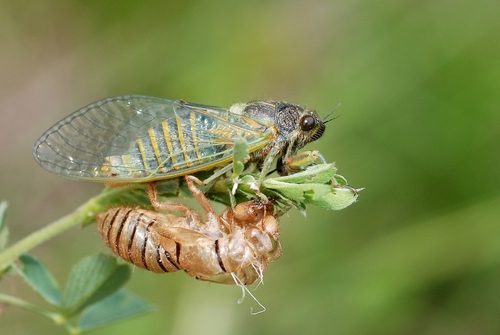
Cicadetta montana (Scopoli, 1772) is a species of cicada found across Europe and in parts of Asia. Across large areas of Europe, this species is endangered, and it has already disappeared from multiple locations in Western Europe. It is the only cicada species that is native to England and Finland, specifically at Åminnefors in Pohja. Adult female Cicadetta montana inject their eggs into the stems of their food plants. When larvae hatch from the eggs, they burrow underground, where nymphs feed on root sap. These underground developmental cycles can last many years, and the length of the cycle differs between cicada species. Female individuals reach a body length of about 50 millimeters, while males are significantly smaller. This species has transparent wings with prominent veins; when the insect is at rest, the wings are folded over its back. Its body is a dark slate-grey or black color, with dull orange rings around the abdomen. The legs and the leading edges of the wings (called costae) are marked with dull orange. Like all cicadas, male Cicadetta montana produce loud, shrill buzzing calls by rapidly flexing drum-like structures called tymbals; females can only produce soft clicking sounds. To the unaided human ear, the call of C. montana sounds like a static hiss, and the call is sustained with relatively short quiet periods at irregular intervals. Documented food plants of Cicadetta montana are: Betula pendula (European white birch), Betula pubescens (downy birch), Corylus avellana (common hazel), Crataegus monogyna (common hawthorn), Fagus sylvatica (European beech), Pteridium aquilinum (northern bracken fern), Quercus robur (pedunculate oak), and Ulex europaeus (common gorse).