About Chrysophyllum oliviforme L.
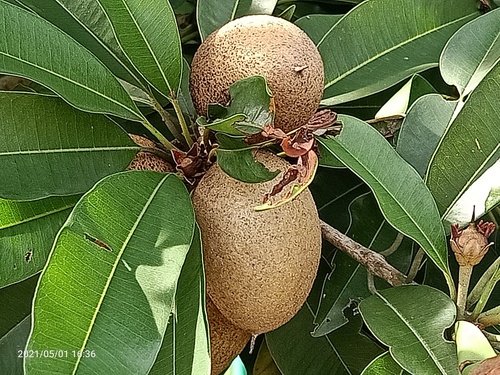
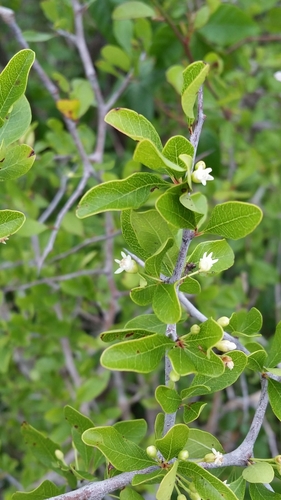
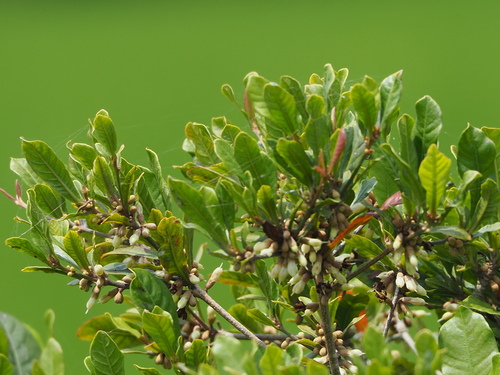
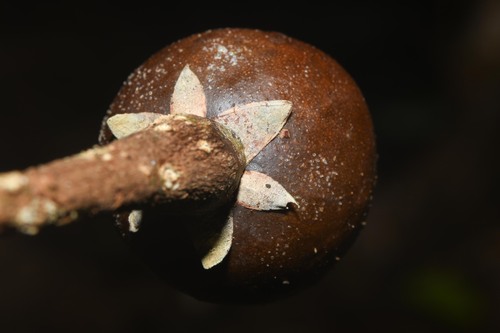
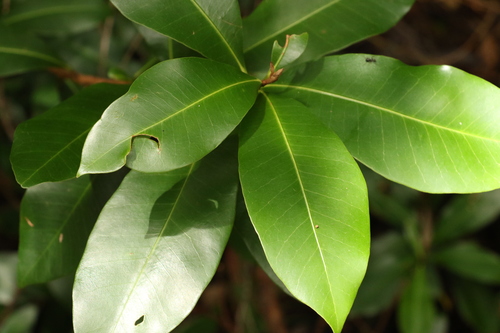
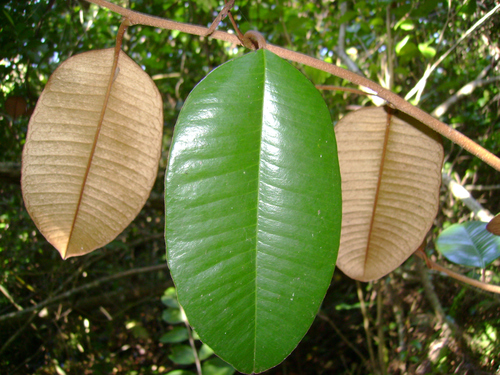
Chrysophyllum oliviforme L. is most commonly a shrub or small tree, typically growing 3 to 5 meters (9.8 to 16.4 feet) tall; under favorable growing conditions, individuals can reach up to 10 meters (33 feet) in height. Trunks are usually around 30 centimeters (12 inches) in diameter, and most plants have a single trunk. The bark is thin, gray-brown, and marked with fissures and plates. Thin brown twigs are produced, and branches droop slightly as the tree matures. Its leaves are evergreen, simple, and alternate, with pinnate venation. The upper leaf surface is shiny dark green, while the lower surface is light brown. Leaves are ovate, ranging from 3 to 11 centimeters (1.2 to 4.3 inches) long and 2 to 5 centimeters (0.79 to 1.97 inches) wide, and are retained year-round. Flowering occurs year-round in some regions such as Florida, while in others including Puerto Rico, flowering only happens between July and October, with mature fruit produced by February. The small flowers are creamy yellow, with 5 petals and 5 stamens, and are arranged in fasciculate inflorescences. Ripe fruit are dark purple, with a gum-like outer skin surrounding white inner flesh, are similar in size to olives, and contain several black seeds. The fruit are edible, though they have a very chewy texture. This species is native to Florida, the Bahamas, the Greater Antilles, and Belize. It is widely planted as a decorative tree in many tropical countries. It has become naturalized in French Polynesia and has been declared invasive in Hawaii, where cultivation is currently discouraged, though no specific funded removal programs are in place. It is adapted to warm tropical climates, and does not tolerate cold, suffering severe damage at temperatures below 0 °C. In Florida, wild populations of Chrysophyllum oliviforme are listed as endangered, though many cultivated ornamental plants persist in south Florida. It can grow in a wide range of soil types, including clay, sand, and loam, and tolerates both alkaline and acidic conditions, as well as both well-drained and moist soils. In Puerto Rico it grows in sand and shallow clay, while in Florida it occurs naturally in pinelands and hammocks. It grows well in low elevation moist secondary forests. It has low to moderate salt tolerance, moderate drought tolerance, and tolerates a soil pH between 5 and 8. The edible fruit are typically eaten fresh. The wood of Chrysophyllum oliviforme is hard, heavy, and strong, and is used in construction. Though difficult to carve, it is well-suited for uses like fence posts, rafters, and other applications requiring a strong beam. It is also planted as an ornamental tree for yards, sidewalks, and other public spaces.