About Chrysomya rufifacies (Macquart, 1844)
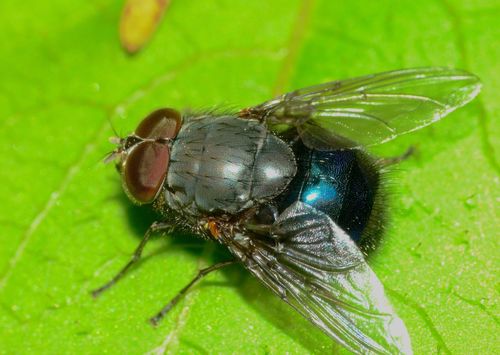
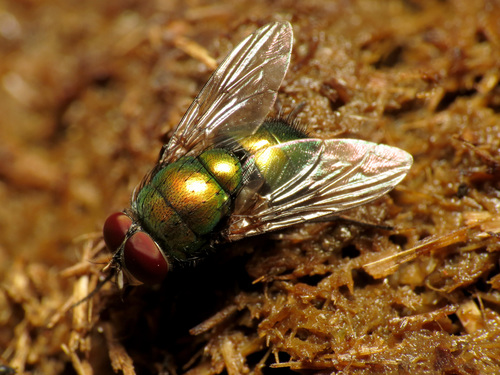
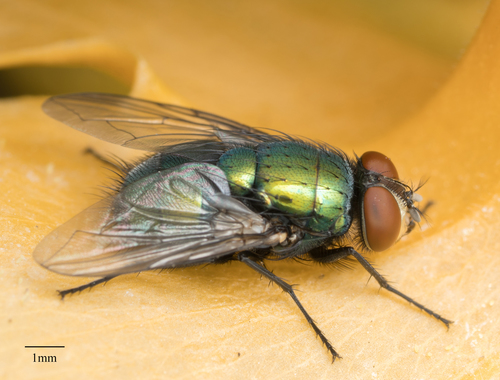
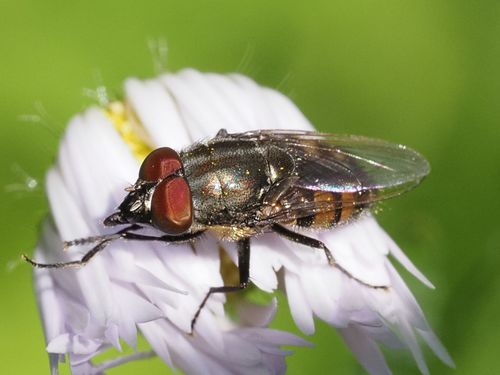
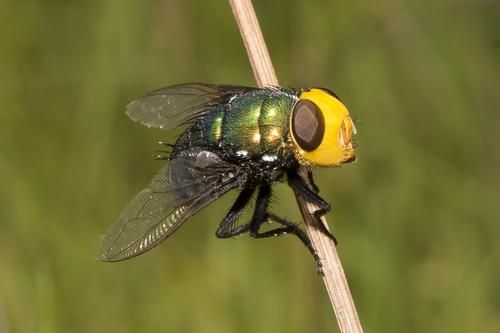
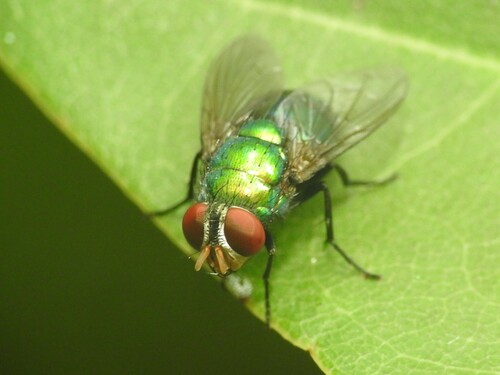
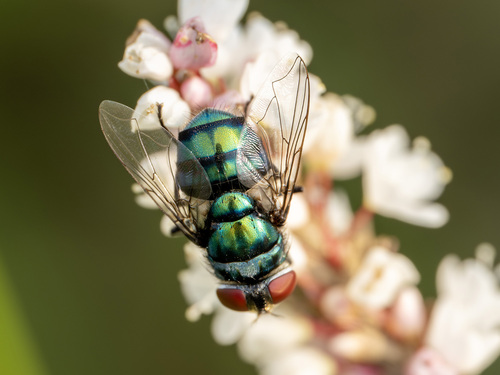
Chrysomya rufifacies (Macquart, 1844), commonly called the hairy maggot blow fly, is a species of blow fly in the family Calliphoridae, genus Chrysomya. Genus Chrysomya is generally known as Old World screwworms, and also includes two other myiasis-causing species: Chrysomya putoria and Chrysomya bezziana. This species is most important to forensic entomology, where it is used to establish or adjust post mortem intervals. It has a greenish metallic appearance, prefers warm weather, has a relatively short lifecycle, is geographically widespread, and favors colonizing large carcasses over small ones. It is significant to medicine, economics, and forensic science. C. rufifacies can occupy a wide range of human habitats. It is native to Australia, and has recently undergone major distribution expansion. This wide spread is the result of both natural dispersal and human transportation via airplanes, boats, and automobiles. Its recorded altitudinal range extends from sea level to either 1,250 m, 1,400 m, or 2,100 m. The species was first recorded in the continental United States in the 1980s, and is now permanently established in Southern California, Arizona, Texas, Louisiana, and Florida. It is predicted that the species will eventually spread across most of the United States in the near future. Due to its rapid spread, C. rufifacies has become the dominant blow fly species found on human cadavers in north and central Florida, while C. megacephala remains dominant in southern Florida. Medically, C. rufifacies has been successfully used in maggot therapy to treat osteomyelitis, a microbial bone infection. Because C. rufifacies is attracted to feces, fruits, meats, and refuse, it can enter human homes and act as a vector for enteric pathogens in countries including India and Australia. Bacillus bacteria, roundworms, and pinworms have all been recovered from the alimentary canal and feces of this species. Late instar C. rufifacies larvae are medically beneficial, acting as predators of maggots from pathogen-transmitting and myiasis-producing fly species, so they can be used as effective and beneficial biological control agents. However, documented strains from Australia, India, and Hawaii have larvae that can cause harmful secondary myiasis.