About Chrysomus ruficapillus (Vieillot, 1819)
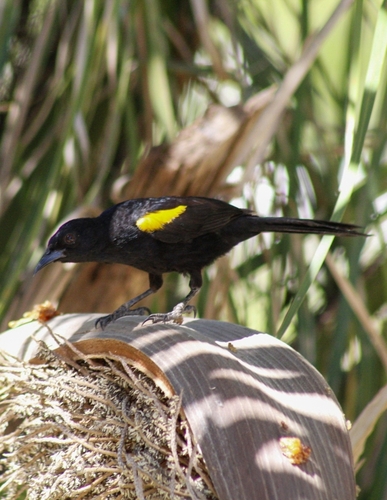
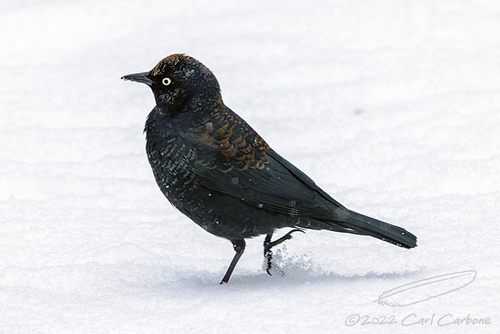
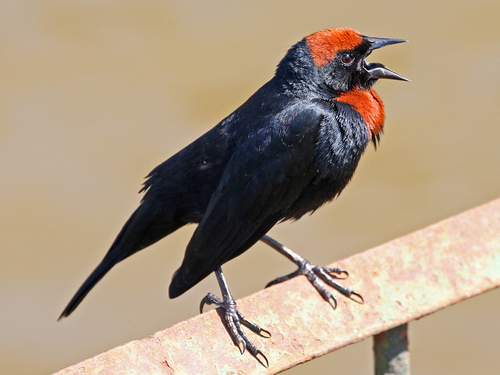
The chestnut-capped blackbird, scientific name Chrysomus ruficapillus (Vieillot, 1819), is a sexually dimorphic species. It has a straight, dark-coloured beak with a sharp tip, and dark legs. Breeding males have a chestnut-coloured head and throat, and are glossy black across the rest of their bodies; males from the southern portion of the species' range have darker heads than males from the north. Females have dark olive-brown upper plumage that is lightly streaked with black, and paler olive-brown under plumage. The streaking on the back of the chestnut-capped blackbird is less distinct than that found on other species in the same genus. The species produces a variety of vocalizations including trills and whistles; its full song is a lengthy sequence that sounds like "chree-chree-churrr". The chestnut-capped blackbird is distributed across the tropical and semi-tropical eastern region of South America, at altitudes up to 1,000 metres (3,300 ft). Its range covers most of the Amazon Basin, and extends from northern Brazil to northern Argentina. It inhabits areas near water, including marshes, adjacent grassland, and rice fields.