About Chrysococcyx osculans (Gould, 1847)
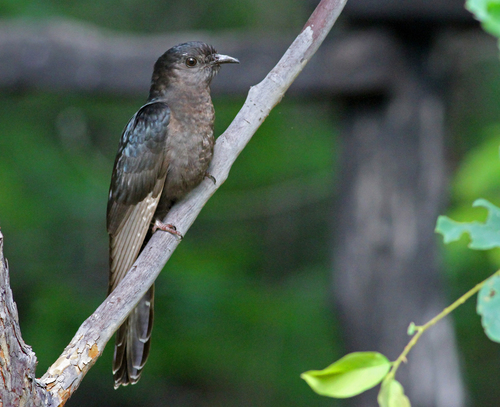
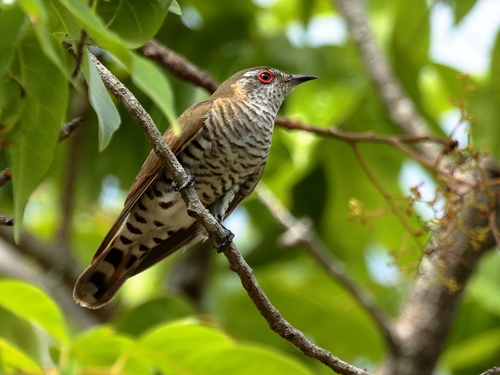
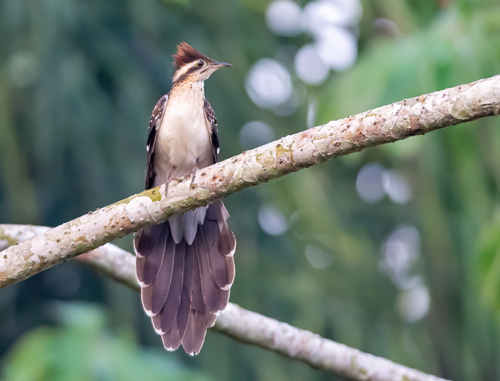
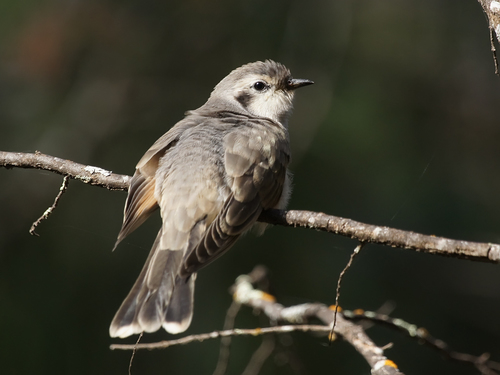
Chrysococcyx osculans (Gould, 1847) is a small cuckoo species native to Australia. Adult individuals have an average weight of 30 grams (1.1 oz) and a body length of 19 to 20 cm (7.5 to 7.9 in). Adults have a dull greyish-brown back marked by a distinctive black eye-stripe that runs from the bill to the neck. The rump is pale white, and the breast area is pale salmon in colour. The feet, legs, eyes, and bill are all black or brown, with brown eyes. The upper surface of the tail is grey-brown with white tips, while the underside of the tail is cream with brownish bars. What sets this species apart from other small cuckoos in Australia is the lack of metallic-coloured feathers on its back. Juveniles have duller overall colouration, and their eye-stripe is more brown than black. This species is common across most areas of Australia, except for wet coastal forested regions. In Victoria, New South Wales, and Queensland, it occurs primarily inland of the Great Dividing Range. Vagrants have been recorded in Tasmania. It breeds in southern Australia, south of the 23rd parallel south. Some birds remain in southern Australia over winter, while many migrate to northern Australia and further north into Indonesia and Papua New Guinea. It inhabits dry open forests, scrublands, mallee, mulga, lignum, saltbush, and riverside thickets. It prefers to fly directly between low trees and shrubs rather than large trees, and it is rare in subhumid areas. It feeds on beetles, diptera, hemiptera, other insects, sandflies, and has been observed eating hairy caterpillars. Most of its food is gathered from the ground, though it also forages in trees and shrubs.