About Chrysococcyx minutillus Gould, 1859
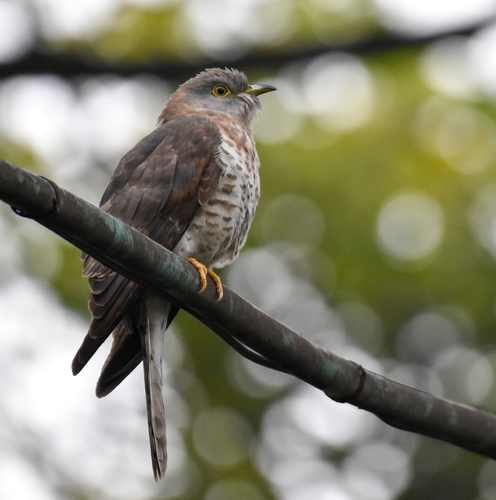
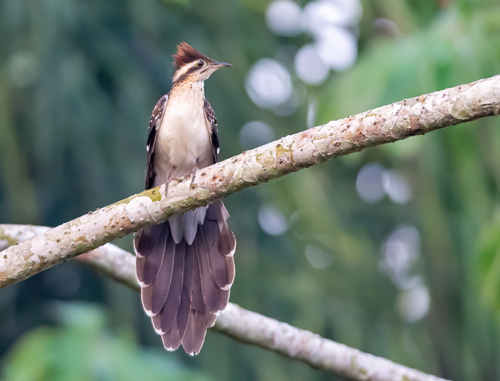
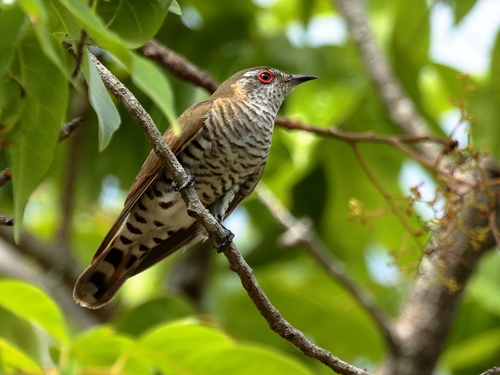
Chrysococcyx minutillus (the little bronze cuckoo) is the world’s smallest cuckoo. Adult individuals measure 15–16 centimeters (5.9–6.3 inches) in length and weigh 14.5–17.0 grams (0.51–0.60 ounces); females are slightly larger than males, and the species has an approximate generation length of three years. This cuckoo is defined by bronze-green upperparts, white underparts marked with dark barring, and a unique white spot behind the eye. It has a slender body and long tail that enable it to move quickly through dense vegetation, and its flight is direct with gentle undulation. Males can be most easily told apart from females by their red orbital ring; juvenile little bronze cuckoos are far duller in color and may lack mottling on their flanks. The little bronze cuckoo looks similar to the shining bronze cuckoo, Horsfield's bronze cuckoo, rufous-throated bronze cuckoo, pied bronze cuckoo, violet cuckoo, banded bay cuckoo, and juvenile brush cuckoos. The little bronze cuckoo is distributed across Southeast Asia, New Guinea, and northern and eastern Australia. It generally prefers open woodlands, forest edges, and scrub areas with dense vegetation, and it also lives near human settlements including villages and gardens. Specific habitat preferences vary by geographic location: on the Thai-Malay Peninsula it occupies forest edges, mangrove lowlands, scrub, and gardens; on Java it occupies mangroves and monsoon vine forests; in Australia it occupies densely vegetated areas, mangroves, monsoon forest edges, areas near wetlands, and forests; in South-East Queensland and North-East New South Wales it occupies forest edges and forests; in New Guinea it occupies forests and woodlands including eucalyptus, sclerophyll, and paperbark stands. Most members of the species are found below 500 meters in elevation, though exceptions occur across the range, and the species has been recorded at elevations as high as 2000 meters.