About Chrysobalanus icaco L.
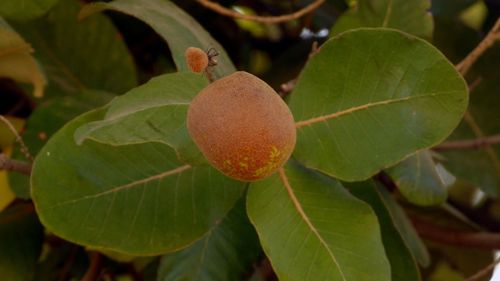
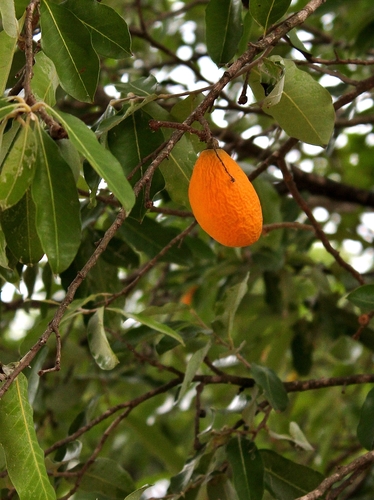
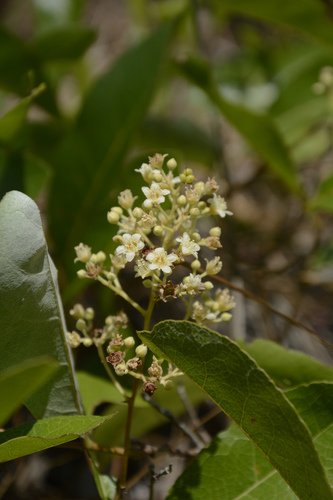
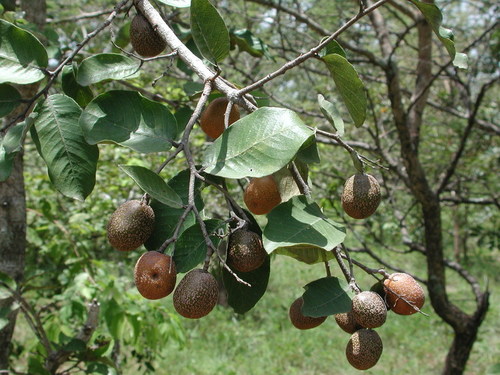
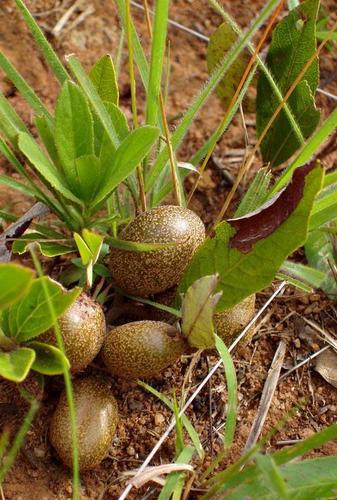
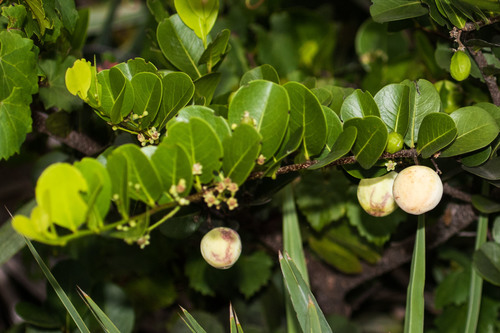
Chrysobalanus icaco L. typically grows as a 1–3 metre tall shrub, or a 2–6 metre tall bushy tree; it rarely reaches 10 metres in height. It produces evergreen leaves that are broadly oval to nearly round, somewhat leathery, 3 to 10 cm long and 2.5 to 7 cm wide. Leaf color ranges from green to light red. The bark is greyish or reddish brown, marked with white specks. Its clustered flowers are small and greenish-white; they appear intermittently throughout the year, with the heaviest bloom in late spring. The fruit that develops after flowering is a drupe that varies in form between growth types: the coastal form produces round drupes up to 5 cm in diameter, which can be white, pale-yellow with a rose blush, or dark-purple, while the inland form produces oval drupes up to 2.5 cm long, which are always dark-purple. The fruit is edible, with a flavor ranging from nearly tasteless to mildly sweet, and is sometimes used to make jam. It contains a five- or six-ridged brown stone that holds an edible white seed. In Barbados, Trinidad and Tobago, and Guyana, this fruit is commonly called "fat pork". In West Africa, the ground, dried kernel of the seed is used as a spice called by multiple local names including gbafilo, itsekiri, umilo, emilo, and omilo, and is included in West African Pepper Soup Mix. Chrysobalanus icaco cannot survive hard frost. It is planted as an ornamental shrub in subtropical regions, valued for its attractive appearance, easily manageable size, tolerance of shallow and variable soils (including soils as alkaline as pH 8.4), and tolerance of partial shade. Several cultivars of the species are available: 'Red Tip' is an inland ecotype and the most commonly planted cultivar in Florida, where it is often used for hedges. It is an accidental selection distinguished by pink new growth. 'Green Tip' is another inland cultivar that has green new growth. 'Horizontal' is a coastal ecotype that tends to root wherever its creeping branches touch the ground, forming expanding clumps over time that help stabilize soil. Combined with the coastal ecotype's high salt tolerance, this growth habit makes it suitable for planting to stabilize beach edges and prevent erosion. In some parts of its native range, Chrysobalanus icaco is used in traditional medicine. Scientific studies have found that the leaf extract of the species has hypoglycemic, antioxidant, antifungal, and other pharmacological properties.