About Chrysiptera rex (Snyder, 1909)
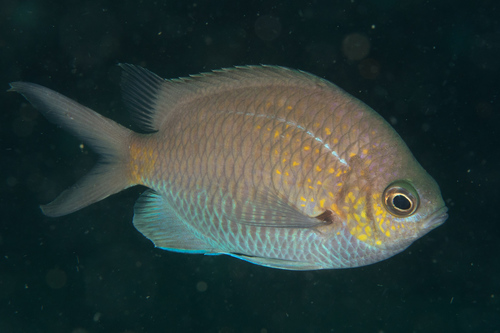
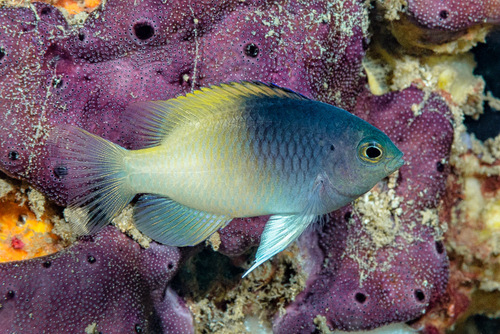
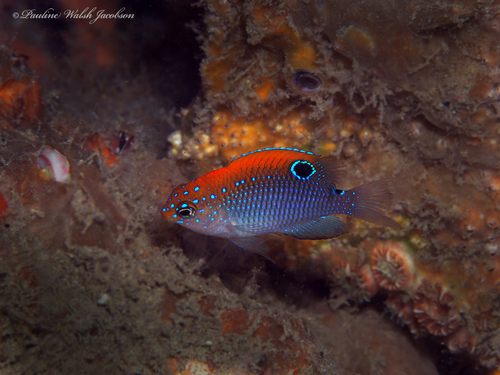
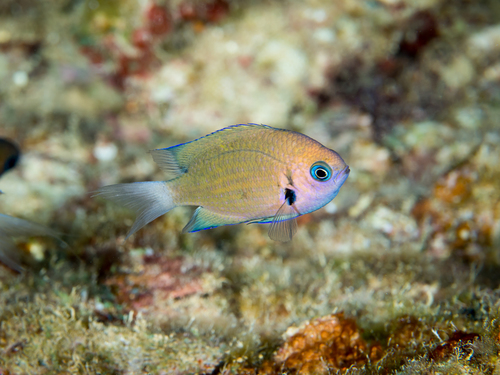
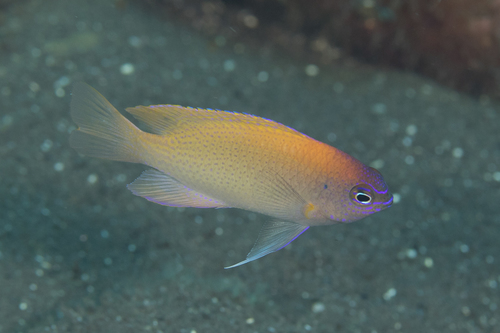
Chrysiptera rex, commonly called the king demoiselle or pink demoiselle, is a damselfish species belonging to the family Pomacentridae. It is native to reef habitats in the eastern Indian Ocean and western Pacific, and grows to a maximum length of 7 centimetres (2.8 inches). It holds commercial importance in the aquarium trade. This small reef fish was first described by Snyder in 1909, originally named Abudefduf rex, from a type specimen collected at Naha, Okinawa Island, Ryukyu Islands, Japan. The coloration of Chrysiptera rex varies greatly based on where the individual is from. Specimens from the Palau region have a whitish body with a bluish head, while individuals from other locations usually have a greyish head, with the rest of the body and fins ranging from yellowish to pinkish-orange. This pink to apricot base color is often marked with small purple spots and lines on the darker face of the fish. The species reaches a maximum total size of 6 to 7 centimeters. King demoiselles live on coastal to outer reef crests, at depths between 1 and 20 meters (around 3 to 70 feet). They prefer lagoons and sheltered reefs, and especially favor shallow sand and coral patches near reef edges; they are abundant in these habitats in northwest Australia. The species has a broad distribution across the tropical Indo-Pacific, stretching from the eastern Indian Ocean to the Philippines, Palau, Indonesia, New Guinea, New Britain, and Solomon Islands, extending north to southern Japan and south to New Caledonia and the Great Barrier Reef. Chrysiptera rex is oviparous, and forms distinct breeding pairs during mating. Its eggs are demersal, meaning they adhere to the substrate, and males are responsible for guarding and aerating the eggs.