About Chrysaora quinquecirrha (Desor, 1848)
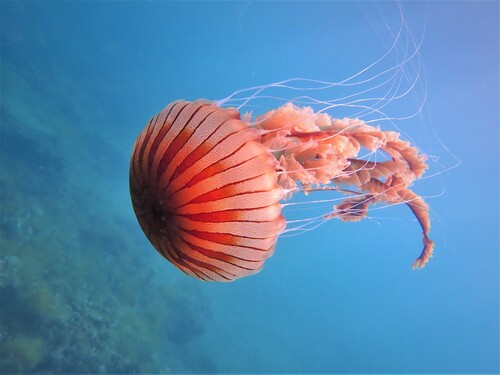
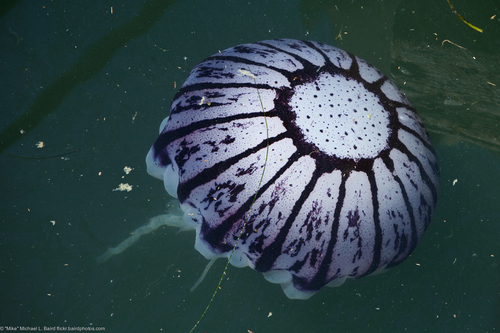
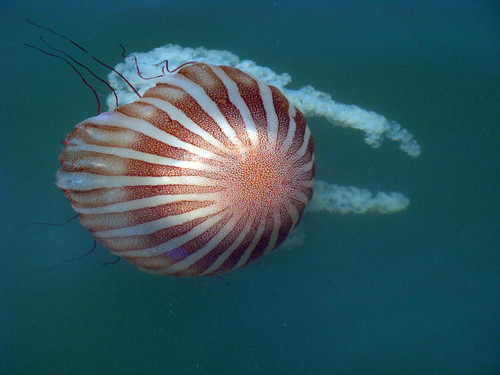
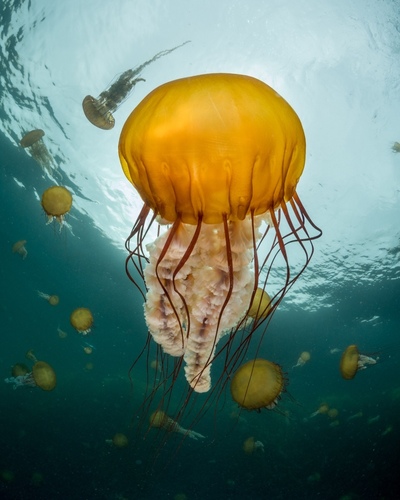
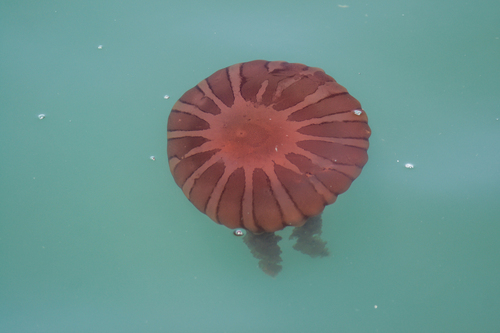
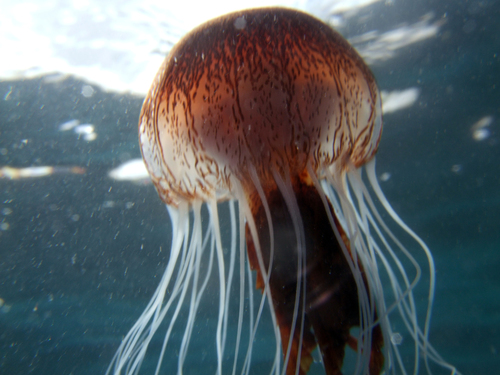
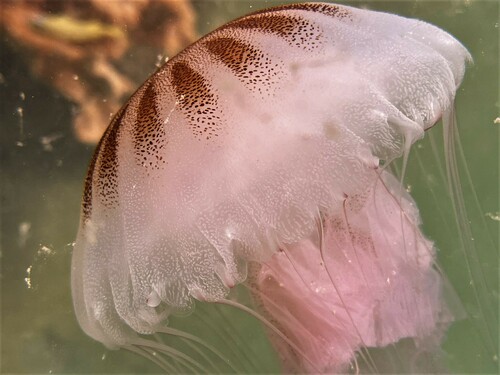
The medusae of Chrysaora quinquecirrha reach up to 40 cm (16 inches) in diameter. This species, commonly called the Atlantic sea nettle, is a radially symmetrical, marine carnivore. Its mouth sits at the center of one end of the body, and opens into a gastrovascular cavity used for digestion. Tentacles surrounding the mouth function to capture food. Atlantic sea nettles do not have excretory or respiratory organs. Individuals of this species alternate between two life stages: a free-swimming, sexually reproducing medusa stage, and an asexually reproducing polyp stage. The Atlantic sea nettle is a bell-shaped invertebrate, typically semi-transparent with small white dots and reddish-brown stripes. Sea nettles that lack stripes have a white or opaque bell. The sting of this species is rated moderate to severe. It is noxious to smaller prey, and while it cannot cause human death except through an allergic reaction, it can produce moderate discomfort in people who are stung. Misting vinegar over the sting site effectively neutralizes the sting, by preventing unfired nematocysts from activating and increasing discomfort.