About Chrysaora plocamia (Lesson, 1830)
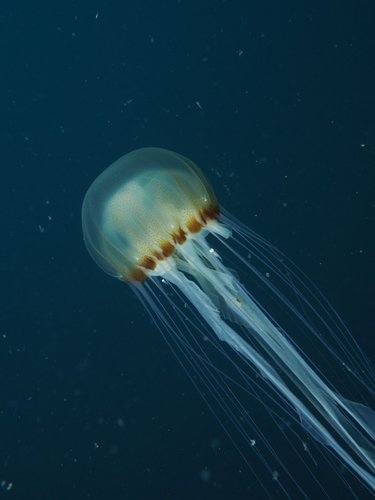
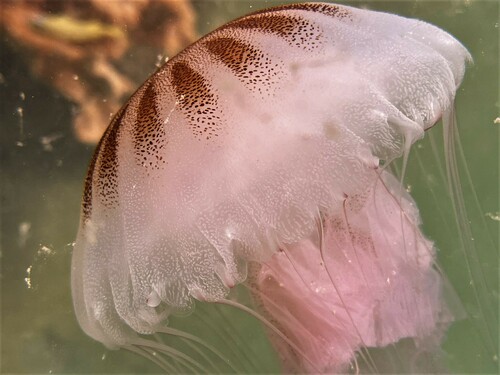
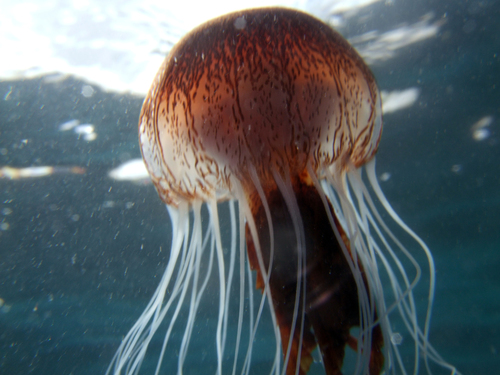
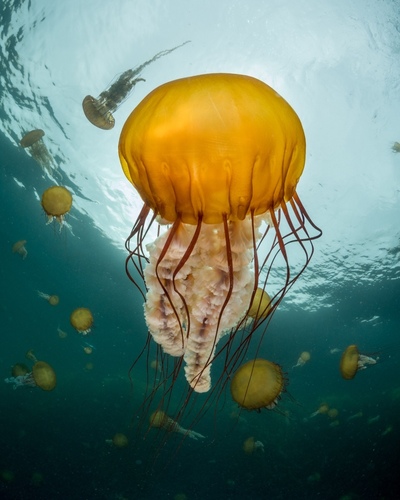
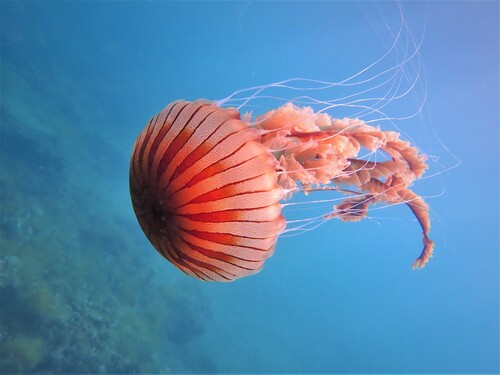
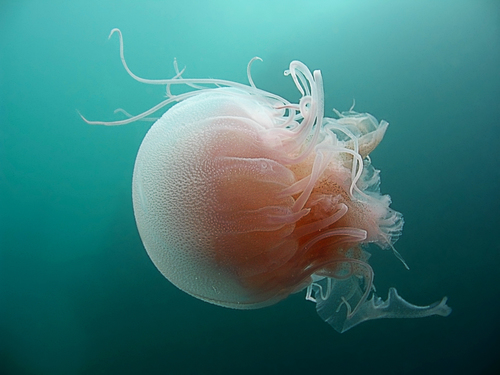
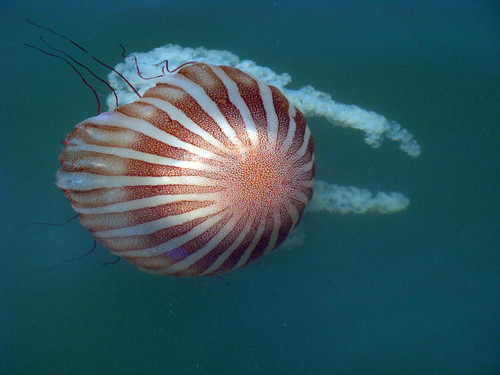
Chrysaora plocamia, a species of sea nettle jellyfish in the phylum Cnidaria, gets its common name from a sting that feels similar to a bee sting or a nettle bush sting. Its genus name comes from Chrysaor, the son of the Greek god Poseidon. The specific epithet plocamia derives from the Ancient Greek word plókamos, which translates to "tress" or "braid of hair". Commonly called the South American Sea Nettle, this species is recognized by its red-brown bell, long spiraling arms, and thin outer tentacles. These outer tentacles surround inner tentacles that typically have a white, fluffy appearance. The bell can reach a maximum diameter of nearly 30 inches, and the trailing arms can grow to between 12 and 15 feet in length. Like other sea nettles, C. plocamia feeds on any prey it can catch and kill with its stinging cells. This jellyfish may form a parasitic relationship with crab larvae, which use the jellyfish for food and shelter. C. plocamia populations have grown in recent years, a change that may be caused by climate change and major shifts to affected ecosystems. As scyphozoans, C. plocamia undergo both asexual and sexual reproduction. During the benthic polyp stage found on the seafloor, polyps reproduce asexually through a cnidarian-specific process called strobilation, which produces ephyrae that later develop into adult medusae. Strobilation is considered an important indicator of upcoming jellyfish population blooms. For C. plocamia, a single polyp can produce between 3 and 10 ephyrae, and the full strobilation process takes approximately 7 to 10 days to complete. C. plocamia also reproduces sexually, and only adult medusae carry out sexual reproduction. Research indicates that the South American Sea Nettle reproduces sexually in the same way as its close relatives, such as the Pacific Sea Nettle C. fuscescens. During sexual reproduction, female medusae capture free-drifting sperm from the water to fertilize the eggs they have released. Sexual reproduction produces offspring with greater genetic diversity than asexual reproduction.