About Chrysaora chesapeakei (Papenfuss, 1936)
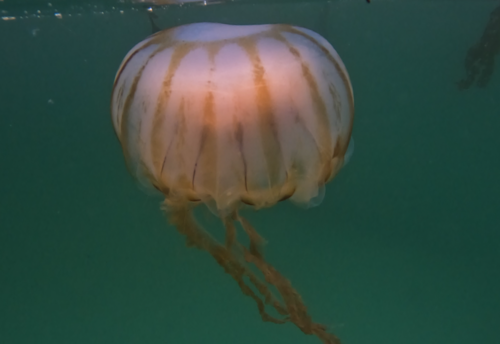
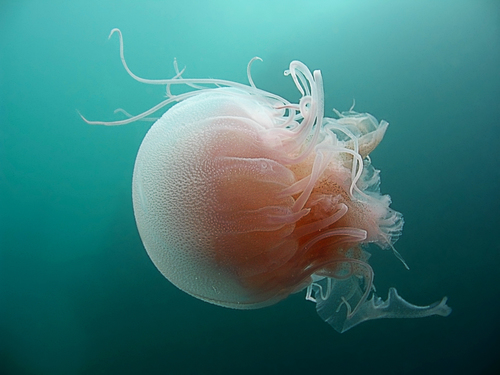
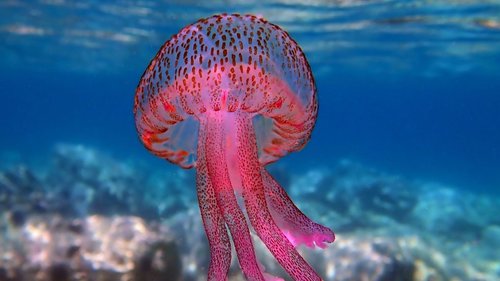
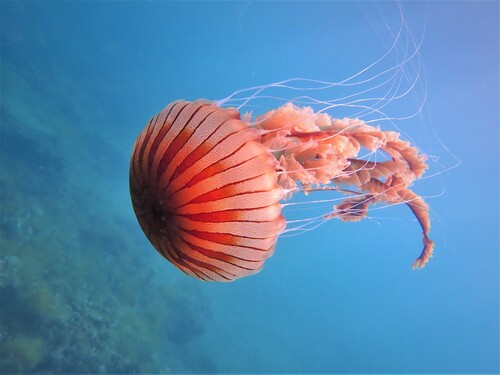
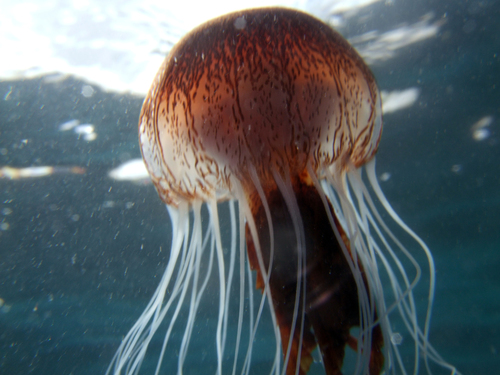
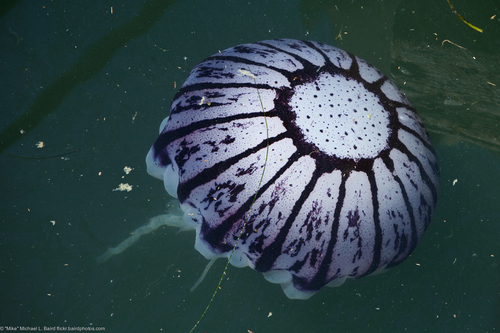
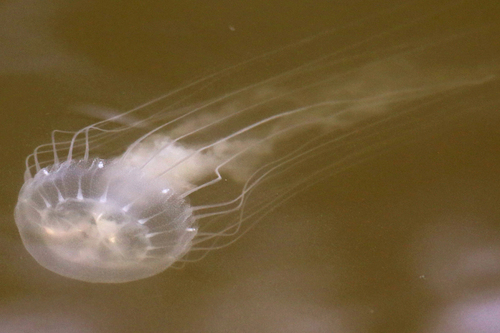
Like other sea nettle species, Chrysaora chesapeakei has a centrally located mouth surrounded by oral arms, a vaguely saucer-shaped bell, and typically four long, lacy oral arms that hang down from the bell. It usually has around twenty-four tentacles, which contain a toxin that can sting and cause pain to humans. This toxin is not strong enough to be fatal to humans, unless the sting triggers an allergic reaction. In 2017, C. chesapeakei was split from Chrysaora quinquecirrha and recognized as a separate species, based on both genetic and morphological differences. Compared to C. quinquecirrha, C. chesapeakei has an average bell size that is half as small, usually around 10 centimeters (3.9 inches), it also has fewer tentacles and longer oral arms. C. chesapeakei lives in several different water types, including the open ocean, brackish water, bays, and estuaries. It is most common in Chesapeake Bay, which is the source of its species name, and it can also be found in many bays and estuaries along the U.S. East Coast, and even in the Gulf of Mexico.