About Chrotopterus auritus (Peters, 1856)
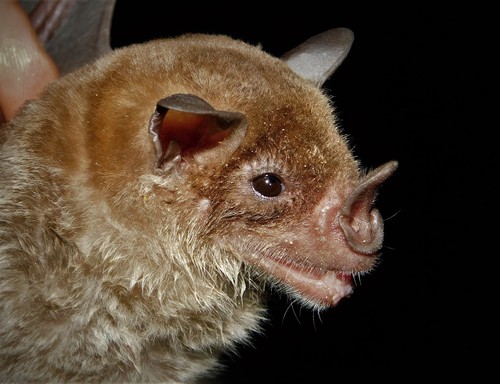
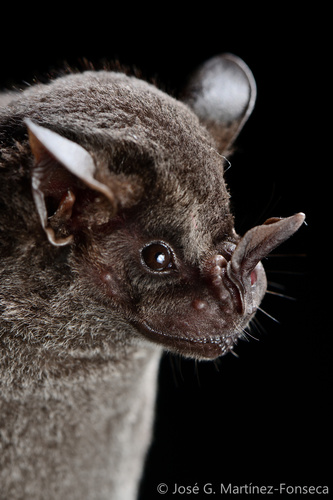
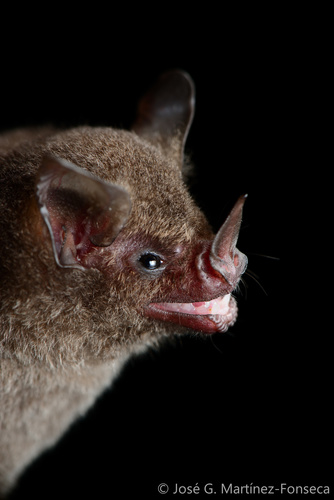
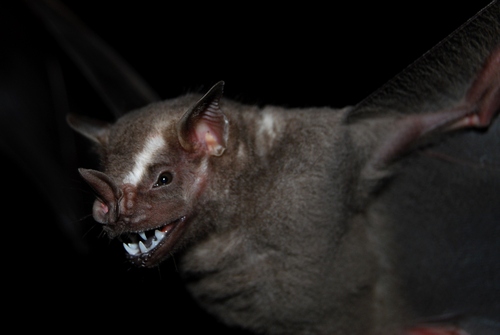
Big-eared woolly bats, scientifically named Chrotopterus auritus (Peters, 1856), are very large predatory bats, and the second largest bat species found in the Neotropics. Their body mass typically ranges from 75 to 96 grams (2.6 to 3.4 oz), and their forearm length ranges from 79 to 83 millimetres (3.1 to 3.3 in). Only three other New World phyllostomid bats reach a comparable size. Their dorsal hair reaches about 12 millimetres (0.47 in) long, which is longer than the dorsal hair of most phyllostomid species. They also have two lower incisors, a trait that is typically shared with smaller bat species. Big-eared woolly bats live in warm subtropical forests, and usually roost in caves and hollow logs. They return prey to these roosts before eating it. Geographically, they are found in southern Mexico, and their range extends through northeastern South America to as far south as northern Argentina. They are typically found in areas that also host many other bat species. Big-eared woolly bats give birth to a single young per reproduction cycle, after a gestation period of more than 100 days. This represents the largest parental investment documented for any species in the Phyllostomid family. Newborn pups are born at roughly 32.5% of the mother’s body size, while other species in the Phyllostomid family produce newborns that range from 18.6% to 29.4% of the mother’s size.