About Chremistica ochracea (Walker, 1850)
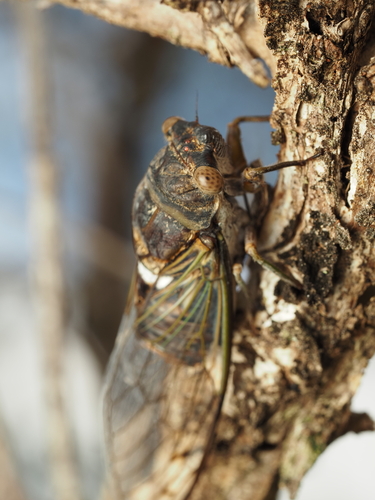
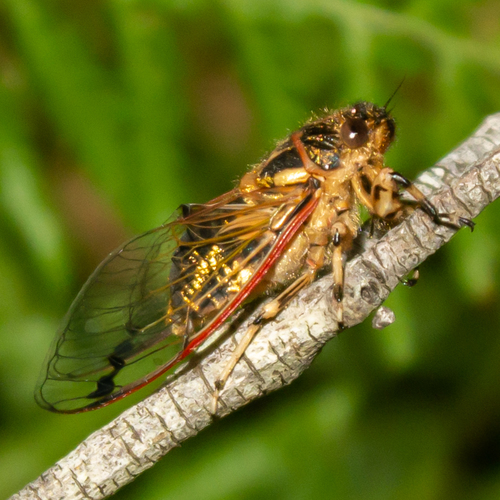
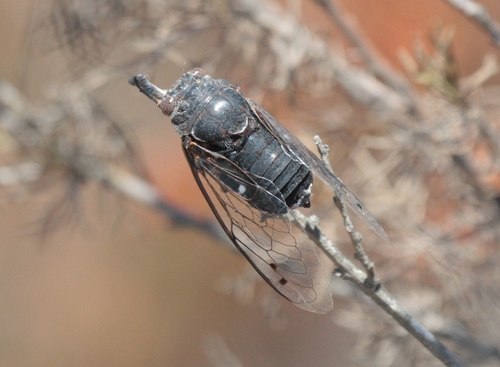
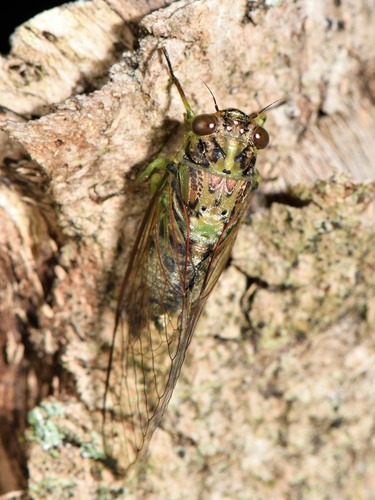
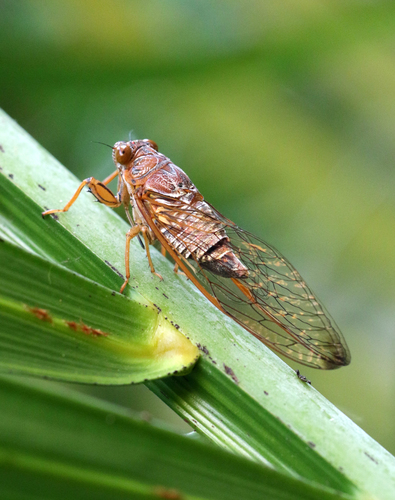
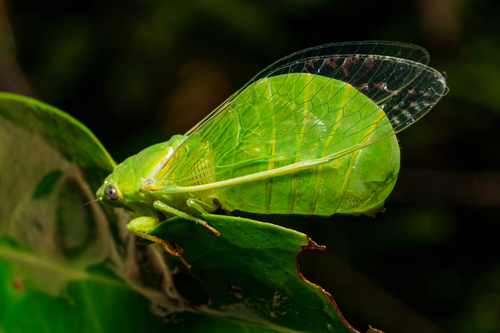
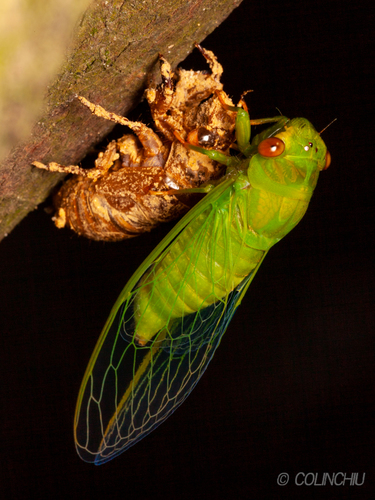
Chremistica ochracea (Walker, 1850) shares the general characteristics of the genus Chremistica, which was originally diagnosed by Stål in 1870. Members of this genus have small to medium-sized eyes that are very prominent laterally and set widely apart on a triangular head, with the frontoclypeus prominently projecting anteriorly. The tymbal is completely covered by a tymbal covering. On the abdomen, the 8th tergite is much longer in median length than the 7th tergite. The foreleg femurs bear two large spines, with several additional small spines on the ventral surface of the forelegs. Male opercula are elongated, overlap one another, and do not extend past the posterior margin of the third abdominal sternum. In most individuals, the apex of the operculum is broadly rounded, which is clearly visible to the naked eye. The body of this species may be colored light green, earthy red, or yellow (ochreous). A transverse black fascia runs along the anterior margin of the head, and there are black markings around the margin of each ocellus, adjacent to the castaneous eyes. The ventral side has a white powdery or scaly coating (pollinosity) over a base color of pale ochreous or pale green. Like most other cicadas, the wings are translucent and glassy (hyaline), with no dark markings or discoloration (infuscation). Full adult (imago) body length reaches up to 31 mm (1.2 in) for males and 24.4 mm (0.96 in) for females. Total body length reaches up to 45 mm (1.8 in) for males and 43 mm (1.7 in) for females. The genus Chremistica is placed in the tribe Tibicenini, alongside the genera Tibicen Latreille, Cryptotympana Stål, Anapsaltoda Ashton, and Neopsaltoda Distant. According to entomologist Hayashi (1987), all genera in Tibicenini share shared sound-production traits, external morphology, and male genitalia, which supports classifying the tribe as a monophyletic group. Chremistica ochracea is placed in the pontianaka species group based on shared external morphology and male genitalia characteristics. Researchers have concluded that members of the pontianaka group lack arc-shaped lateral clasper lobes, while their medial and lateral clasper lobes are well developed compared to those of other cicada species.