About Chortophaga viridifasciata (De Geer, 1773)
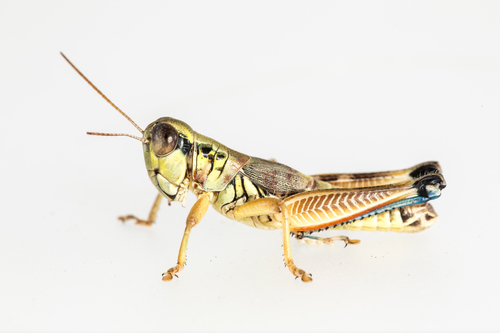
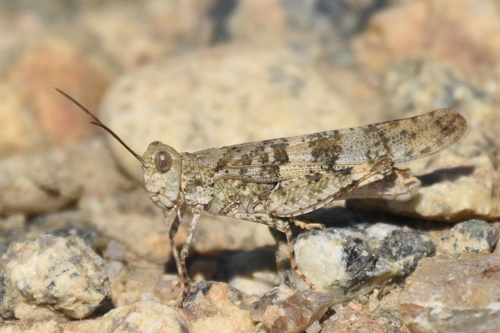
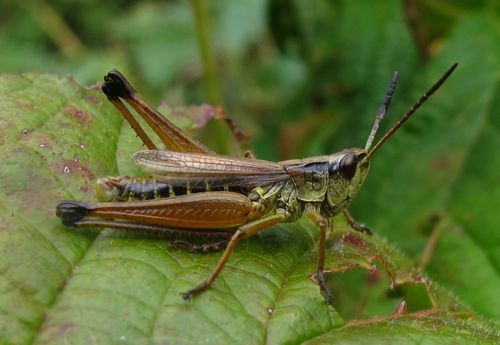
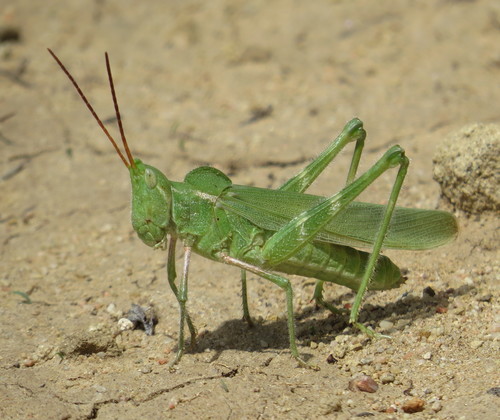
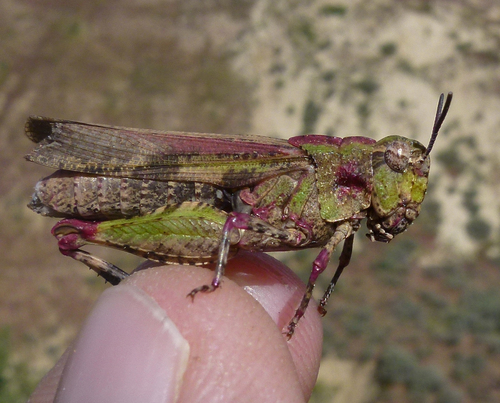
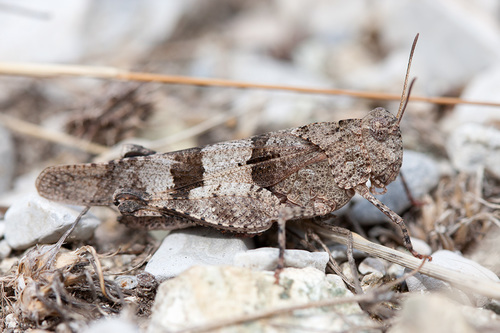
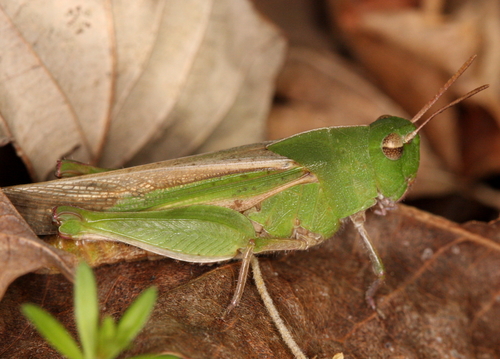
Chortophaga viridifasciata (De Geer, 1773), commonly called the green-striped grasshopper, has a size range of 23 to 30 mm for males and 28 to 38 mm for females. While females are typically green and males are typically brown, both sexes show color variation. This species occurs in Central America and North America, with a range extending from British Columbia to the Gulf of Mexico, mostly east of the Rocky Mountains, and reaching south to Costa Rica. Green-striped grasshoppers live in relatively moist short-grass areas, including roadsides and hay meadows. The species is single-brooded in the northern part of its range and west of the Great Plains, but multiple-brooded in the Southeast. In the single-brooded portion of its range, green-striped grasshoppers lay eggs early in the summer, and these eggs hatch later the same summer. Nymphs molt three to four times before winter, survive the winter, then molt one or two more times to reach adulthood. Because of this overwintering nymph stage, C. viridifasciata is often the first grasshopper to appear in early spring. Green-striped grasshoppers typically go through five instars during their development.