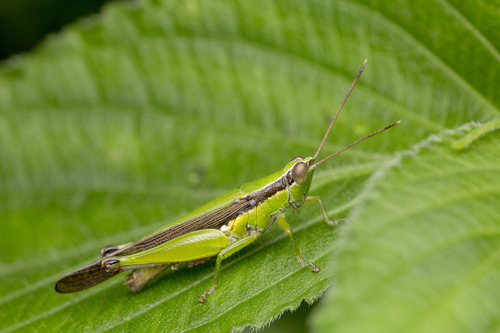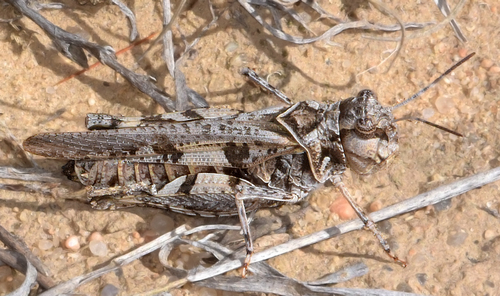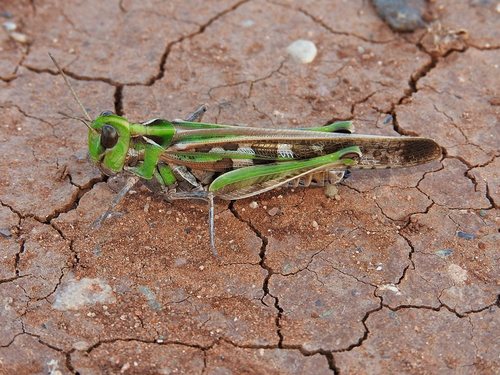
About Chortoicetes terminifera (Walker, 1870)
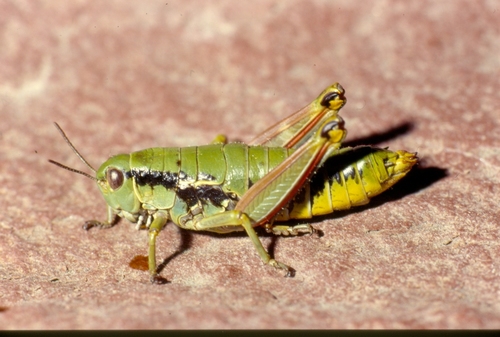
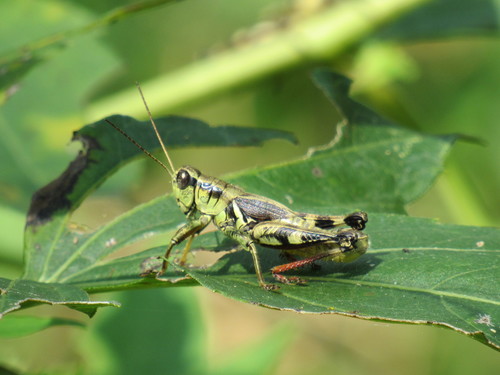
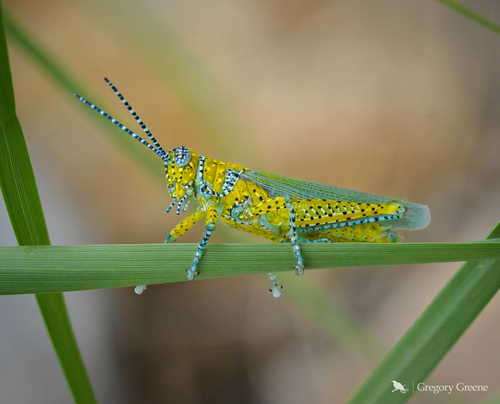
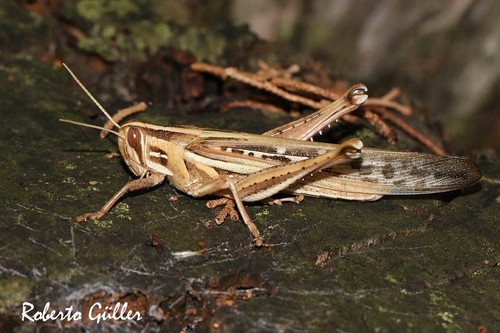
Chortoicetes terminifera (Walker, 1870), commonly known as the Australian plague locust, is the most commercially important locust species in Australia. Adult Australian plague locusts measure 20 to 45 mm in length, and their body colour ranges from brown to green. Viewed in profile, the head is taller than the thorax, and the thorax bears a distinct X-shaped mark. The shank segment of the legs is reddish, and the wings are clear except for a dark spot on their outer edge. This locust is naturally native to far northwestern New South Wales, the adjacent border areas of Queensland and South Australia, and Western Australia. Populations occasionally expand outward from these core ranges into agricultural regions of South Australia, New South Wales including the Riverina, and Victoria. Across inland areas of the Australian mainland, it occupies a wide variety of grassland and open woodland habitats. Upper-level winds may occasionally carry individual locusts to mainland coastal areas and northern Tasmania, and can allow temporary populations to become established in the eastern valleys of the Great Dividing Range; these introduced populations usually do not persist for more than a few generations. Climate change is projected to alter the spatial patterns of this species' pest outbreaks, as it is a primary limiting factor for locust dispersal. When large swarms invade, they cause extensive widespread damage to agricultural crops and pastures. The life cycle of the Australian plague locust is closely tied to rain events in warm weather. Adult locusts that feed on new green shoots that emerge within 24 to 48 hours after rain will mature sexually, and lay eggs within 5 to 7 days of the rain event. Locusts use their ovipositors to drill holes in soil, where they deposit eggs in grouped pods. Each egg pod holds 30 to 50 eggs, and a single locust will lay two or three pods spaced 5 to 10 days apart. Egg laying often occurs in large communal events, with up to one million eggs laid per hectare of suitable soil. When conditions are favourable—warm and moist—eggs take approximately two weeks to complete development. After hatching, nymphs complete their development in around 20 to 25 days during mid-summer. The species has five nymphal instar stages, and wings grow more prominent after each moult. After the first and second instars, nymphs form dense aggregations called bands; these bands typically disperse by the time nymphs reach the fifth instar. Late-instar nymph bands can travel up to 500 metres per day. In drier regions, bands are large and dense enough to be visible from the air, while bands in agricultural regions tend to be smaller. After the final nymphal moult, which occurs 6 to 8 weeks after eggs are laid, the newly mature adult is called a fledgling. Fledglings go through three distinct developmental stages: a growth stage where the wings strengthen and the exoskeleton hardens, a stage of fat accumulation, and a final stage of oocyte development. Gregarious locust populations form swarms, which recur in central eastern Australia roughly every two to three years. The Australian plague locust is less gregarious than other locust species, and swarms occur across a full continuum of densities from very dense large swarms down to scattered individual adults. Swarms may persist for multiple days, dispersing and reforming as they move with prevailing winds. They can travel up to 20 kilometres per day, and may infest areas as large as 50 square kilometres (19 square miles), though most infestations cover less than 5 square kilometres (1.9 square miles). Over their lifetime, swarms can travel up to 800 kilometres (500 miles), typically moving with hot winds and most often moving in a coastal direction.