About Chorizanthe rigida (Torr.) Torr. & A.Gray
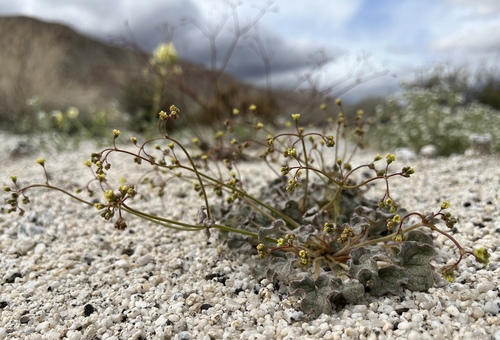
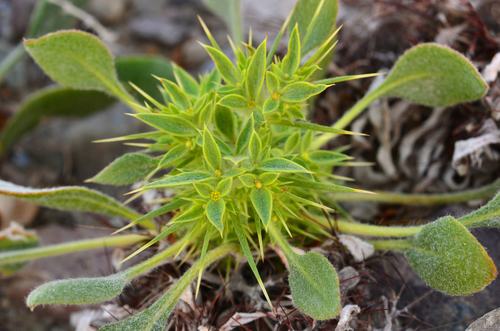
Chorizanthe rigida, also called devil's spineflower or rigid spineflower, is a short, erect annual plant. It may grow with a single stalk, or up to 5 or more multiple stalks, and reaches a height of 2.5 to 6.0 inches (1–2 dm). In the hottest parts of the western Sonoran Desert in southwestern Arizona, it typically grows 2.5 to 5 inches tall and is often not noticed once it dries out. It grows quickly, especially after spring rains. When early summer arrives, it dries out into a spiny skeleton. It has a main taproot that is usually longer than the entire plant is tall, allowing it to access moisture deep in the ground after rainfall. When fresh and actively growing, its bright new green foliage makes it extremely conspicuous against desert surroundings. When desiccated, its spiny skeleton is blackish, dark gray, or medium brown, and blends easily into the colors of the desert ground. This species is a common desert plant native to the Sonoran and Mojave Deserts. It grows in bajadas (washes), flat mesas that flood with annual rains, rocky hillsides, and ridgelines. One example of its local range includes most habitats in the Muggins Mountains Wilderness in southwestern Arizona. On desert flats, the short 3-inch plant can be easily hidden by downstream-washed debris that collects on its dried skeleton, often forming small debris hillocks with the spineflower skeleton at the core. This position may be advantageous for allowing at least a second generation of the plant to germinate in the original location. On flat mesas, the plant can be hidden under clumps of vegetation and go unseen. Along roadsides, its dried skeleton remains as a single erect plant, with taller plants growing in the highest areas that collect water. In the eastern Colorado Desert, the plant can be found in any major wash in mid-spring, after at least moderate winter rains.