About Chordeiles acutipennis (Hermann, 1783)
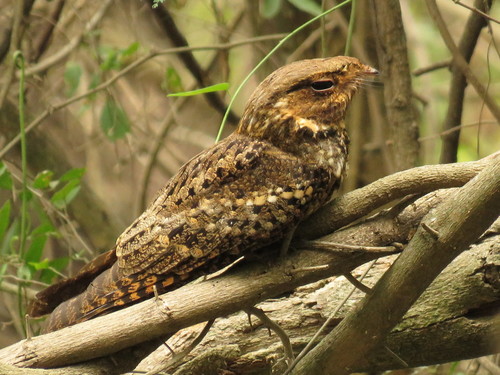
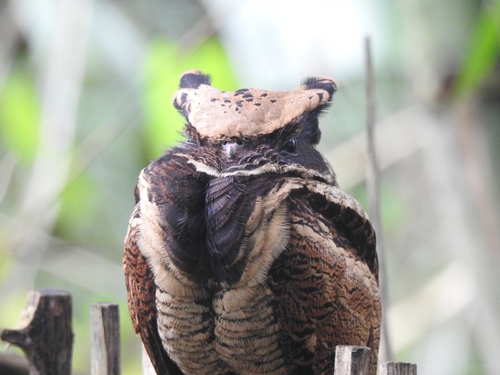
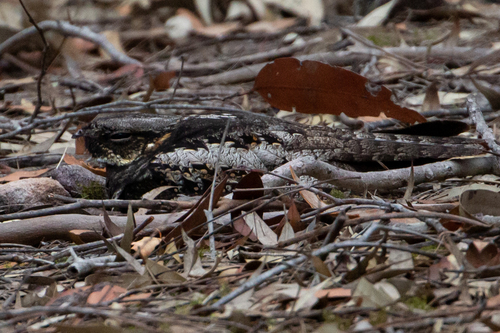
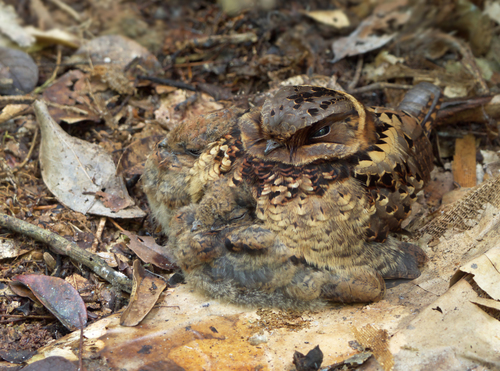
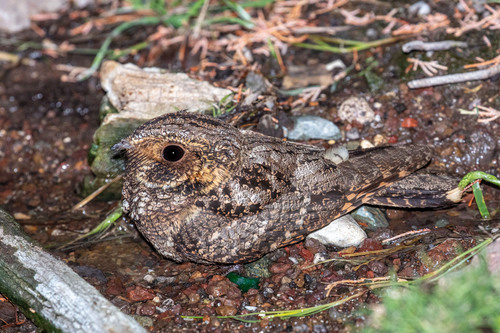
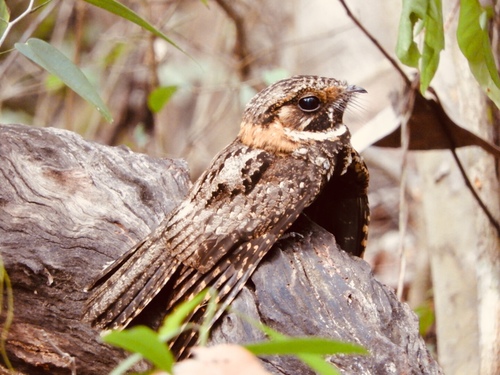
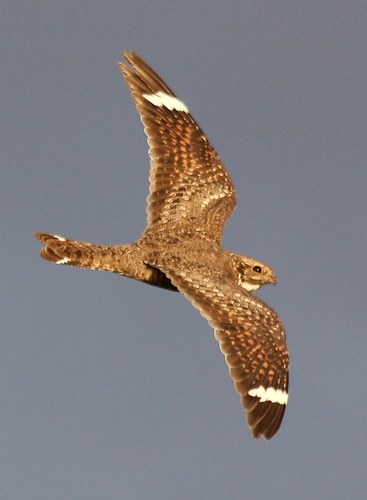
The lesser nighthawk, Chordeiles acutipennis, is characterized by a large mouth and small feet. Its natural brown and gray plumage blends into its surroundings, making it difficult to spot during the daytime when it sleeps. This long-winged, long-tailed species has slight physical differences between males and females. Males have a prominent white bar at the end of the tail and on the wing tips, while females have a paler, cream-colored bar on the wing tips and lack the tail stripe. Both sexes have a white v-shaped mark on the neck. Although its mouth is large, the lesser nighthawk's beak is short and curved. The lesser nighthawk is native to southern North America, where it lives in arid, dry deserts or grasslands. Unlike the common nighthawk, it prefers open, drier habitats at lower elevations. It typically selects habitats that have large swarms of insects, which are its primary food source. It migrates in the fall, and spends winters in southern Central America and northern South America, then returns to the southern United States to breed in spring and summer. During courtship, the male performs an elaborate aerial display, circling the female with his throat puffed out while giving a trilling call. Females do not build nests, and instead lay their eggs directly on the ground. Females rely on their natural camouflage to protect their eggs from potential predators. Because they live in warm desert areas, females cannot leave their eggs in one exposed spot in the heat for too long, so they periodically move their eggs by rolling them into shaded areas. Females lay 2 clay-colored eggs marked with gray-purple spots. The incubation period lasts around 18 days, and the nestling phase lasts 21 days. Both parents feed their young by regurgitating food into the nestlings' mouths. Soon after hatching, nestlings gain mobility, which lets them move short distances if disturbed by predators.