About Choloepus didactylus (Linnaeus, 1758)
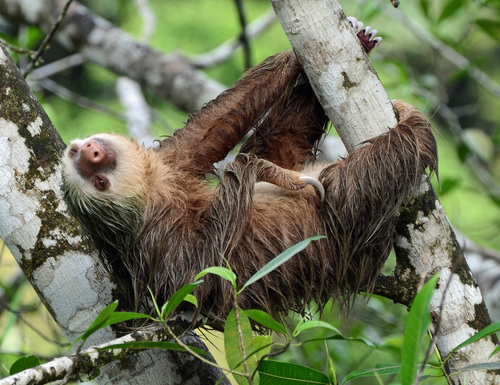
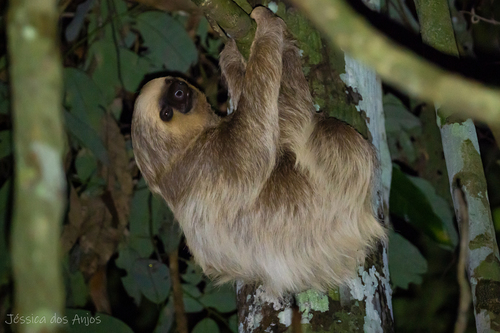
Linnaeus first described Choloepus didactylus in 1758. Adult males and females of this species are the same size. Body length ranges from approximately 53 to 89 cm (21 to 35 in), not counting the tail, and body weight ranges from approximately 4 to 11 kg (9 to 24 lb). Their base fur color spans from brownish yellow to a pale brown. In the wild, algae that grows on their fur during the rainy season sometimes gives their coat a green tint. Their belly fur is slightly lighter than the fur on the rest of their body, and they have no undercoat. Belly hair is parted along the midline and grows towards the animal's back, which is the opposite direction of fur growth in most other mammals. Young sloths have softer, darker fur than adult individuals. Compared to three-toed sloths of the family Bradypodidae, Choloepus didactylus is larger, with longer hair, bigger eyes, and back and front legs that are more equal in length. Their ears, hind feet, and head are generally larger than those of Bradypodidae, but they have a shorter tail. Their shoulder height, measured from the shoulder blade to the tips of the claws, is longer than that of three-toed sloths, which indicates Choloepus didactylus has longer arms. This species has relatively few teeth. It has four to five tooth sets including canines, and lacks incisors. Molars cannot be distinguished from premolars. The teeth are rootless, lack enamel, and consist only of two layers of ever-growing dentin. Supernumerary teeth have been observed occasionally in this species, but this variation has been reported in almost all mammalian orders. Choloepus didactylus is a solitary, nocturnal, arboreal species that lives in rainforests. This two-toed sloth is preyed on by wild cats including ocelots and jaguars, as well as large birds of prey including harpy eagles and crested eagles. Most predation happens when the sloth descends to the ground to defecate or move to a new tree. Anacondas are also known to hunt this sloth. Choloepus didactylus can swim, which allows it to cross rivers and creeks, but this ability may also make it more accessible to predators like the green anaconda. Two-toed sloths of this species inhabit ever-wet tropical rainforests with hot, humid conditions. They tend to occupy areas with abundant vine growth, which lets them travel easily between trees in the forest canopy. They mainly eat leaves, but there is a lack of data on the full extent of their diet, due to their nocturnal lifestyle and effective camouflage. Like other sloth species, C. didactylus has low rates of metabolism, food intake, and defecation, even though it has a relatively large body mass and produces high volumes of methane. It retains digested material for long periods of time, which comes from a combination of its low defecation rate and large digestive system. This long digestion period appears to cause the sloth's high methane production, which is greater than that of most other similar-sized herbivores. These high methane levels may also result from high formate levels in the sloth's digested material.