About Choeradodis rhombicollis Latreille, 1833
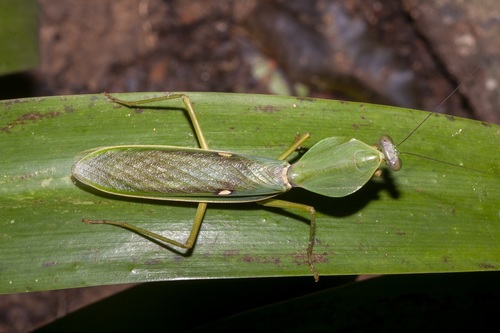
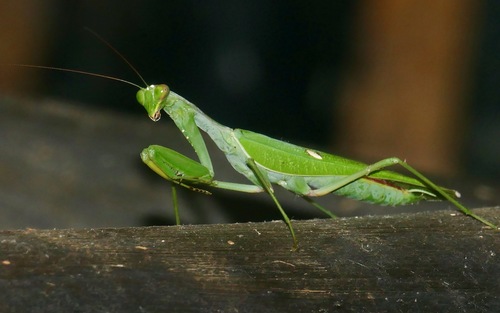
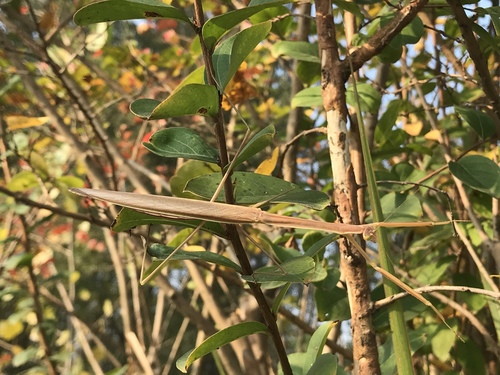
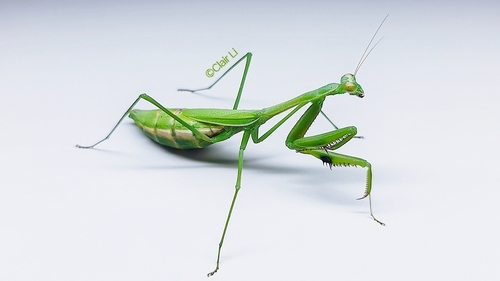
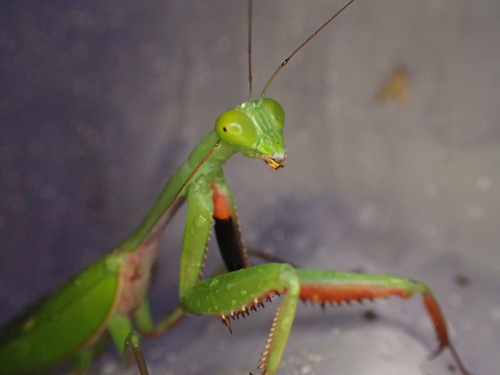
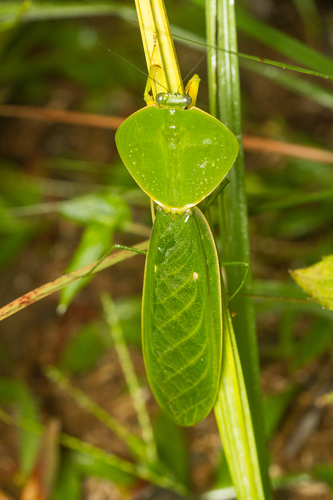
Choeradodis rhombicollis, commonly called the Peruvian shield mantis, is a species of praying mantis. It is native to North America, Central America, and South America, and has been recorded in Belize, Costa Rica, Ecuador, French Guiana, Guatemala, Colombia, Mexico, Nicaragua, Panama, Peru, and Suriname. Epizoites can live on some specimens of this species. C. rhombicollis begins its life hatching from an ootheca that holds 30 to 50 eggs. First-instar nymphs have very slim pronotums, similar to those of typical mantises. As the mantis molts through its life stages, its hood expands gradually, shifting from an initial hexagonal shape into a final shape that is either rhombus or pentagonal, depending on the mantis's sex. Following the wet season, and sometime after September, adult Peruvian shield mantises seek mates, copulate, and lay eggs a few days after mating.