About Chlorurus gibbus (Rüppell, 1829)
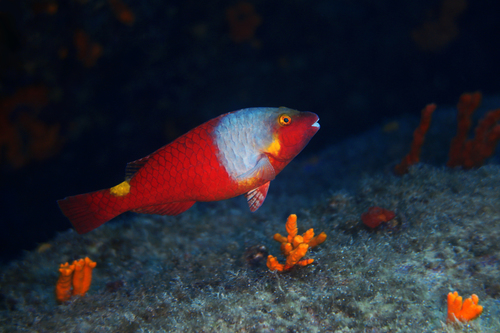
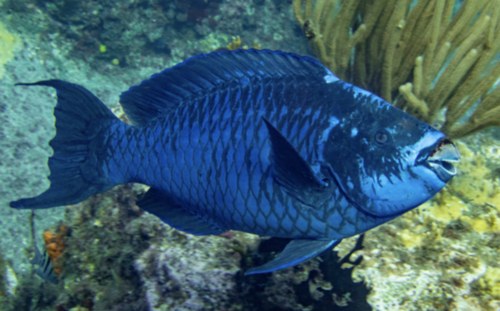
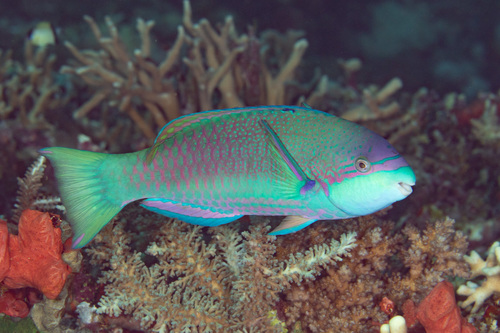
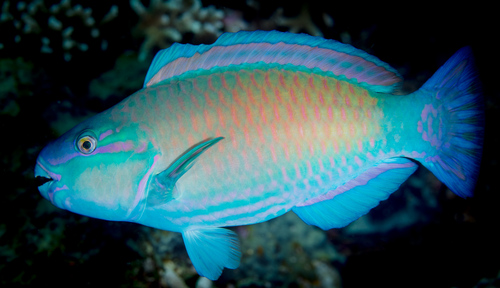
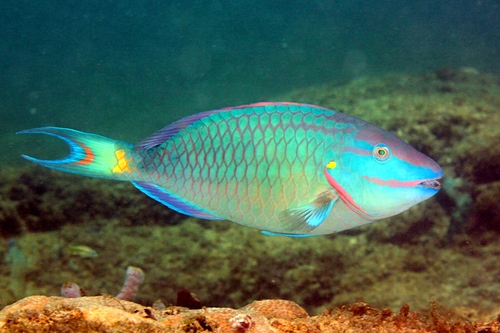
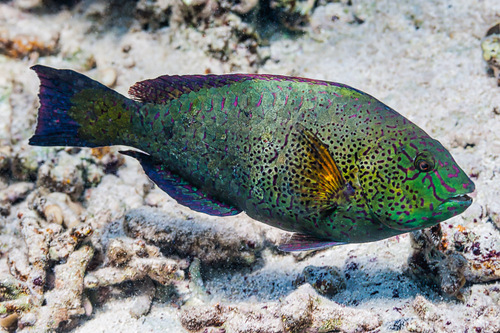
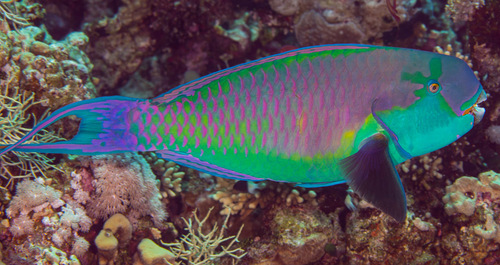
Chlorurus gibbus, formally described by Rüppell in 1829, is a large species of parrotfish. This species can reach a total length of 70 centimetres (28 in) and a weight of 2.2 kilograms (4.9 lb). Solitary juveniles have longitudinal black and white stripes. Adult individuals are blue overall: males have a green and purple sheen, while females have a yellow sheen. Chlorurus gibbus is endemic to the Red Sea and the Gulf of Aqaba. It has not been recorded in the Gulf of Aden, where the closely related species Chlorurus strongylocephalus has been found. A reported sighting of C. gibbus from Socotra requires further verification. This parrotfish lives in shallow reefs and adjacent sandy substrate areas in lagoons and bays, at depths between 2–30 metres (6.6–98.4 ft). Adults form schools that swim over outer reefs with abundant algae growth. They graze on filamentous algae, and have been recorded to live up to 14 years of age. Chlorurus gibbus are protogynous hermaphrodites, with a social structure of harems led by a single dominant male. They are not territorial, and live and feed peacefully alongside other species. Like other parrotfish, their teeth are fused into a powerful beak, which they use to graze on filamentous algae that grows on dead coral; they are often observed feeding within a cloud of sediment stirred up during this activity. This species is oviparous, and spawning occurs in paired males and females. During the night, Chlorurus gibbus creates a protective bag made of mucus and bubbles to defend itself against nocturnal predators.