About Chlorospingus pileatus Salvin, 1865
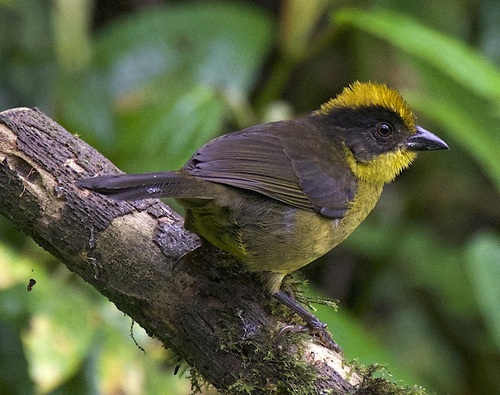
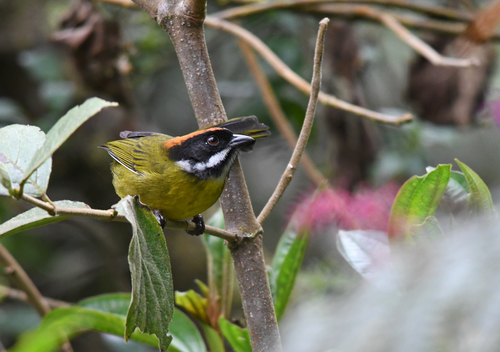
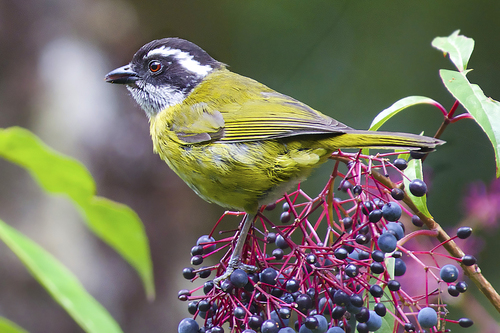
The sooty-capped chlorospingus (Chlorospingus pileatus), also called the sooty-capped bush tanager, is a small passerine bird. It was traditionally classified in the family Thraupidae, but is now considered to be closer to Arremonops in the Passerellidae family. This species is an endemic resident breeder restricted to the highlands of Costa Rica and western Panama. It inhabits mossy mountain forests, second growth, and adjacent bushy clearings, most commonly at altitudes from 1600 meters up to above the timberline. It builds a bulky cup nest, placed on a bank, in a dense bush, or hidden among epiphytes up to 11 meters high in a tree. Its typical clutch contains two pink-brown eggs marked with white. Adult sooty-capped chlorospingus measure 13.5 cm in length and weigh 20 grams. Adults have blackish heads, a white supercilium, and a grey throat. Their upperparts are olive, and their underparts are yellow, turning white on the belly. Some individuals from the Irazu-Turrialba area are overall greyer and lack yellow coloring on their underparts. Immature birds have browner heads, duller underparts, and a duller olive-tinged supercilium. This species can be easily distinguished from the common chlorospingus by its blacker head and prominent supercilium. Sooty-capped chlorospingus occur in small groups, or join mixed-species feeding flocks. They feed on insects, spiders, and small fruits. Their call is a high tseet tseet, and their song is a scratchy seechur seechur see see seechur seechur with individual variations.