About Chlorocebus aethiops (Linnaeus, 1758)
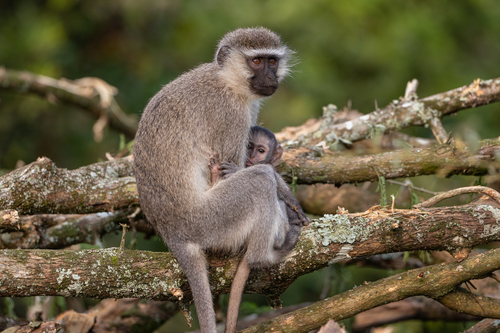
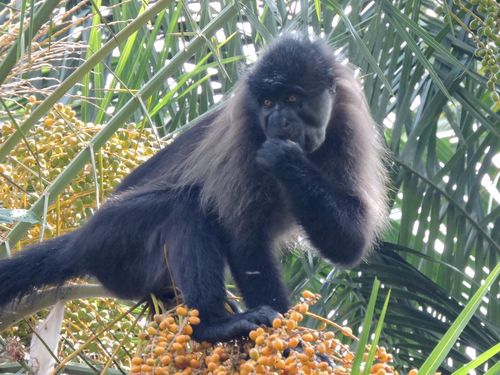
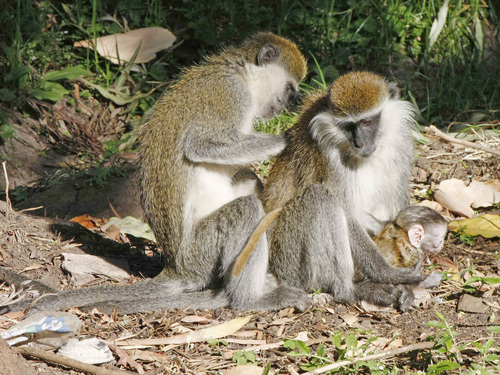
The grivet, scientifically named Chlorocebus aethiops (Linnaeus, 1758), has distinct physical characteristics. Its facial skin, hands, and feet are black. A white line runs above its eyes, and it has long white whiskers growing on its cheeks. The fur on its back is olive-colored, while the fur on its front is white. The skin on its stomach carries a blue tint, and its fur has a bristly texture. Grivets show sexual size dimorphism: the approximate head-and-body length is 49 cm (19 in) for males, and 42.6 cm (16.8 in) for females. The tail length of males falls between about 30–50 cm (12–20 in). Overall body mass ranges from 3.4 to 8.0 kg (7.5 to 17.6 lb), with females falling at the smaller end of this range. The grivet's primary habitat is savanna woodlands. Its natural range covers Sudan east of the White Nile, Eritrea, Ethiopia east to the Rift Valley, and Djibouti. Grivets require access to a water source, particularly during the dry season, and they are able to adapt to many different environments.