About Chlamydera nuchalis (Jardine & Selby, 1830)
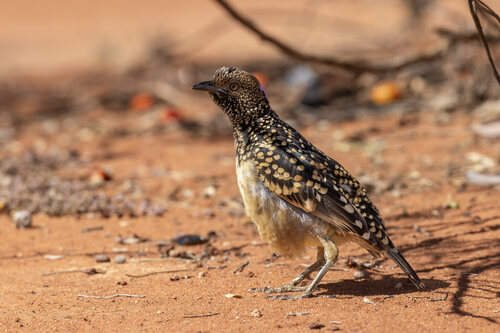
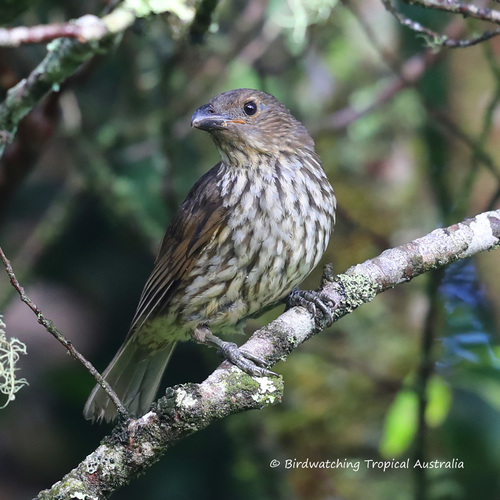
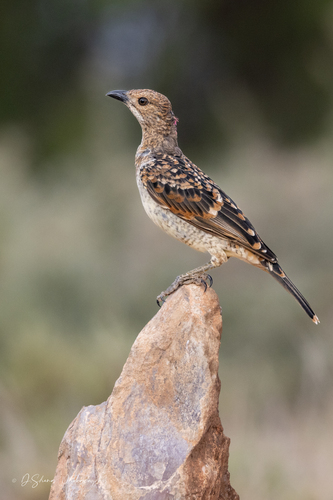
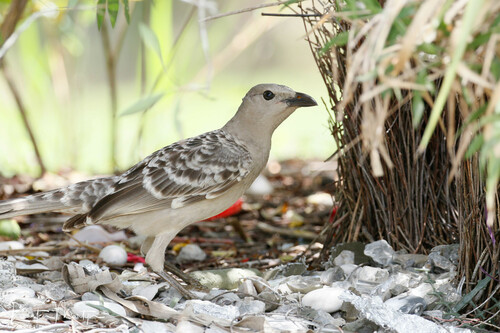
The great bowerbird has the scientific name Chlamydera nuchalis (Jardine & Selby, 1830). It is a common, conspicuous resident of northern Australia, found from the area around Broome across the Top End to Cape York Peninsula, and extending as far south as Mount Isa and Townsville. Its favoured habitats include a broad range of forest and woodland, as well as the margins of vine forests, monsoon forest, and mangrove swamps. Like most other members of the bowerbird family, breeding-related behaviours dominate the great bowerbird's lifecycle. Females nest inconspicuously and raise their young alone, while males spend most of the year building, maintaining, improving, and defending their bowers, and primarily displaying from these structures. Only a male with a successful bower is able to attract mates. The great bowerbird is the largest species in the bowerbird family. It measures 33 to 38 centimetres long and has a fawny grey colour. Males have a small but conspicuous pink crest on the nape of the neck.