About Chiroxiphia caudata (Shaw, 1793)
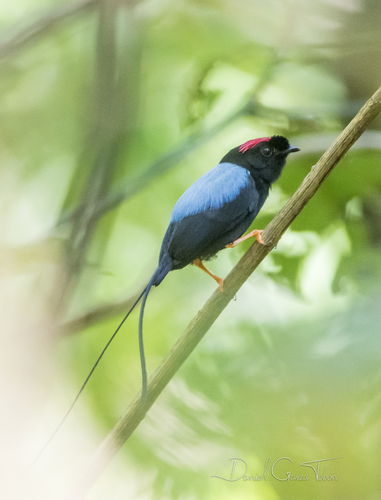
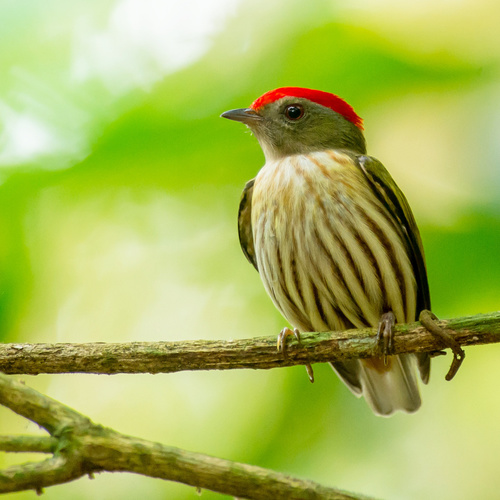
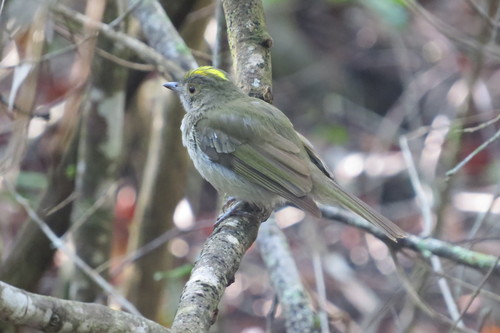
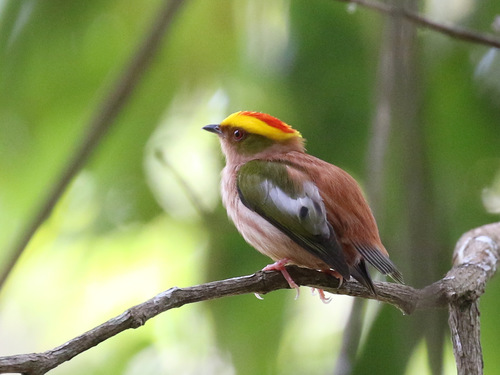
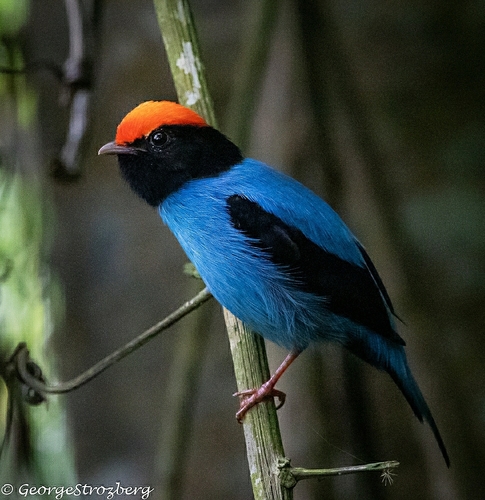
This bird measures around 15 cm (5.9 in) in length and weighs approximately 25.6 g (0.90 oz). It is a small, sparrow-sized species, and may be the largest member of the small manakin family. The former common name "swallow-tailed manakin" was once widely used, but this name has been mostly discarded because it is misleading—the species' tail does not resemble a swallow's tail. It is now most commonly called the superior blue manakin. As this common name implies, adult males have far more blue plumage than any other manakin. A male's entire body is bright blue, while its wings, tail, and most of its head are black, with the exception of a red cap on the crown. Females are much duller in color, with an overall greenish-brown plumage. Both sexes have elongated central tail feathers, or rectrices. Juvenile males look similar to adult females, but they gradually develop adult male plumage over time: they first grow the red crown, then develop black coloring on the sides of the face, and finally gain the full adult male plumage pattern. Males gather in communal display grounds called leks, which typically contain one adult male and two sub-adult males. Within these leks, males sing and perform displays, or "dances", to attract females. This species' lekking behavior was featured in the BBC documentary series The Life of Birds. Because females of this species have a strongly pronounced hypergamous mating system, up to 90% of male blue manakins never mate. This species is found in northeastern Argentina, southern and southeastern Brazil, and Paraguay. Its natural habitats are subtropical or tropical moist lowland forest, subtropical or tropical moist montane forest, and heavily degraded former forest. It is generally common in suitable habitats across its range. Between one and five males occupy a 100 square meter area, which holds one alpha male, one beta male, and several gamma males. Each occupied area contains four to six display perches, which are horizontal vines, branches, or lianas located around one meter above the ground. Alpha and beta males clean the main display arena perch by removing moss, leaves, and twigs, which makes the perch appear whiter.