About Chiromantis xerampelina Peters, 1854
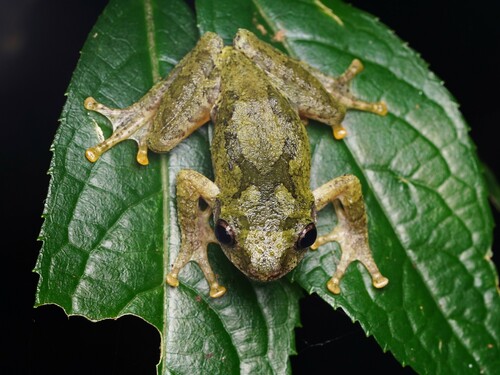
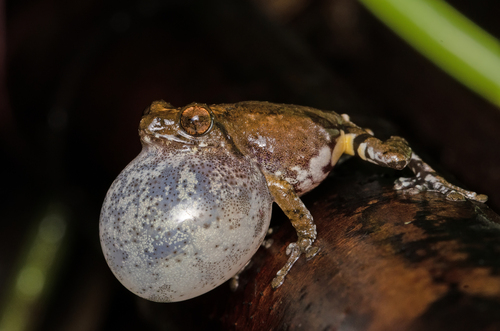
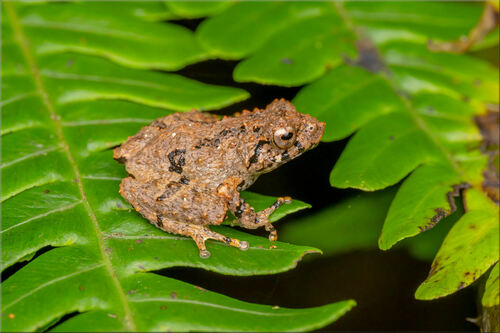
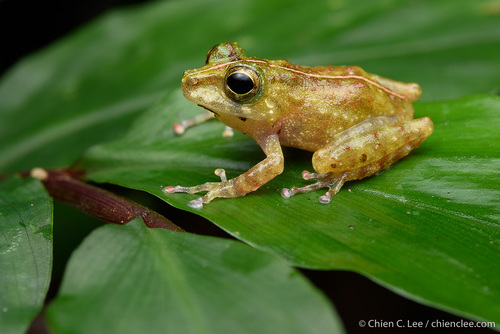
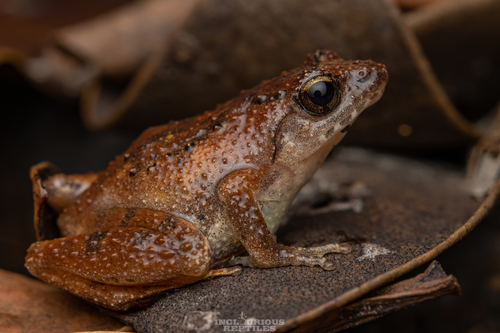
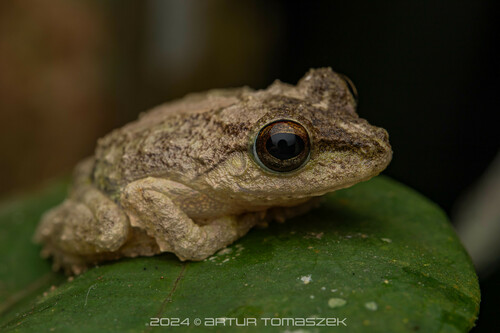
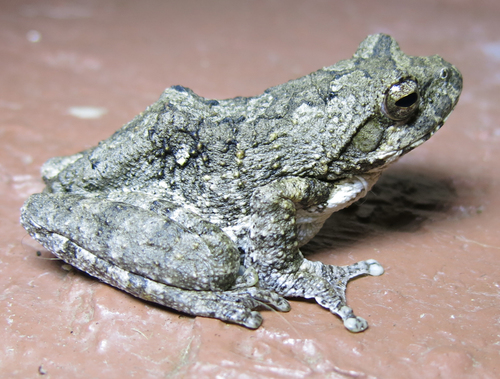
Description: The grey foam-nest tree frog, scientifically known as Chiromantis xerampelina, is an arboreal species. Like other members of the genus Chiromantis, it has adhesive discs on its toes, and the outer two fingers on each hand are widely spaced, positioned nearly at a right angle to the inner two fingers. This species has a reported snout length of 50–80 mm, with males having a snout-vent length of 43–75 mm, and females having a snout-vent length of 60–90 mm. Its skin is relatively impermeable, a trait that lets it survive dry spells sheltered under tree detritus. The skin itself is slightly bumpy and dry. Its coloration ranges from white to brown, and changes in response to temperature. Individuals typically turn white after death. Distribution and habitat: Grey foam-nest tree frogs live in a range of habitats including savannah, shrubland, forests, pastureland, and urban areas. In addition to their native range in southern Africa, there have been reports of populations living in Australia. They are classified as habitat specialists, meaning they only breed in undisturbed, unsettled environments. While they avoid arid conditions and require humidity to survive, they can still be found in dry environments such as dry forests, miombo woodlands, mopane woodlands, savannah, and cultivated areas at low altitudes. They can survive dry seasons sheltered under loose bark, which aligns with their classification as tree frogs. Large rainstorms stimulate increased breeding activity, because high humidity reduces egg mortality and improves survival across multiple life stages. Habitat destruction and disturbance negatively impact the species' ability to breed. Reproduction: Mating activity typically occurs at night between October and February, during the wet summer months of southeastern Africa. These frogs mate in arboreal locations, creating foam nests on tree branches that overhang bodies of water. Female mate choice is often limited, because males force copulations. Mating primarily takes place on tree branches, which makes females easily visible to males. Unpaired males may also intercept females by waiting at the base of a tree; matings from these intercepting males are often with genetically undesirable males. Over 90% of females mate with ten or more males to produce a single clutch. To start reproduction, the female produces a thick, mucus-like fluid from her cloaca, a cavity at the end of the amphibian digestive tract. She uses her hind legs to whip this mucus into an elastic froth, which will act as physical protection for developing eggs. The female leaves temporarily to rehydrate before returning to the nest, and nest construction takes around five to six hours. Males then add their sperm to the newly laid foam to fertilize the eggs. The next day, the female returns to the egg-laying site and adds an extra layer of foam to protect the eggs from drying out. Foam-nest building behavior has evolved multiple times independently, and the foam nest created by the female serves different purposes for aquatic versus terrestrial breeding. For grey foam-nest tree frogs that breed exclusively in water, the foam nest holds eggs suspended in oxygenated water. For individuals that reproduce on land, the nest minimizes egg drying out, temperature swings, and predation. Polyandry is a well-documented characteristic of this species, and it has been shown to substantially increase offspring survival. Polyandrous matings may provide eggs with additional nutrients via seminal fluid from multiple males; these nutrients increase yolk availability for post-hatching development and improve tadpole survival. Sperm competition may also increase the interaction between eggs and steroids found in seminal fluids, which can accelerate yolk metabolism and increase tadpole growth rate. Offspring produced from polyandrous matings are more likely to survive than offspring from single-male matings.