About Chimaphila maculata (L.) Pursh
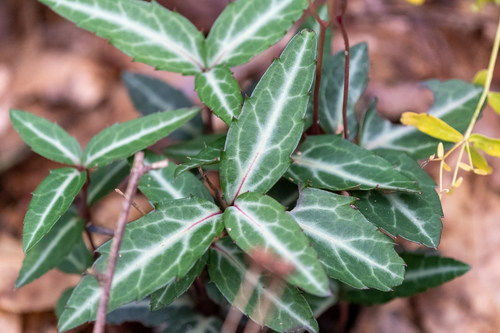
This plant, Chimaphila maculata (L.) Pursh, has dark green variegated leaves that are 2–7 cm (0.8–2.8 in) long and 6–26 mm (0.2–1.0 in) wide. The variegation forms from distinct white veins that contrast with the leaf's dark green surface. Stems grow 10–25 cm (4–10 in) tall and emerge from creeping rhizomes. Nearly round white or pinkish flowers appear on top of tall stalks in early summer, and they are pollinated by insects. After flowering, the plant develops small capsules 6–8 mm (0.24–0.31 in) in diameter that hold its seeds, which are dispersed by wind. In terms of ecology, Chimaphila maculata is most often found in sandy habitats, well-drained upland forests, wooded slopes, oak-pine woods, old-growth forests, and similar mesic habitats and woodlands. It is highly tolerant of acidic soil and shade. Like many species in the Ericaceae family, it is thought to partially depend on delicate mycorrhizal connections, possibly ericoid mycorrhizal, to grow well. In medicinal history, the Creek Indians named this plant 'pipsisikweu', which translates to 'breaks into small pieces', based on the claimed ability to break down gallstones and kidney stones. Native Americans used a tea made from its leaves to treat rheumatism and stomach problems, and applied crushed leaves as a poultice to sores and wounds.