About Chiloscyllium plagiosum (Anonymous & Bennett, 1830)
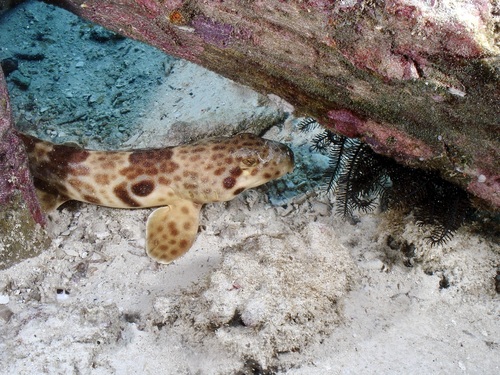
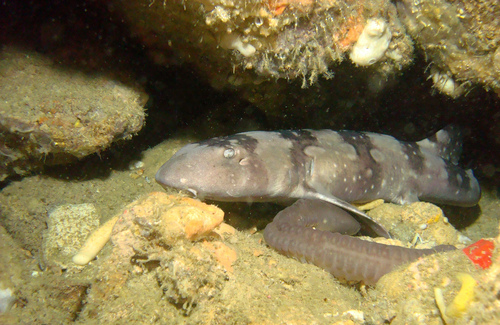
Chiloscyllium plagiosum, commonly called the whitespotted bamboo shark, has dorsal fins with convex posterior margins. Its body is white, marked with purple and pink spots and dark bands; this unique color pattern within its family makes the species very easy to identify. The teeth of this bamboo shark are not strongly differentiated. Each tooth has a medial cusp and weak labial root lobes, with 26 to 35 teeth in the upper jaw and 21 to 32 teeth in the lower jaw. Bamboo sharks of this species commonly rest on the bottom of their habitat, with their head and trunk propped up on their bent, depressed pectoral fins. Whitespotted bamboo sharks have a very distinct dorsal fin that can influence where they choose to live and their methods of mobility. This shark species is found on coral reefs in the Pacific Ocean. It is common in the coastal areas of Indonesia and surrounding waters, and its overall range extends from Japan to India. It is fished for human consumption in Madagascar and Taiwan. Whitespotted bamboo sharks are oviparous, meaning they lay eggs. Their eggs are approximately five inches long, and hatch after 14 or 15 weeks. Newly hatched young reach approximately 6 inches in length. In July 2002, Doug Sweet, curator of fishes at the Belle Isle Aquarium in Detroit, reported that a clutch of eggs from a female whitespotted bamboo shark hatched without any apparent fertilization. This is the first reported example of parthenogenesis in this species.