About Chilomycterus schoepfii (Walbaum, 1792)
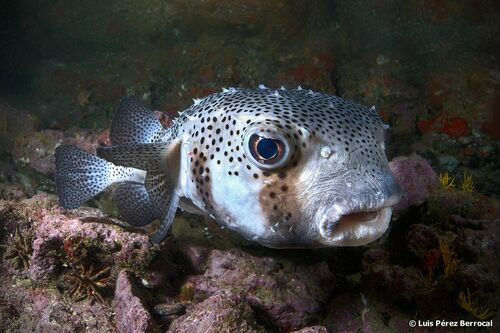
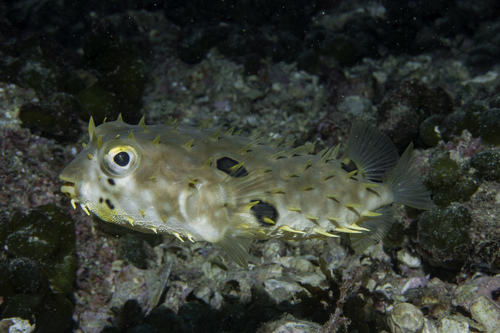
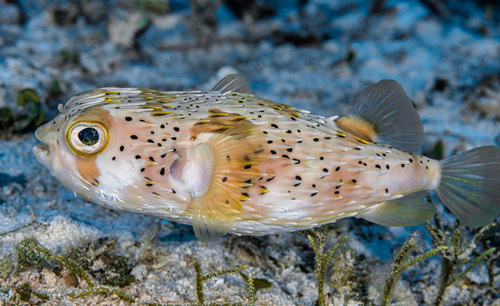
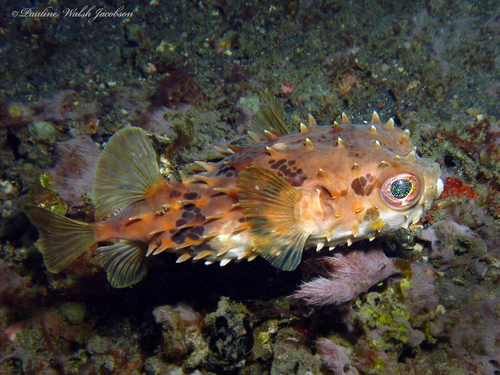
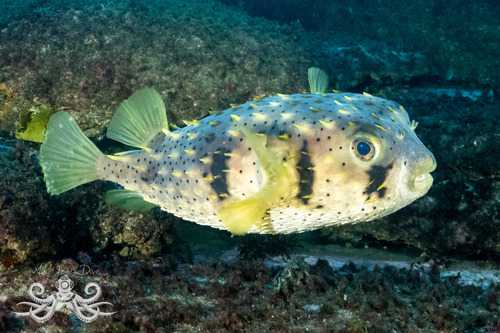
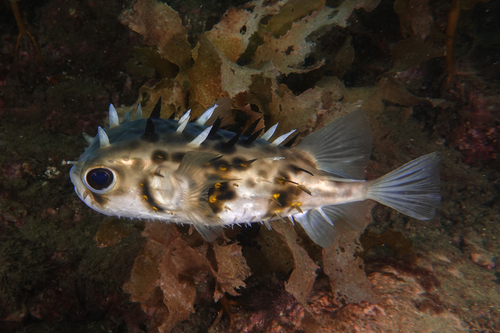
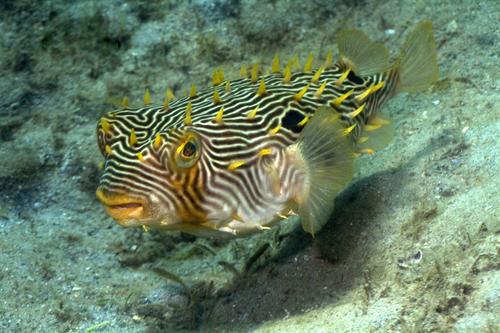
Chilomycterus schoepfii (Walbaum, 1792) can be distinguished from other porcupinefish by its shorter, less sharply pointed, immovable spines that cover its somewhat spherical body. It can inflate its body by taking in either air or water through a ventral extension of the stomach. Its upper body is olivaceous or brownish, while its underside is pale yellow. Irregular parallel brownish, dusky, or black lines run obliquely downward across its back and sides. Several large black spots are present on its sides, with one spot just below the dorsal fin and another behind the pectoral fin. This species reaches a maximum total size of around 10 inches. It occurs primarily in the western Atlantic Ocean tropics, ranging from Brazil to Florida, and also lives along the Atlantic coast of North America. It can sometimes be found as far north as Cape Cod, and is regularly seen in the New York area during late summer and fall. One individual has been recorded caught on dead shrimp in Oyster Lake, near Matagorda Bay, Texas. This species spawns off the coast of New Jersey in July. Juveniles are found in Chesapeake Bay during the summer.