About Chilocorus bipustulatus (Linnaeus, 1758)
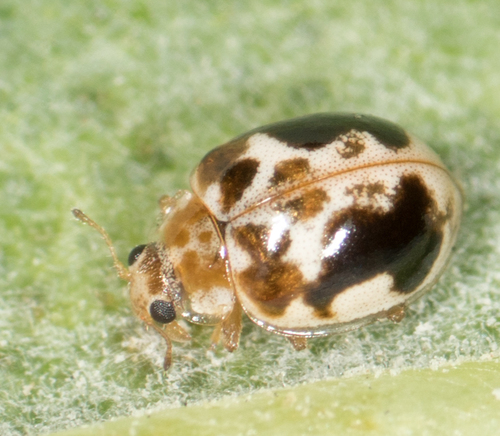
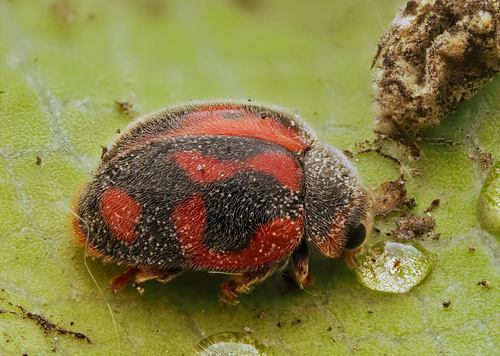
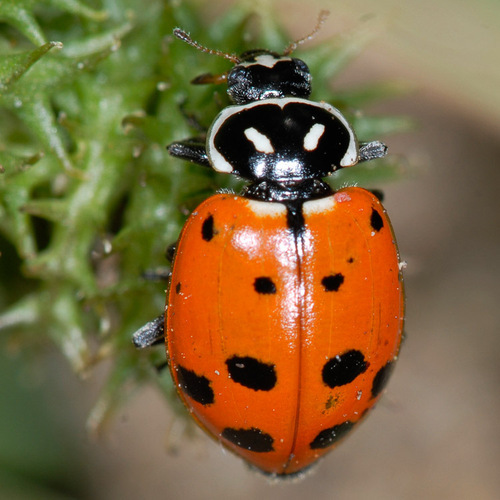
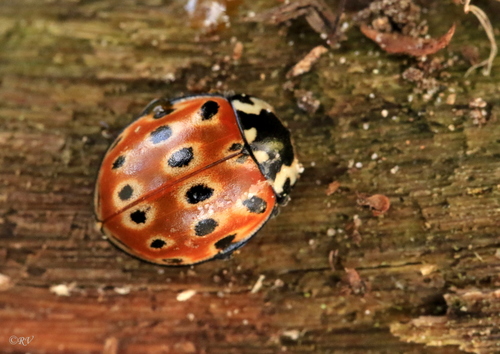
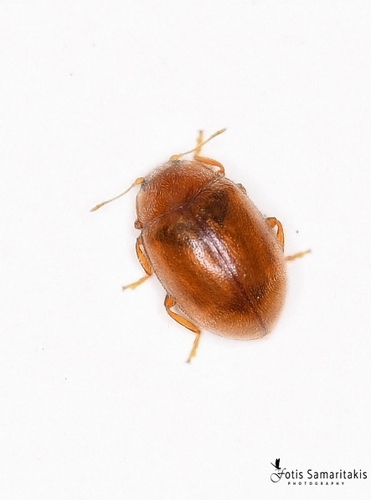
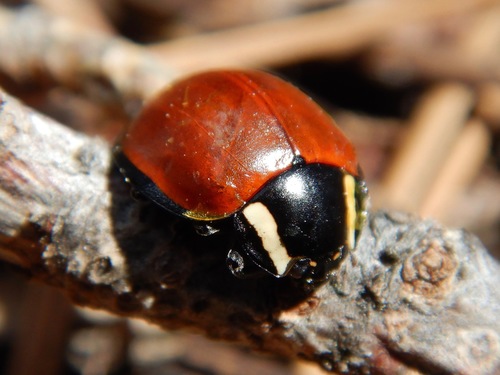
Chilocorus bipustulatus, commonly known as the heather ladybird, is a species of beetle in the family Coccinellidae, subfamily Chilocorinae. This species is native to most of the Palearctic realm, which includes Europe, North Africa, Asia north of the Himalayan foothills, and the northern and central Arabian Peninsula. It has also been introduced to tropical Africa, Hawaii, and North America. This small beetle has shiny brown elytra, with two reddish-orange spots on each elytron. This trait gives the species its specific name bipustulatus, which translates to "two-blistered" in Latin. Occasionally, three horizontal spots may fuse together to form two larger stains. Mature larvae reach approximately 5 millimetres (0.20 in) in length. Adults are between 3 and 5 millimetres (0.12–0.20 in) long, and can be found from May through October. This species overwinters in its adult form. In Europe, it can be found in fruit gardens, pine forests, and stone quarries. In Poland, it has been recorded on grasses, low vegetation, bushes, and heath lands, under bark flakes on pines and fruit trees, and occasionally in leaf litter and moss. Heather ladybirds feed on aphids and scale insects, mainly scale insects from the families Coccidae and Diaspididae. Because of this diet, it is often introduced as a biological control agent to manage infestations of these pests.