About Chilabothrus angulifer (Cocteau & Bibron, 1840)
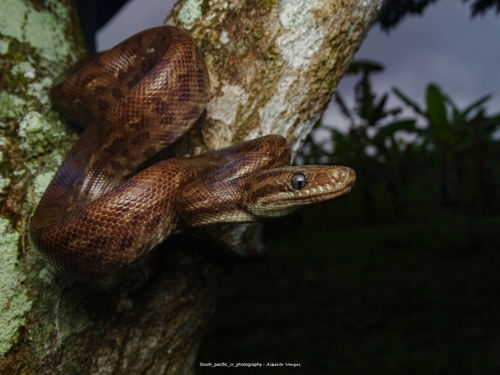
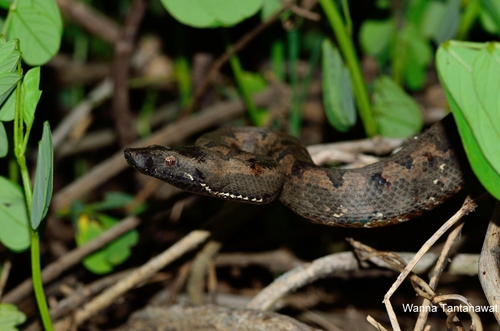
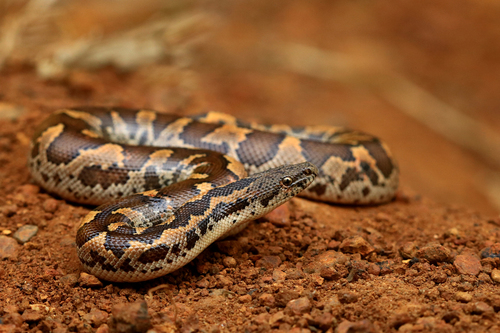
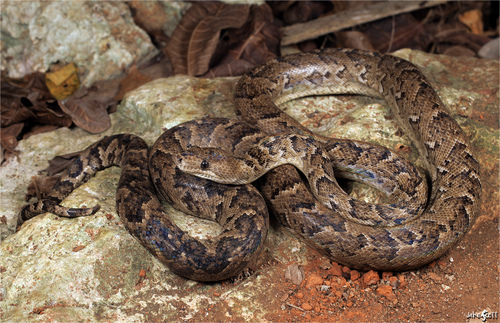
Chilabothrus angulifer, commonly known as the Cuban boa, is identified as the least derived species in the genus Chilabothrus by three key traits: the presence of labial pits, the shortest tail of any species in the entire genus, and supralabials that are separated from the eye. It is also the largest member of the genus Chilabothrus. The Cuban boa has a notably massive body, with a body mass typical of boas or pythons that have a far greater total length. This species is native to Cuba and its adjacent islands, including Isla de la Juventud, formerly called the Isle of Pines, the Canarreos Archipelago specifically Cayo Cantiles, the Colorados Archipelago off the northern coast of Pinar del Río, and the Sabana-Camagüey Archipelago which includes Cayo Guajaba and Cayo Sant María. Its designated type locality is "Cuba". The preferred natural habitat of Chilabothrus angulifer includes multiple types of forest: rainforest, cloud forest, evergreen forest, semi-deciduous forest, thorn forest, and coastal scrub forest. It occurs at altitudes ranging from sea level up to 1,214 m (3,983 ft). It has also been recorded living in sugar cane plantations. Chilabothrus angulifer is a viviparous species. Females of this species are biennial breeders and require five or more years to reach sexual maturity. The species' mating season normally runs from April through June. Males mate every year, and engage in ritualized combat. A female's ability to reproduce is determined by her size, not her age. In wild populations, gestation typically lasts 150 to 180 days. Gestation length appears to correlate with the temperatures that gravid females are exposed to. Parturition normally occurs in September and October. Litter sizes in the wild range from 2 to 22 live young. There is a documented correlation between female size and the size of both litters and neonates: larger females produce larger litters and larger individual offspring. Neonatal Chilabothrus angulifer are among the largest of any species in the boa family, with snout-vent lengths from 505 to 646 mm and weights from 80 to 237 g. Only the neonates of Boa constrictor and Eunectes murinus reach comparable sizes.