About Chiasognathus grantii Stephens, 1831
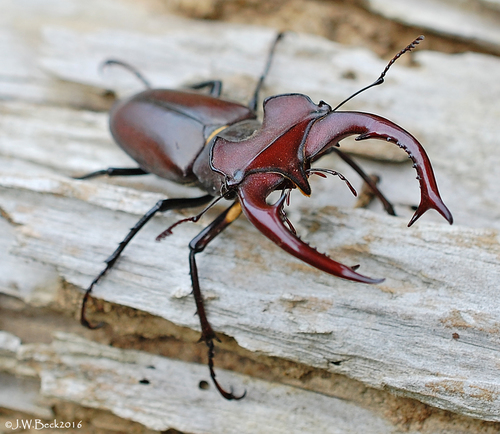
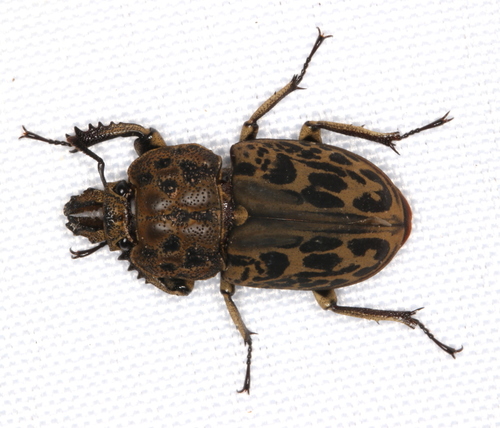
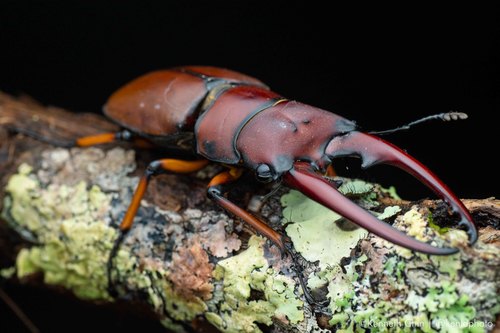
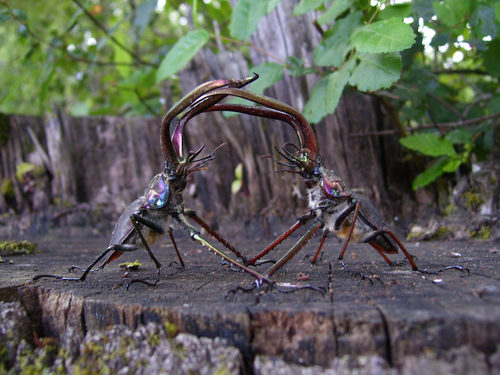
Chiasognathus grantii, also known by its scientific name Chiasognathus grantii Stephens, 1831, shows strong sexual dimorphism, with high variation in body size and jaw development. When including the mandibles, males reach a total length of 60 to 90 millimeters, which equals 2.4 to 3.5 inches. Females are much smaller, with a body length of 25 to 37 millimeters, or 0.98 to 1.46 inches. Male upper mandibles are very robust at the base, finely serrated, and longer than the male's entire body. This species has small eyes, and its antennae have a whorl of hairs at the apex. The thorax is broad, and both its anterior and posterior margins are densely covered with short, pale cilia. The elytrae are chestnut-brown, with faint greenish iridescent tinges, and have a finely granulated texture. C. grantii is classified as a rare and vulnerable species, and its populations face a risk of decline. Adult beetles of this species primarily feed on tree juices, while larvae feed on dead wood. This species inhabits temperate/subantarctic Nothofagus forests.