About Chenopodium giganteum D.Don
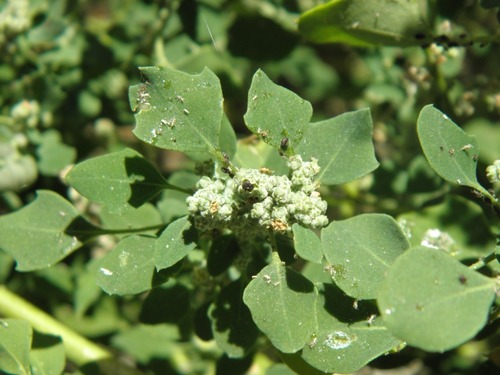
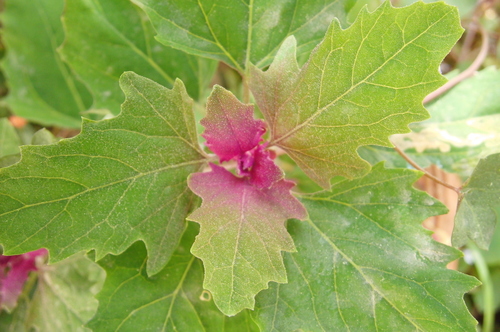
Chenopodium giganteum D.Don has characteristic color and hairiness that changes with leaf age: its younger leaves are hairy and magenta, while older leaves turn green. Its leaf blades are shaped rhombic to ovate, and can reach up to 20 cm long by 16 cm wide. This species produces inflorescences made of terminal panicles holding hermaphrodite, wind-pollinated flowers. Each flower has 5 perianth segments and 5 stamens, and flowering begins in August. Its seeds measure 1.5 mm in diameter, and the species has a chromosome number of n=54. Chenopodium giganteum is in the genus Chenopodium, the same genus that includes quinoa and Chenopodium album. Many species in this genus have a long history of domestication for use as grain, vegetable, or forage crops. This long domestication history makes it difficult to determine the genetic relationships and place of origin of Chenopodium giganteum. The species is divided into two main subspecies: one native to India, and the other native to America. It grows well in Mediterranean climates, but requires full or partial shade. It does not have high requirements for soil quality. It also displays weedy characteristics, including fast growth and rapid spreading. It has been recorded as a neophyte in a small number of countries, including Germany and Slovakia. Commercial cultivation of Chenopodium giganteum is almost non-existent, but its stable and high yield means it could be a useful crop plant for the future. The young shoots and leaves of Chenopodium giganteum can be eaten cooked like spinach, which is another member of the Amaranthaceae family. Most of the oxalic acid and saponins present in the plant are removed during cooking, especially if the leaves are boiled for 2 minutes at 100 °C (212 °F). Leaves can also be eaten raw in small quantities, for example added to a salad. Its seeds can be prepared in a similar way to rice or quinoa, or ground into flour that is mixed with cereal flour for making bread. Because its leaves are partially pink, Chenopodium giganteum also has value as an ornamental plant.