About Chelostoma campanularum (Kirby, 1802)
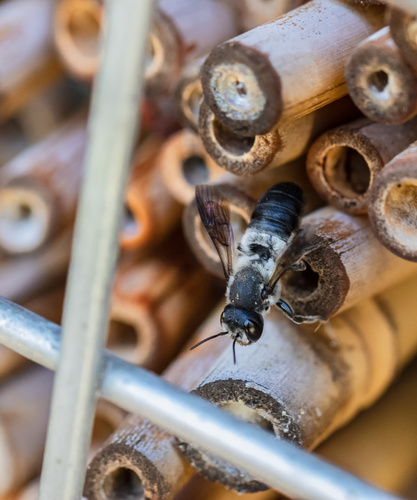
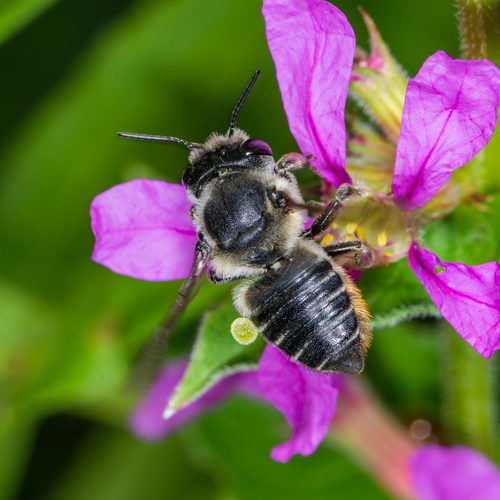
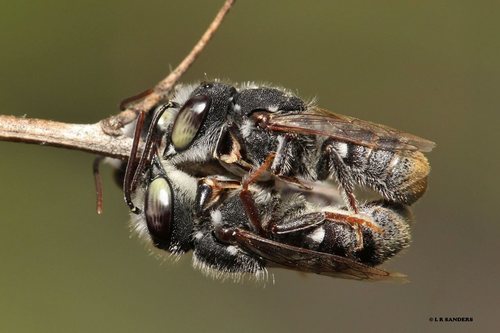
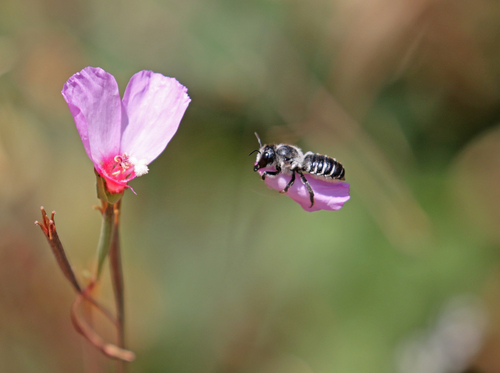
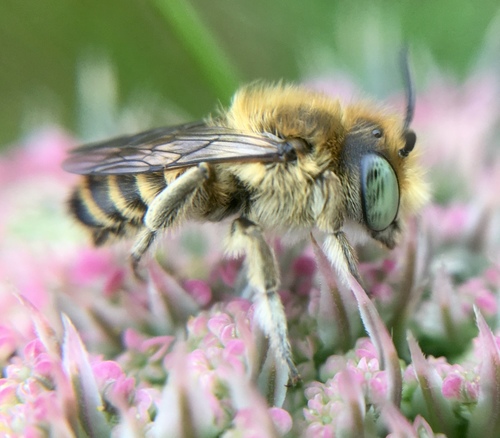
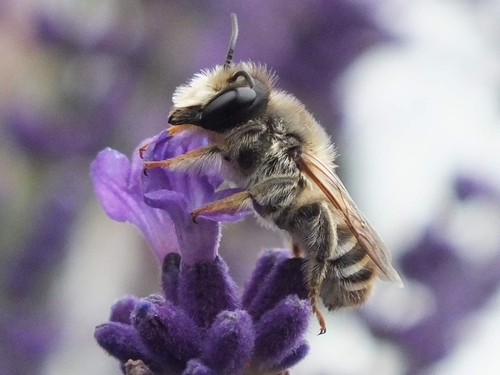
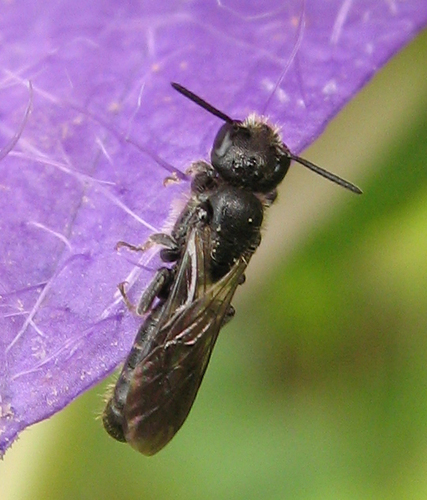
Chelostoma campanularum, commonly known as the harebell carpenter bee, is a hymenopteran species belonging to the family Megachilidae. This species is distributed across Europe, Northern Asia excluding China, and North America. It is a small black bee that measures 6 to 7 mm long, and has a single annual flight period that runs from mid-June to mid-August. Males have a two-pronged peg on the final abdominal segment, while females have distinct snow-white pollen-collecting hairs on their underside. The species is most often observed on Bellflowers of the genus Campanula, and on Sheep's bit. To collect pollen, the female uses her back legs to brush her abdominal underside hairs against pollen, and grips the flower's anthers with her front legs and mandibles. Males are frequently found in the same flowers that females visit, and mating occurs inside these flowers. Naturalists who want to encourage populations of this bee plant multiple Bellflower species, and provide dry reed stems that the bees use as nesting sites.