About Chelon ramada (Risso, 1827)
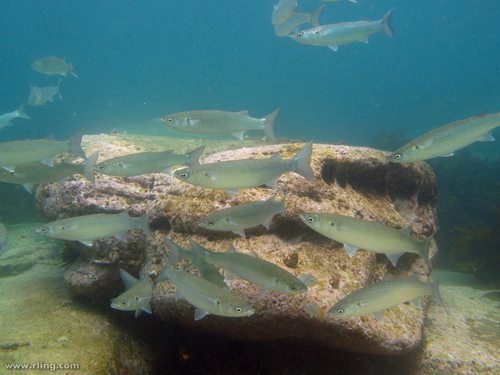
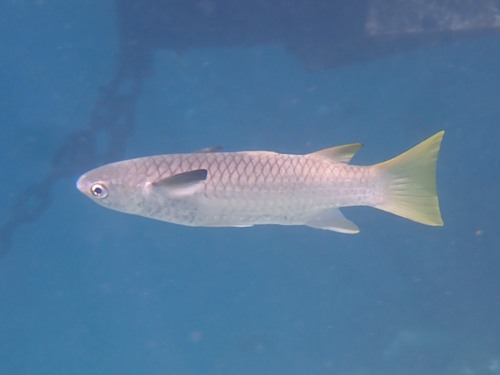
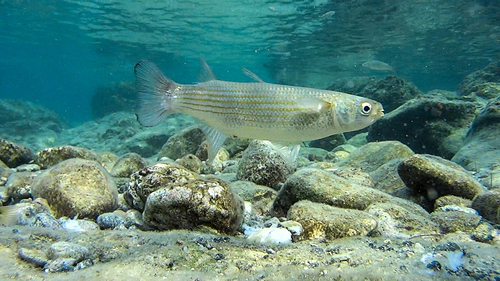
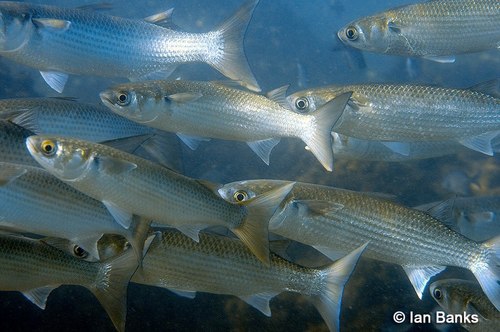
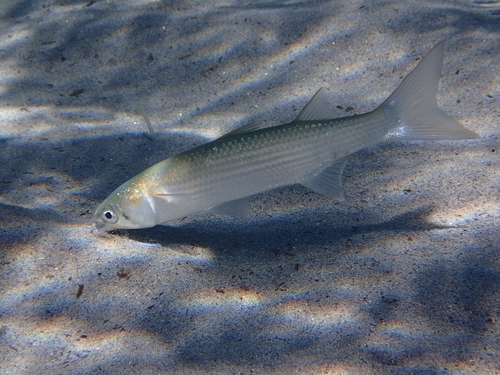
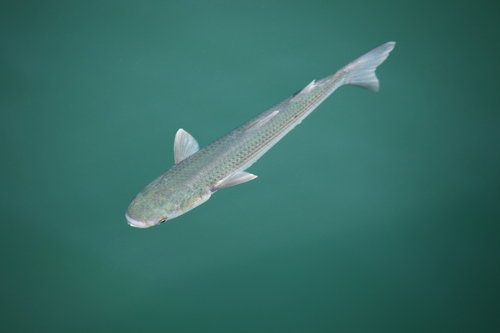
This species, commonly called the thin lip mullet with the scientific name Chelon ramada (Risso, 1827), has an elongate, laterally compressed body. It has a short, flattened head and a broad mouth that features a narrow upper lip with no tubercles. There are two separate dorsal fins on its body. The upper body of this mullet is steely blue, while the underside is paler in color. Its scales are large, and no lateral line is visible externally. This species reaches a maximum total length of around 70 cm, and most commonly encountered individuals grow to roughly 35 cm. The largest recorded specimens of this species have weighed more than three kilograms. Spawning occurs in the sea, near the coast, between September and February. The thinlip mullet is distributed across the eastern Atlantic Ocean, ranging north from Cape Verde and Senegal to the Baltic Sea. It can also be found in the Mediterranean Sea, Black Sea, and Azov Sea. It is a pelagic species that typically occurs in inshore areas, and it regularly enters lagoons, estuaries, and rivers. Its diet consists of epiphytic algae, detritus, and small benthic or planktonic organisms. It most commonly occurs in waters between 0 and 10 meters deep, and it is rarely found in deeper water.