About Chauliognathus pensylvanicus (DeGeer, 1774)
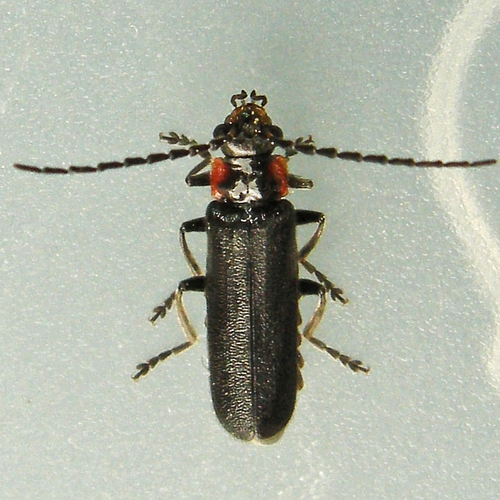
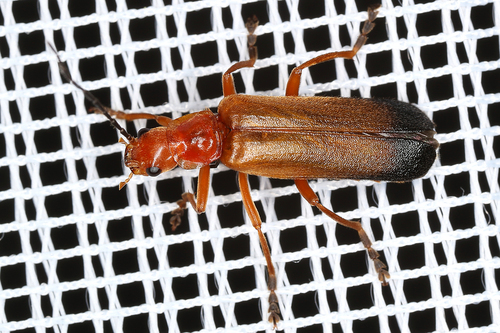
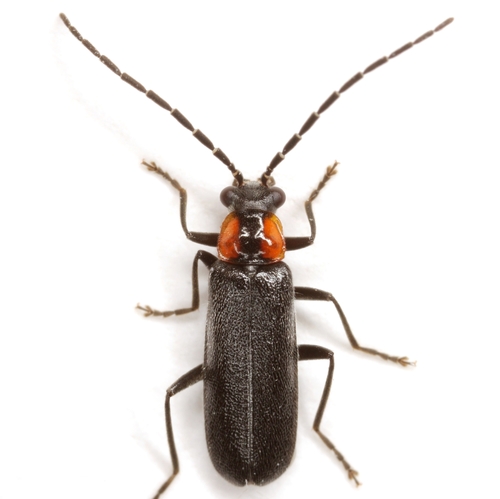
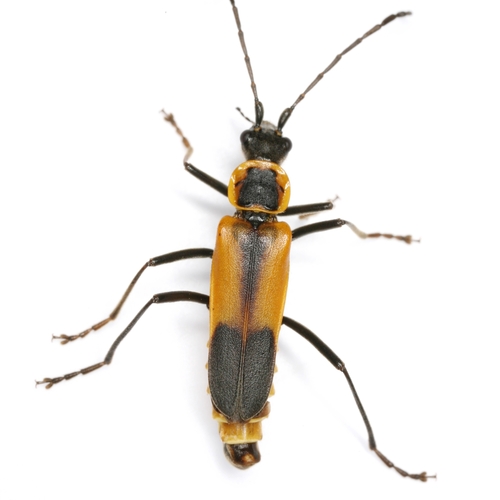
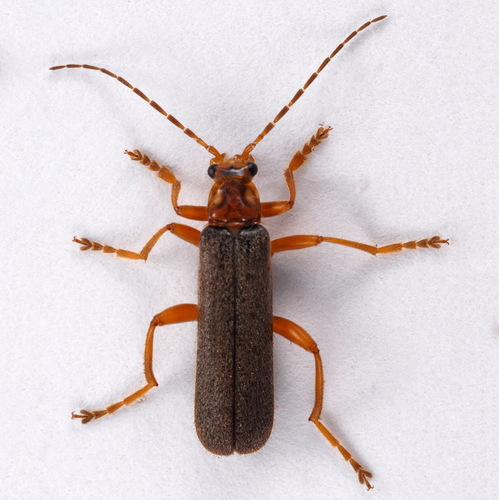
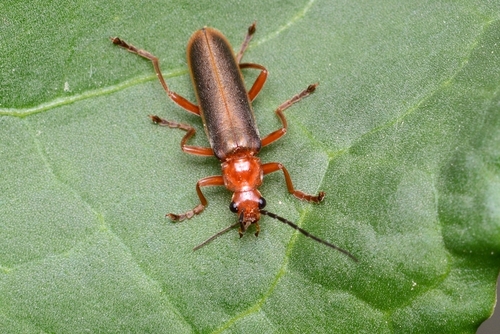
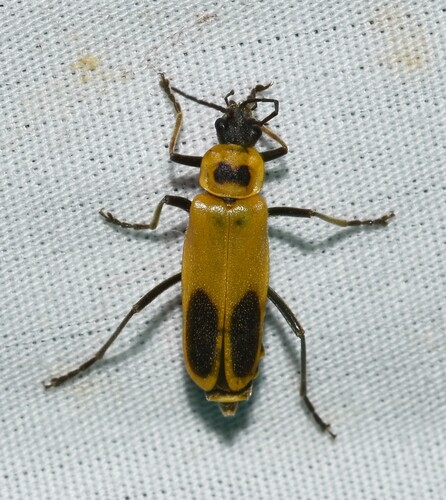
Chauliognathus pensylvanicus, commonly known as the goldenrod soldier beetle, is a species of soldier beetle. Adults of this species reach approximately 5/8 of an inch in length. They have elongated, leathery elytra that cover almost their entire abdomen. Their overall body color is a mix of orange and brown, with distinct black patches. They also have a horizontally elongated dark spot on their pronotum, which is a key identifying feature that distinguishes them from the closely related Margined Leatherwing (Chauliognathus marginatus), which has a vertically elongated dark spot on the pronotum.
This species is native to North America, and it is one of the most common soldier beetle species in the Midwest of the continent. Its range extends from eastern to central Canada, south through Florida and northern Texas, with some populations found as far west as Colorado.
This species has a univoltine life cycle, meaning adults reproduce only once per year. Adult females lay clusters of eggs in soil or leaf litter. Larvae have slender bodies, are dark in color, and are covered in dense hairs. During the larval stage, they mostly reside in leaf litter, but can climb up onto plants. Larvae overwinter in the soil, and feed on grasshopper eggs, small caterpillars, and other soft-bodied insects. Larvae enter the pupal stage in early summer, and emerge as adults around July.
Adults are active in late summer and early fall, and reach their highest abundance during the month of August. Adults are diurnal, and congregate on flowers, especially goldenrod — a habit that gave the species its common name. C. pensylvanicus is an important pollinator for prairie onion, milkweed, Queen Anne's lace, and many species in the Asteraceae family, including goldenrods, black-eyed Susans, and asters. Adults feed on nectar and pollen, and transfer pollen between flowers as they move, assisting in pollination. In addition to feeding on flower resources, adults also eat small insects such as aphids and caterpillars. Both laboratory tests and field observations confirm that this beetle strongly prefers yellow flowers. Goldenrod soldier beetles have leptokurtic dispersal patterns, meaning they typically only move short distances. Their dispersal patterns are also sex-dependent: males cluster in areas with high flower density, while female dispersal follows the location of males rather than the location of host plants.