About Charina umbratica Klauber, 1943
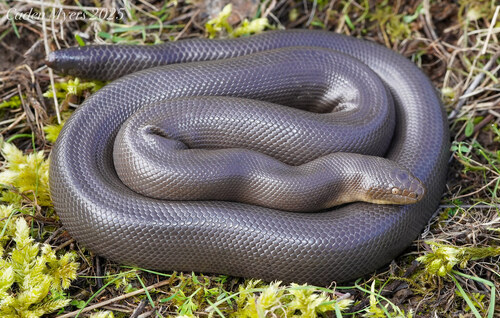
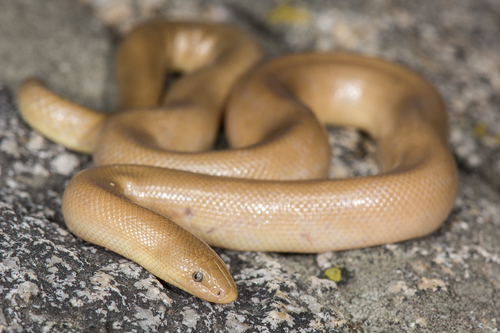
The southern rubber boa (Charina umbratica) is a small snake with a blunt tail. Its secretive nature makes collecting individuals for research very difficult. A five-year study conducted in the San Bernardino Mountains of southern California, published in the Journal of Herpetology, has produced new information about this species. The study found that female southern rubber boas are longer and heavier than males. Adult females also have higher rates of tail tip scarring and tail shortening than males. The study additionally measured weight loss during gestation in females, finding that females lose 47% of their body weight while carrying young. Southern rubber boas most commonly inhabit woodlands and coniferous forests with developed soils and high vegetative productivity. These habitats are typically moist, and accumulated organic debris helps maintain the moisture levels at sites occupied by the snakes. The species uses rock outcrops, loose developed soils, and tree debris to burrow and take shelter. This boa is distributed across the San Bernardino and San Jacinto Mountains east of Los Angeles in southern California, found at elevations between 4,900 and 7,900 feet. Phylogenetic analyses have definitively distinguished northern and southern boas, and have identified an area in northeastern California that holds populations of both taxa. Some intergrades between northern and southern boas have been found in isolated populations in the Southern Los Padres Ranges. Boas of this species are ovoviviparous: they produce 2 to 8 young, with eggs hatching inside the parent's body. Females typically emerge from hibernation in a reproductive condition, and mating occurs immediately after emergence, continuing through May. Females give birth between late summer and autumn, with most young born between late August and September.