About Channa micropeltes (Cuvier, 1831)
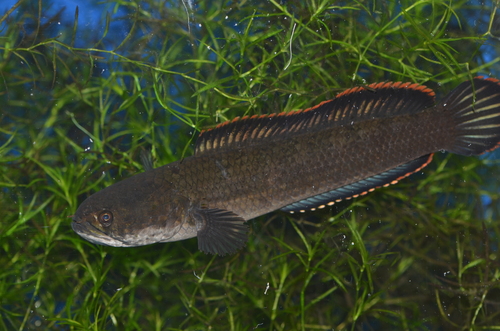
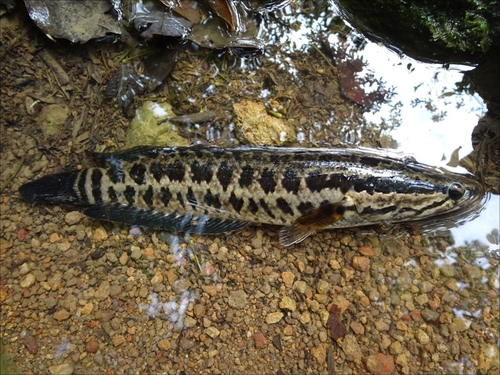
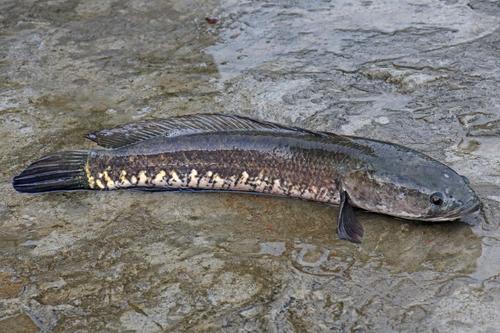
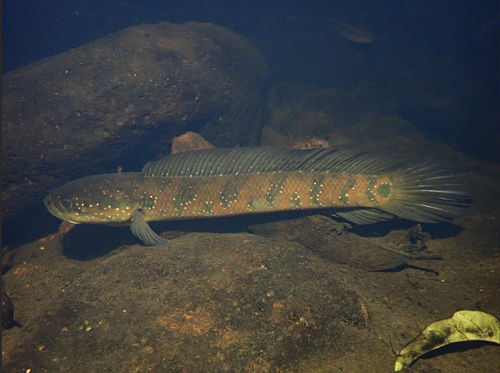
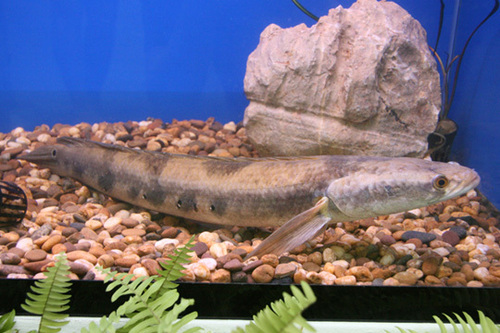
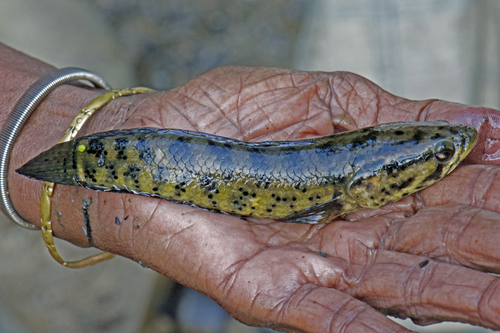
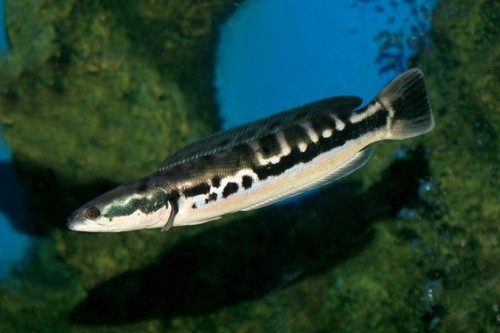
Channa micropeltes, commonly called giant snakehead, giant mudfish, or toman harimau, is one of the largest species in the Channidae family. It can reach 1.8 m (5.9 ft) in length and 30 kg (66 lb) in weight. This species is native to the fresh waters of Southeast Asia; populations that were once found in South India are now classified as a separate species, C. diplogramma. It has been introduced outside its native range, and is considered invasive in Taiwan. Its other common names include shol machh (শোল মাছ) in Bengali, red snakehead, redline snakehead, and ikan toman, where ikan means fish in Malay and Indonesian.
Channa micropeltes occurs in Southeast Asia, the Malay Peninsula, and Indonesia. Scientists previously thought this species had an unusual disjunct distribution, living 2,500 km (1,600 mi) apart in both Southeast Asia and southwest India and Bangladesh. The Indian population was once speculated to come from an early human introduction before the 19th century. In 2011, researchers confirmed that the Southeast Asian and Indian populations are separate species: the Indian population is the correctly classified C. diplogramma, while C. micropeltes refers only to the Southeast Asian population.
This fish is considered highly suitable for cage or pond culture raised in combination with tilapia, and it is an effective tool for controlling overabundant tilapia populations, preventing stunted tilapia growth. In Malaysia, Singapore, and Indonesia, the fish is known locally as toman. It is cultured in fish ponds and reservoirs as a game fish, because it puts up a strong fight when hooked. Giant snakehead is also edible, and is commonly served in Chinese restaurants. In Thailand, this fish is prepared in many different ways, with grilled giant snakehead being a common food sold by street vendors. According to traditional Chinese medicine theory, eating this fish is thought to support body healing, such as after surgery or after severe cuts and scrapes.