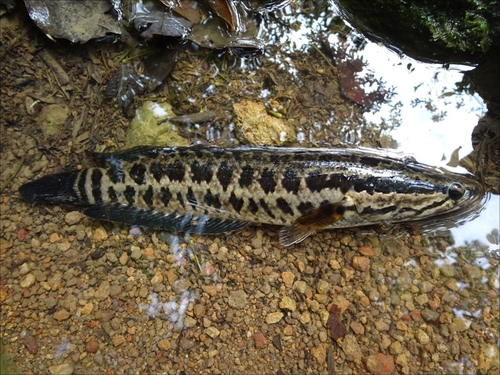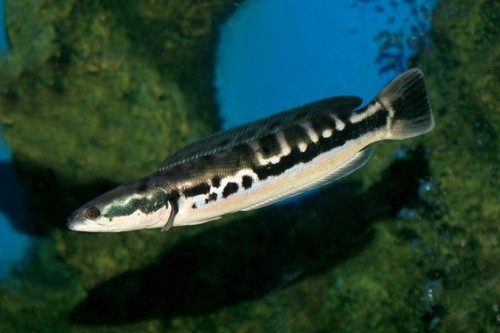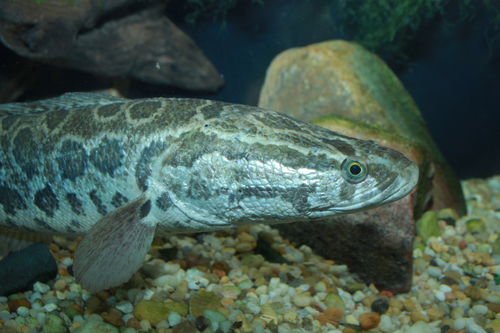
About Channa argus (Cantor, 1842)
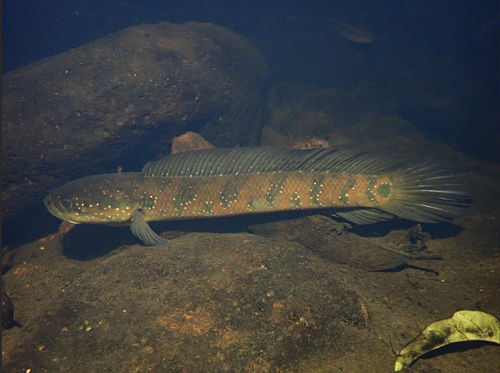
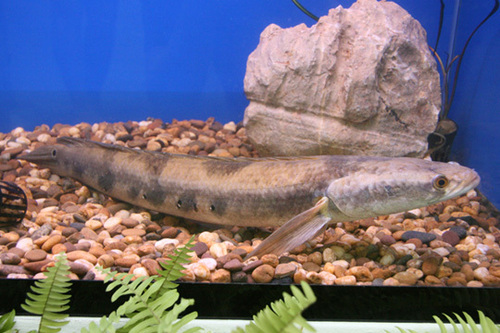
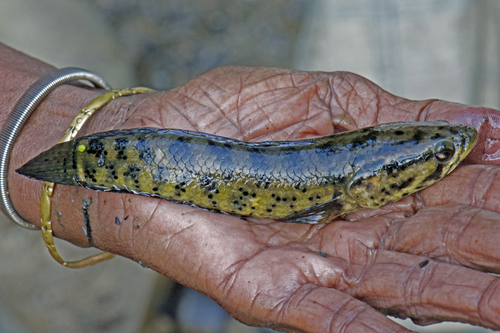
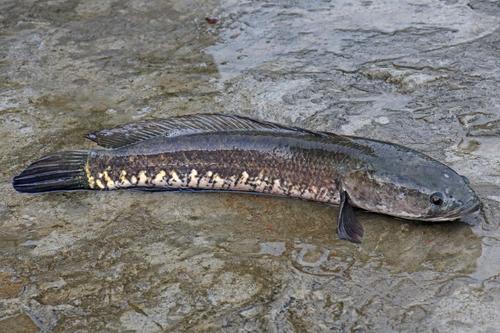
The northern snakehead has the scientific name Channa argus (Cantor, 1842). This species of snakehead fish is native to temperate East Asia, occurring across China, Russia, North Korea, and South Korea. Its natural geographic range spans from the Amur River watershed in Siberia and Manchuria down to Hainan. Northern snakehead is an important food fish and one of the most widely cultivated fish in its native region, with an annual worldwide production of 510,000 tonnes. Because of its cultivation for food, this fish has been exported around the world and has successfully established non-native populations in Central Asia and North America. In the United States, non-native northern snakehead populations are found in Pennsylvania, Virginia, West Virginia, Delaware, Maryland, North Carolina, Arkansas, Missouri, and Mississippi. Northern snakehead can double its total population in as little as 15 years. Individuals reach sexual maturity at three to four years of age, at a length of approximately 30 to 35 cm (1 ft 0 in – 1 ft 2 in). This species has external fertilization of eggs; a single female can lay up to 100,000 eggs per year. Fertilization takes place in shallow water during early morning. The eggs are yellow, spherical, and measure about 2 mm (0.079 in) in diameter. Eggs typically hatch after around 1 to 2 days, though hatching takes much longer when temperatures are lower. Parents guard the eggs until yolk absorption, when the newly hatched young are about 8 mm (0.31 in) long.