About Chamelea striatula (da Costa, 1778)
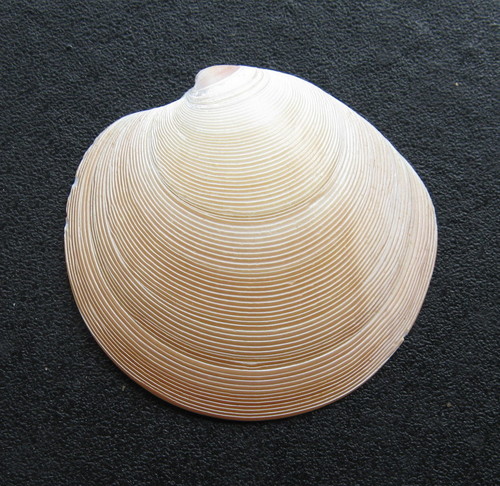
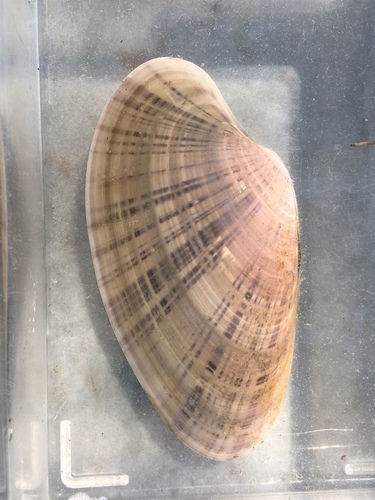
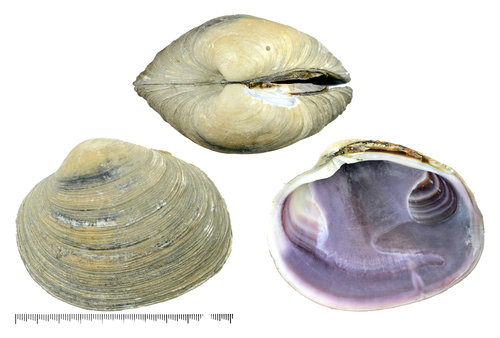
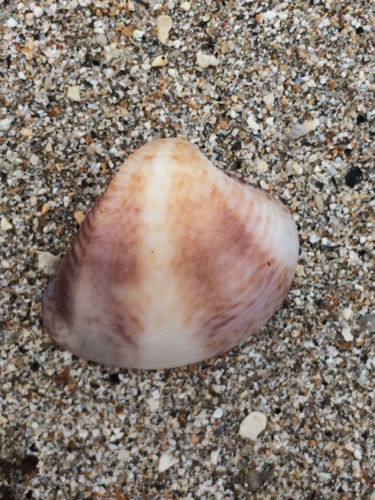
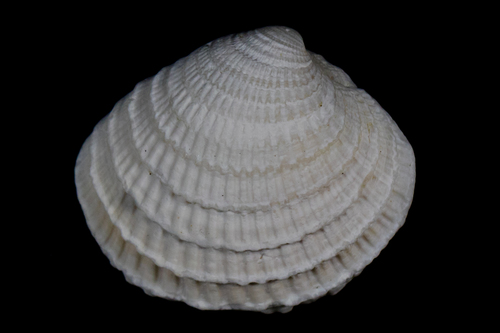
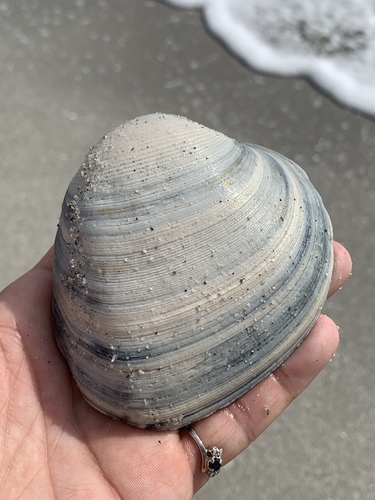
Chamelea striatula, formally described by da Costa in 1778, has robust, only slightly convex shell valves. The shell's beak is prominently bent toward the anterior end of the shell, and sits behind a clearly delimited lunula. Overall, the valves are nearly triangular in shape: the beak sits anterior to the center of each valve, and the dorsal margin behind the beak slopes down to the shell's lower margin with a very slight curve, giving the posterior end of the shell a pointed shape. Adults commonly reach a size of around 3 cm. The ligament of the shell is inset. The hinge of each valve holds three cardinal teeth, and has no lateral teeth. The pallial sinus is triangular and very small. The interior lower margin of the valve is finely crenelated. The outer surface of the shell is marked by many regular concentric ridges. Well preserved or live specimens typically show a pattern of darker rays or zigzag markings over a lighter background. The shell is cream or brown in overall color, and the interior of the shell is lighter in tone. This bivalve species occurs along the coast from Norway to Morocco, and is also found in Madeira and the Canary Islands. Its range extends into the Mediterranean Sea, where it coexists with the slightly larger common venus clam, Chamelea gallina. The two species live sympatrically along the Algarve coast, in the Gulf of Cádiz, the Strait of Gibraltar, and the Alboran Sea. Fossil valves of Chamelea striatula are common in the North Sea, and are most likely no older than the Holocene or Pleistocene epochs.