About Chamelea gallina (Linnaeus, 1758)
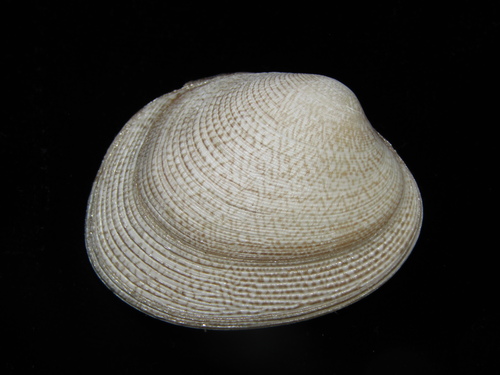
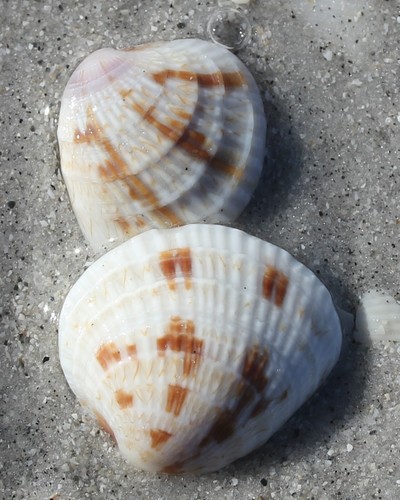
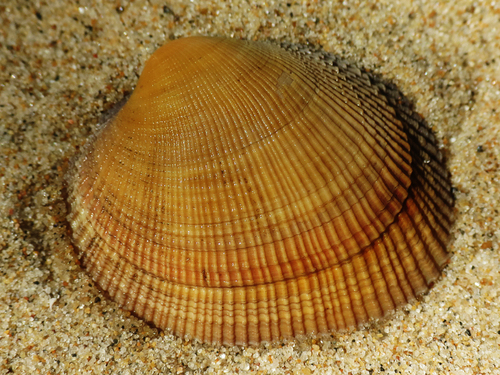
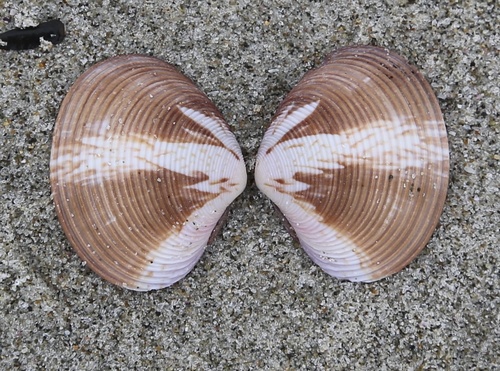
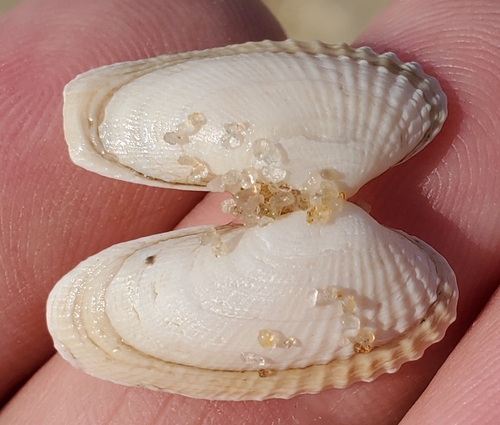
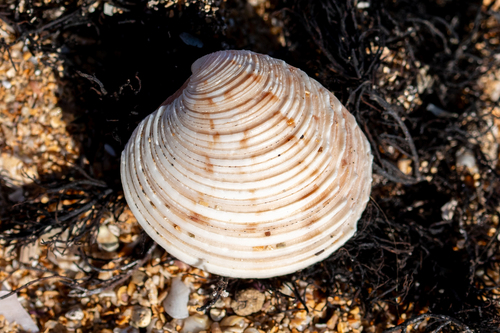
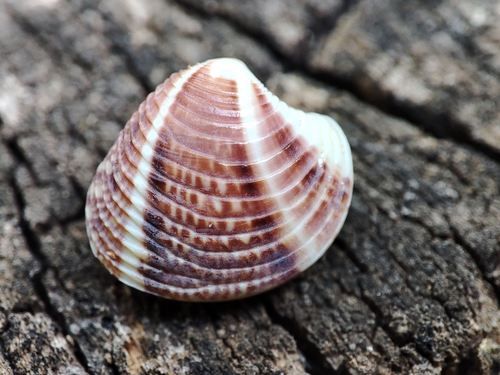
Chamelea gallina, first described by Linnaeus in 1758, has a solid, thick bivalve shell with two equal-sized valves, reaching up to five centimetres in length. The shell is broadly triangular but asymmetrical: it has a rounded anterior margin and a somewhat elongated posterior. The periostracum is thin, and the ligament connecting the two valves is narrow. The short, heart-shaped lunule is light brown and marked with fine radiating ridges. The shell surface is sculptured with around fifteen concentric ridges. Overall shell colour is whitish, cream, or pale yellow, sometimes with a shiny surface, and it usually bears three red-brown radiating rays. This species is found along Eastern Atlantic coasts, ranging from Norway, the British Isles, Portugal, and Morocco to Madeira and the Canary Islands. It also occurs in the Mediterranean Sea and the Black Sea, and is abundant in the Adriatic Sea. Chamelea gallina is harvested and used for food. In 1995, the total recorded global catch of this species was 42,000 tons, with the largest catches landed by Italy and Turkey. Most harvesting is done with dredges, though some is caught via bottom trawling, and aquaculture of this species is carried out in Italy.