About Chalcophora virginiensis (Drury, 1770)
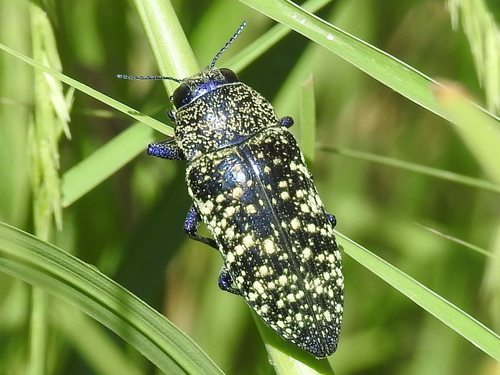
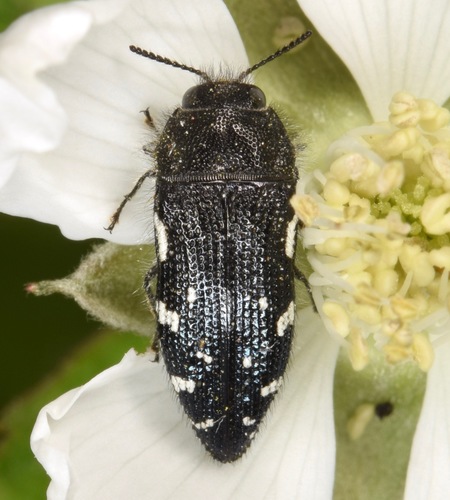
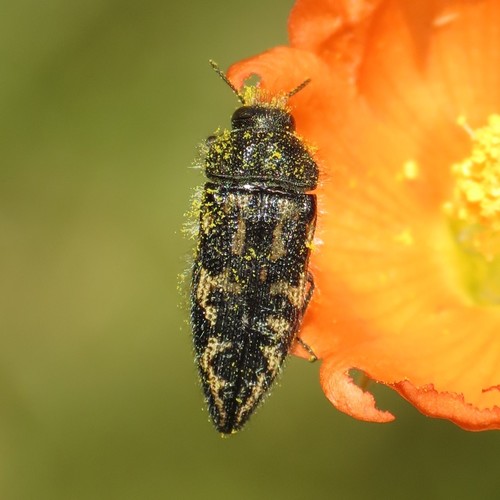
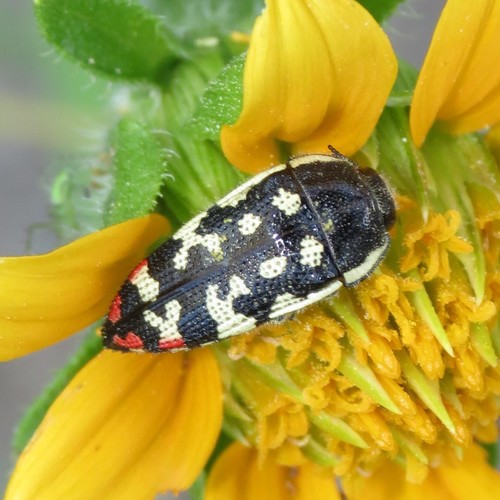
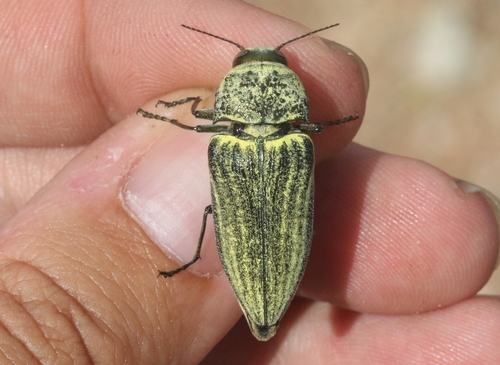
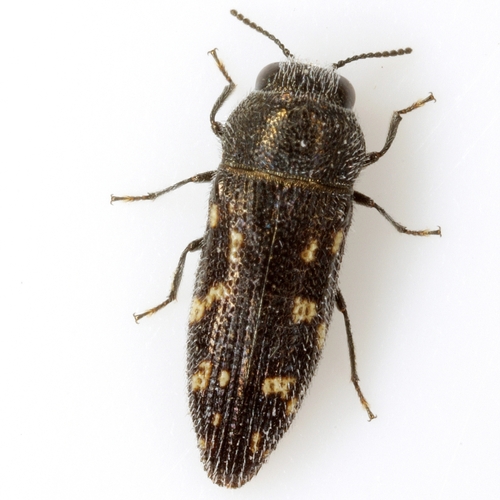
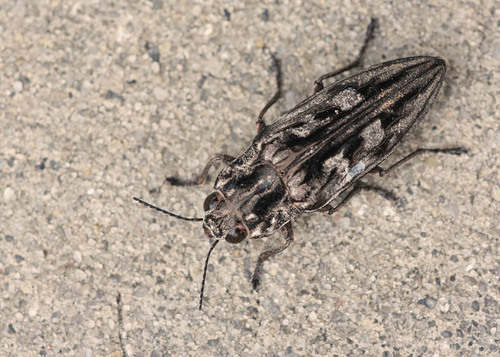
Chalcophora virginiensis, commonly known as the sculptured pine borer, is a species of metallic woodboring beetle in the Buprestidae family. It is native to forested areas of eastern Canada and the eastern United States. Some authors have previously synonymized this species with the western species Chalcophora angulicollis, but a 2013 study by Maier and Ivie confirms that the two species are distinct. This species has a small, broad head and short, small antennae that are approximately the same length as the thorax. The thorax is broad and rugged, with dark coppery color on elevated areas and lighter color on depressed areas. It is covered in very small punctures and fits closely against the elytra (wing-cases). The scutellum is very small and triangular. The elytra match the thorax in color, with the highest regions appearing as the darker areas in illustrations. The elytra have margins along their sides and the suture, extend to the level of the anus, and have slight serration along their edges. The underside of the beetle is shiny and coppery, with a faint flesh-colored tint along the sides. The legs match the underside in color, and each bears two tibial spurs. The total body length of this beetle is just over one inch. A more detailed description of this species is provided by Maier & Ivie. Recorded host trees for Chalcophora virginiensis are red pine (Pinus resinosa) and white pine (Pinus strobus). In addition to its native range in North America, specimens of this beetle have been collected in Europe and Japan, presumably introduced accidentally via transported timber.