About Chaetophractus vellerosus (Gray, 1865)
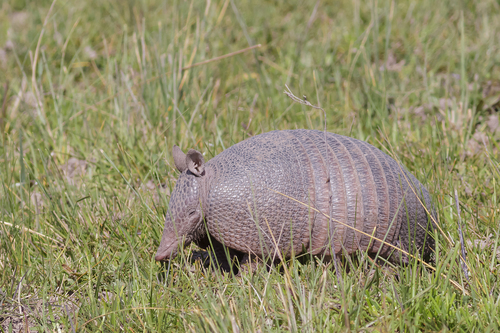
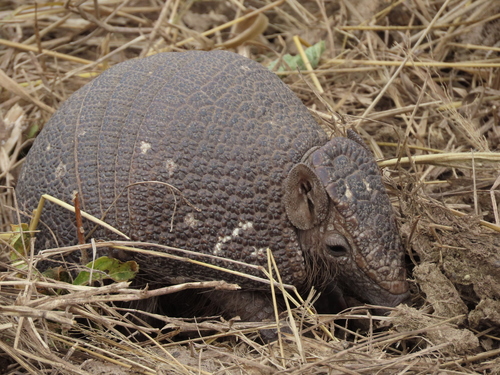
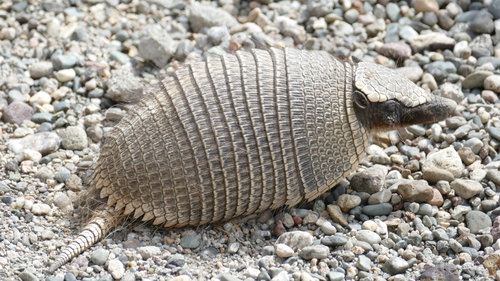
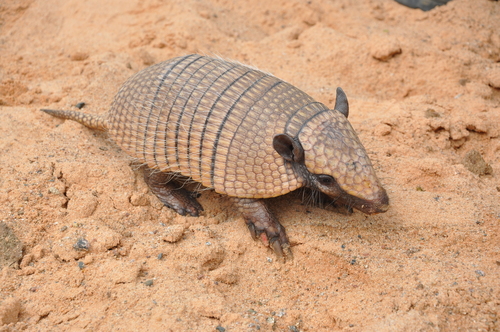
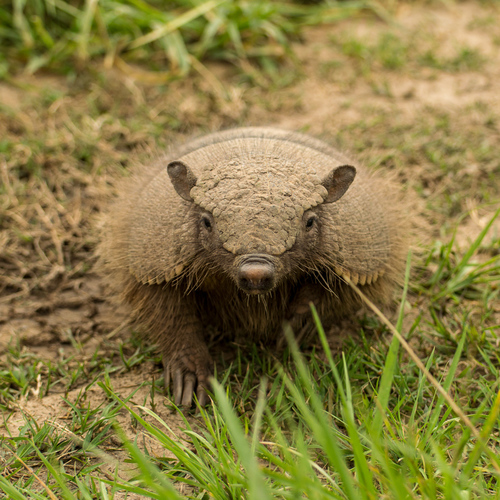
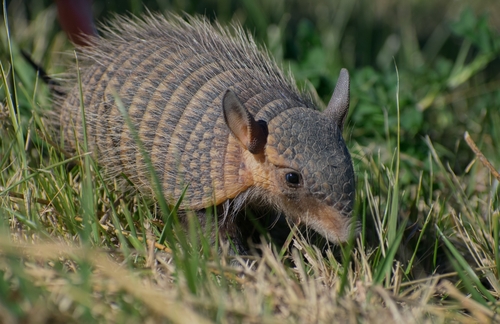
Chaetophractus vellerosus, commonly known as the screaming hairy armadillo, is one of the smallest and most slender species in the genus Chaetophractus, and it has longer ears than other members of its genus. Males of this species measure between 328 and 400 mm (12.9 to 15.7 in) in length, with an average length of 376 mm (14.8 in); females range from 265 to 419 mm (10.4 to 16.5 in) in length, with an average length of 368 mm (14.5 in). Male body weight ranges from 543 to 1,329 grams (19.2 to 46.9 oz), averaging 860 grams (30 oz); female body weight ranges from 257 to 1,126 grams (9.1 to 39.7 oz), averaging 814 grams (28.7 oz). When John Edward Gray first described this species in 1865, he noted the following traits: a convex forehead covered in many polygonal shields; a dorsal shield covered with abundant elongated bristly hairs; a close covering of hair on the underside of the body; and 5 toes on each foot, with the outer and inner hind toes being small. This armadillo has more hair growth than other armadillo species. It has 18 body bands total, of which 6 to 8 are movable. The hair on its dorsum is light brown. The screaming hairy armadillo is a burrowing species native to arid habitats from low to high altitudes. It occurs in parts of the Gran Chaco and Pampas regions of Argentina, Bolivia, and Paraguay, with an isolated population in eastern Buenos Aires Province, Argentina. Its natural habitats include subtropical or tropical dry forests, temperate shrubland, subtropical or tropical dry shrubland, temperate grassland, subtropical or tropical dry lowland grassland, hot deserts, temperate desert, arable land, pastureland, and plantations. It is not found in rocky areas, as it cannot burrow in this terrain. Average annual rainfall in the species' main range is 200 to 600 mm (7.9 to 23.6 in), while the area holding the Buenos Aires population has an average annual rainfall of 1,000 mm (39 in). For reproduction, the gestation period of this armadillo is 60 to 75 days. Individuals reach sexual maturity at 9 months old, and can produce two litters per year.