About Chaetodon lineolatus Cuvier, 1831
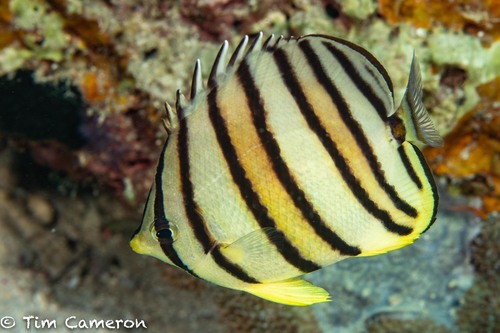
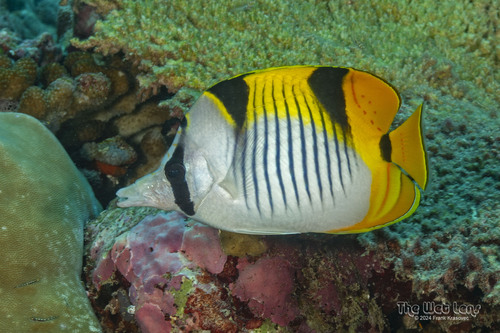
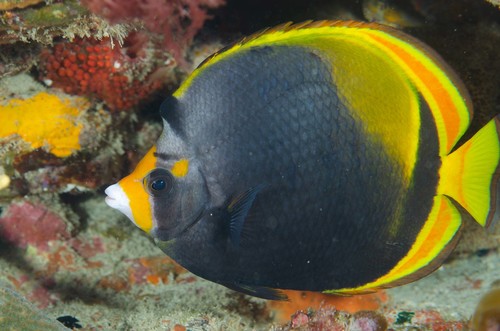
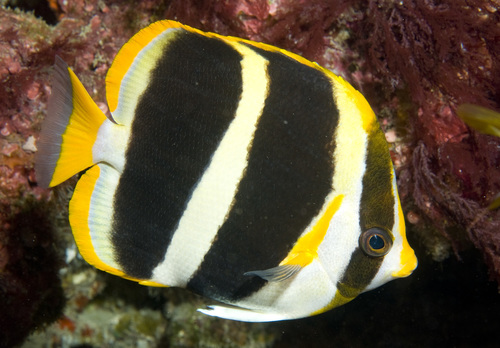
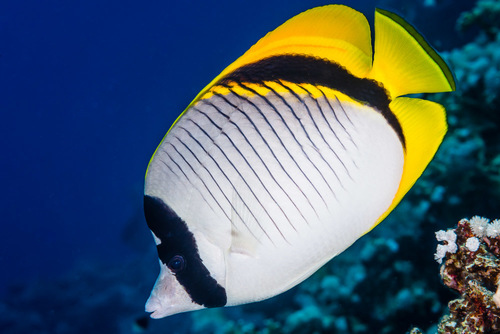
Lined butterflyfish (Chaetodon lineolatus Cuvier, 1831) may grow up to 30 centimetres (12 inches) long. Among species of the genus Chaetodon, only the saddle butterflyfish (C. ephippium) reaches the same maximum size, making lined butterflyfish about as large as a dinner plate. Their bodies are white, marked with thin black vertical bars that join a thick black band at the base of the tail and dorsal fin. The tail, dorsal, and anal fins are yellow. This species occurs along the east coast of Africa, including the Red Sea and Mozambique Channel; across Northern Australia, including the Coral Sea, Gulf of Carpentaria, and Timor Sea; and throughout the West Indo-Pacific, including the Java Sea, South China Sea, Philippine Sea, and Celebes Sea. This uncommon fish is found swimming alone, in pairs, or occasionally in spawning aggregations. It inhabits coral-rich areas of reefs and lagoons at depths between 2 and 50 metres. The diet of lined butterflyfish consists of coral polyps, small anemones, algae, and invertebrates. The species is known to be territorial, and this territorial behavior is linked to its highly specific feeding habits that are tied to particular areas. Lined butterflyfish can live up to ten years of age. Very little is known about spawning across butterflyfish as a group, but it is believed that lined butterflyfish spawn near their feeding habitats during the new moon. Lined butterflyfish form lifelong monogamous mating relationships, though males may choose to either stay with their existing mate or leave to find a new mate, a behavior that appears to maximize their fecundity. Lined butterflyfish are social mates, meaning they spend time with their partner outside of spawning, and often live together in the same habitat. The species shows little to no parental care for its young.