About Chaetodipus penicillatus (Woodhouse, 1852)
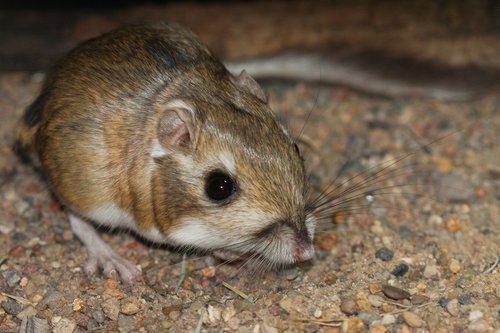
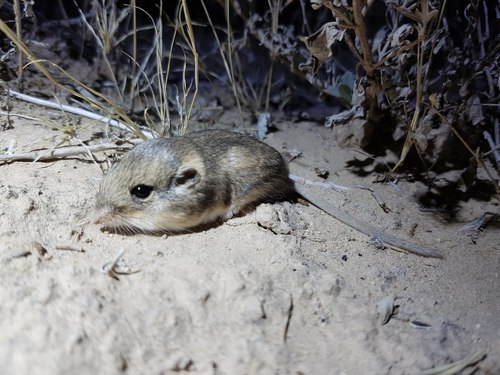
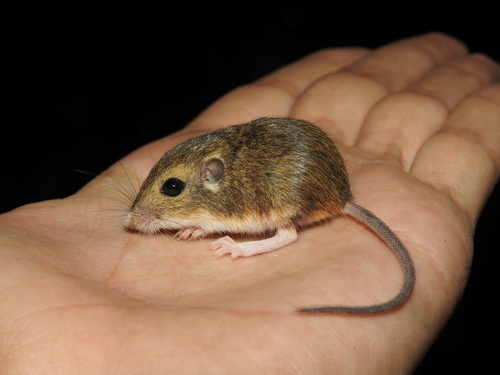
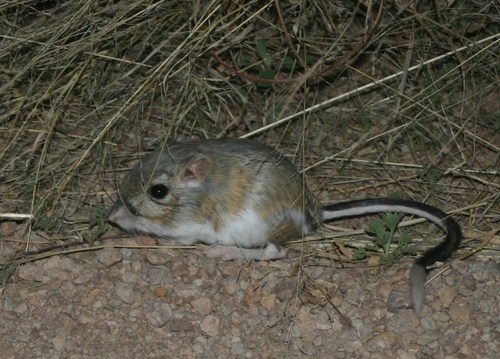
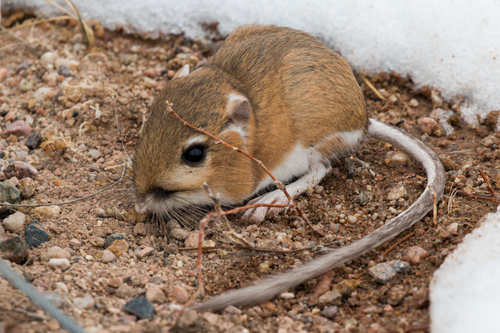
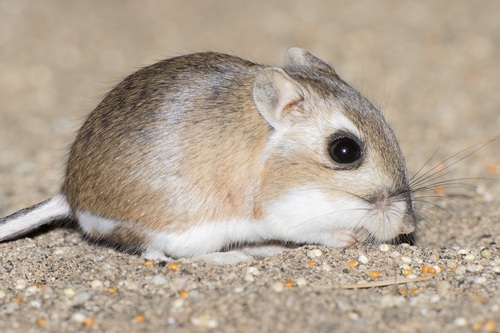
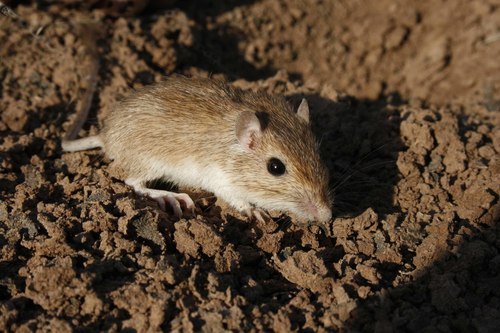
Chaetodipus penicillatus, commonly called the desert pocket mouse, is a medium-sized pocket mouse. Adult total length usually does not exceed 180 mm. Its coloration ranges from grayish brown to yellowish gray, and may be sprinkled with black. It has coarse pelage; this species lacks rump spines, but has numerous elongate rump hairs that are darker dorsally and lighter laterally. It has no lateral line. The underparts of the body and the tail are whitish. The tail is heavily crested and longer than the head and body, with an average tail length of 109 mm. The soles of the hind feet are whitish, and average hind foot length is 25 mm.
Chaetodipus penicillatus is found in the southwestern United States and northern Mexico. Its northern range limit is southern Nevada. It extends southwest into California, the northern Baja Peninsula, and northwestern Mexico. Eastward, it reaches the southwesternmost parts of Colorado. From southern Nevada and southwestern Colorado, its range extends southeast into Arizona, through southern New Mexico and southwestern Texas, and into northeastern Mexico. The desert pocket mouse prefers a variety of arid, open desert environments, most often with sparse vegetation. These habitats can include desert washes, desert succulent shrub, desert scrub, and alkali desert scrub. It favors soft alluvial, sandy, or silty soils along stream bottoms, desert washes, and valleys, rather than rocky terrain. These pocket mice live in soils vegetated with creosote bush, palo verde, burroweed, mesquite, cholla and other cacti, and short, sparse grass. They also occur at the lower edges of alluvial fans with yucca, mesquite, grama, and prickly poppy.
Six subspecies are currently recognized: C. penicillatus penicillatus from south-central Arizona, C. penicillatus angustirostris from southern California and eastern Baja California, C. penicillatus pricei from southern Arizona and Sonora, C. penicillatus seri from Tiburón Island, C. penicillatus sobrinus from southern Nevada, and C. penicillatus stephensi from eastern California.
The species' breeding season occurs in spring. Adult females can produce one or more litters of 2 to 5 young during spring and summer. Average gestation length is 23 days. Incisors emerge 9 days after birth, eyes open on day 14, and ears open no earlier than day 14. Many young females reach sexual maturity early and become pregnant while still retaining their juvenile pelage. Population annual turnover can be as high as 95%.