About Chaetodipus hispidus (Baird, 1858)
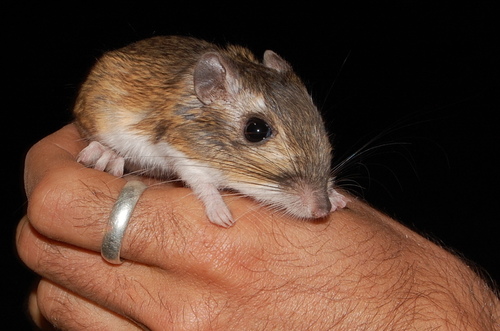
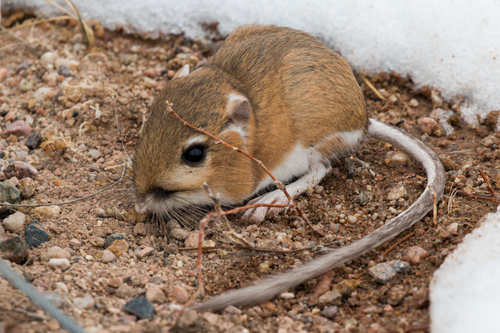
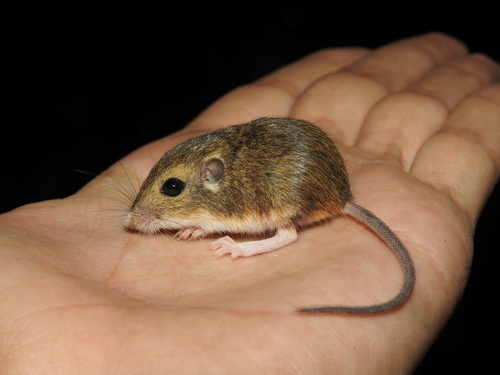
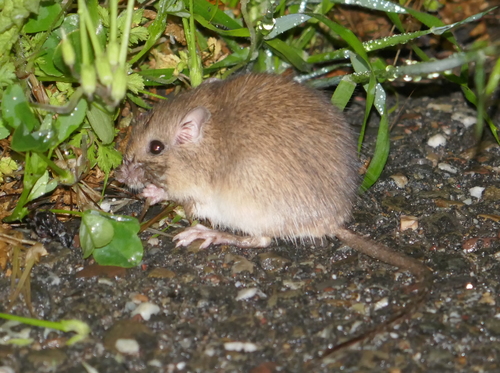
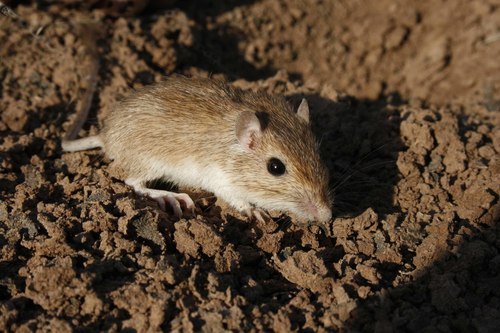
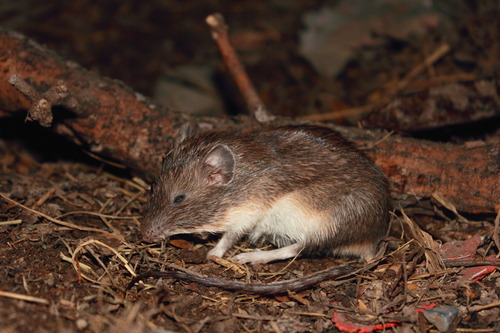
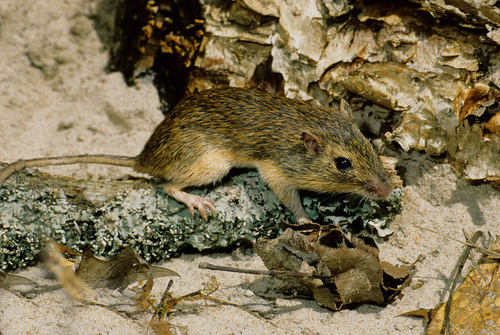
This species, the hispid pocket mouse (Chaetodipus hispidus), is one of the largest pocket mice. Its fur is bristly, which matches its scientific epithet hispidus that means "bristly". The upper fur is yellowish, with black hairs interspersed throughout. It has a distinct buff-colored side stripe, and white underparts. The hispid pocket mouse is distributed across the Great Plains, ranging from southern North Dakota south to central Mexico. Westward, its range extends from the Missouri River to the foothills of the Rocky Mountains. It is absent from the far-eastern parts of the states of Kansas and Missouri. Hispid pocket mice live in a variety of upland habitats, and are most abundant in areas with sandy soils and patches of bare ground. They also occur in areas with rocky, loamy soils. They are not found in rocky prairie, and appear to avoid sand dunes and riparian zones. These mice favor vegetation that is a mix of short- to mid-height grasses, shrubs, forbs, cacti, and/or yucca. The hispid pocket mouse is primarily a granivore; its diet consists mostly of seeds that it gathers selectively, though it also eats a small amount of insects and leaves. Burrows are always dug into loose, friable soil, and have two to three entrances that are often plugged. Unlike other pocket mice, the hispid pocket mouse often leaves a noticeable mound of earth around its burrow entrance, similar to the mounds made by pocket gophers, but noticeably smaller. Hispid pocket mice are solitary. Little research exists on the reproduction of this species. Adult males have been recorded with enlarged testes from March through October, and pregnant females have been trapped in July and August. The length of the active breeding period suggests females can produce two or more litters per year.