About Ceuthmochares australis Sharpe, 1873
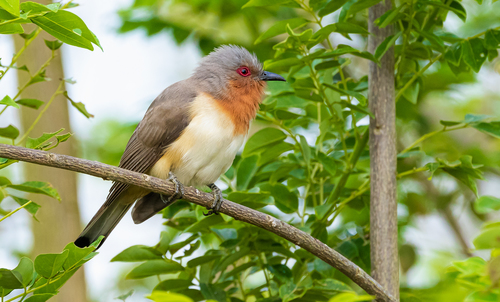
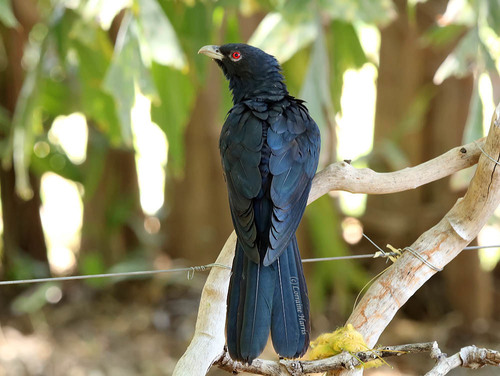
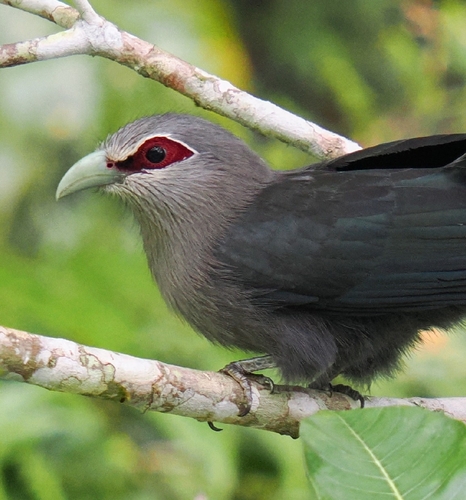
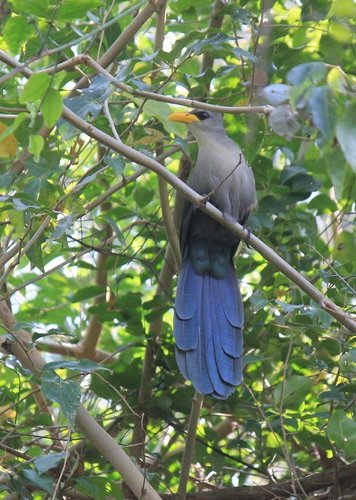
The green malkoha, also called the whistling yellowbill, is a cuckoo species belonging to the family Cuculidae, with the scientific name Ceuthmochares australis. This species and the blue malkoha were previously classified as a single conspecific species, and both were together known as the yellowbill. This bird has green coloration on its tail, wings, and back. It has a widespread distribution along the Eastern African coast, ranging from Kenya down to South Africa. Its habitat extends from dense forest to riverine forest and forest edges. Within forests, it typically occupies the subcanopy layer, found between 8 and 30 meters above the ground. The green malkoha feeds primarily on insects, especially caterpillars, beetles, grasshoppers, and crickets. It will also consume frogs, slugs, fruit, seeds, and leaves. It moves through tangled vegetation with a sequence of small hops, snatching prey as it travels. It will accompany other birds and squirrels, feeding on insects that these animals flush out into the open. Unlike many other cuckoo species, the green malkoha is not a brood parasite, and instead cares for its own young. Observed breeding behaviour follows a specific pattern: the male and female face each other, first wagging their tails from side to side, then spreading their tails. The male also engages in gift giving, presenting prey to the female. He then mounts the female and feeds her while mounted. The female lays two white and creamy eggs in a nest made of a rough mass of sticks, suspended 2–5 meters above the ground. Both parents care for the young. The green malkoha is an uncommon species and is rarely observed due to its secretive behaviour. However, it is not considered threatened, and the IUCN lists it as a species of least concern.